


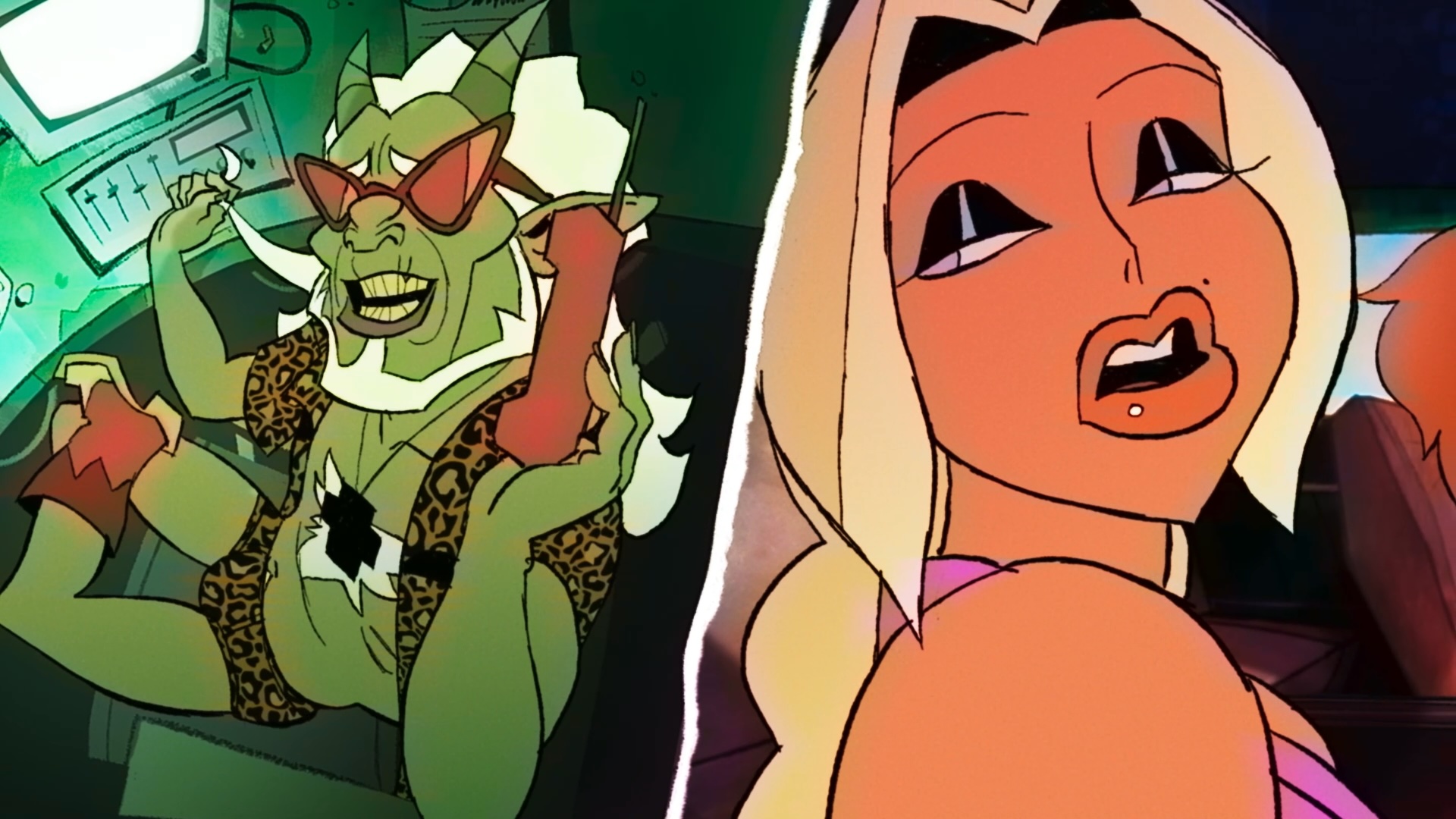


Fasten your seatbelt, baby – but not because this ride is fast. Speed implies control, and Skin Flick does not believe in control. It swerves, it kicks, it sparkles, it devours.
The final short of this year’s Gobelins lineup arrives on-screen like a neon fever dream: a high-octane 2D spectacle dripping with retro gore, queer desire, and enough camp energy to power your whole night. Directed by Louise Bailly, Daniela Del Castello, Alice Levy, Bruno De Mendonça, Elifsu Meriç, and Joey Quoc Tran, it’s yet another reminder that the French school doesn’t just train animators – it encourages work that is wild, unruly, and impossible to forget.

“A high energy camp/romance/comedy/adventure road movie with a serious core lying beneath the skin” – how the Skin Flick team describe their film.
The premise alone has bite: an XXX actress stars in the Devil’s cannibalistic snuff films in exchange for flawless skin. At first, she moves through the motions – seduction, deception, digestion – until one job ruptures the loop. A runaway bride steps into the scene as her next on-camera victim… and instead becomes the disruption that softens the edges of this evil script. What begins as a predatory performance shifts into something tender and inconveniently romantic.
Visually, the 2D animation is a rush – fluid, elastic, delightfully unhinged. Smears, distortions, and bursts of color track the velocity of the story like a pulse. The short embraces everything we loved about the eighties – the grit, the gloss, the unapologetic excess – then rebrands it through a contemporary queer lens.

“A fever dream drastically changed the tone of the film and introduced more fantastical elements and a queer storyline” – the Skin Flick team discussing the evolution of their narrative.
The references to Under the Skin, Thelma & Louise, and a whole lineage of cult cinema aren’t decorative; they’re part of the film’s DNA, reinterpreted rather than recycled. Skin Flick also toys with vintage XXX tropes, horror clichés, and melodramatic beats, only to twist them into a story about desire, and the stubborn things that refuse to die inside us.
That desire is perpetually hungry, but it’s not carnal; the force that moves this narrative is rooted in the ultimate kind of love: self-acceptance.
Because beneath the pastel gore and the devilish grins, the film becomes an exploration of difference – of species, beauty, power, and sexuality. Sound familiar?
It leaves you with a provocative question lodged under the skin: what tips your scale? Beauty standards? The roles you’re expected to play? The thing you most desire? Or the messy, rebellious instinct to choose your own ending?


