


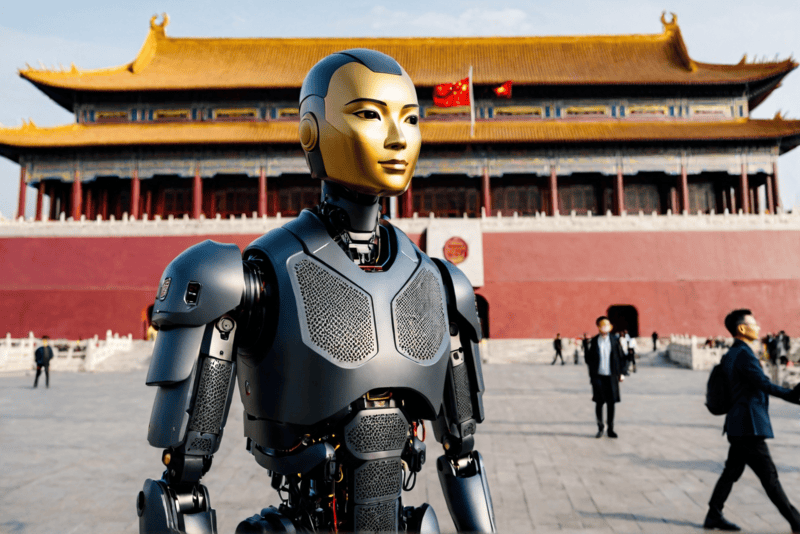


Frequent travelers within the tech industry had found themselves at the center of an escalating conflict, as reports had emerged that China had quietly instructed its top AI entrepreneurs and researchers to avoid traveling to the United States.
For business travelers, particularly those involved in cutting-edge artificial intelligence research, this development had raised alarms about the future of global collaboration, security risks, and the increasing politicization of international travel.
The decision, as reported by The Wall Street Journal on February 28, 2025, had reportedly stemmed from concerns that Chinese AI experts might unintentionally leak sensitive information about China’s AI advancements while traveling abroad.
This revelation had left many wondering: Was this a legitimate national security measure, or was China preparing for a more closed-off approach to global AI cooperation?
A Fear of Detention? Why Executives Are Being Warned
For those familiar with the U.S.-China tech war, this latest travel restriction had not come as a complete surprise.
Chinese authorities had reportedly been concerned that AI executives could be detained or used as leverage in diplomatic negotiations, with some citing past incidents—such as the detention of a Huawei executive in Canada at the request of the U.S.—as evidence that high-profile tech leaders could become bargaining chips in geopolitical disputes.
Executives working in AI, robotics, and other strategically sensitive industries had reportedly been discouraged from visiting not just the United States, but also its allied nations unless travel was deemed absolutely necessary.
Tech Entrepreneurs Hesitate to Travel as Restrictions Tighten
As news of these restrictions had spread, Chinese AI entrepreneurs had already begun altering their travel plans.
Reports had surfaced that Liang Wenfeng, the founder of DeepSeek, a prominent Chinese AI startup, had declined an invitation to attend an AI summit in Paris in February 2025. Meanwhile, another major AI startup founder had abruptly canceled a planned U.S. trip last year after receiving direct instructions from Beijing.
This had led to speculation about whether such restrictions could permanently affect international AI collaboration, with some suggesting that China was moving toward a more isolated AI research ecosystem—one that had increasingly relied on domestic innovation rather than global exchange.
What This Means for Business and Academic Travel
While the impact had been most immediately felt by AI entrepreneurs and researchers, the broader travel industry had also begun to take notice.
Business travelers in China’s tech sector had expressed concerns about what this could mean for their international mobility. Some had worried that these restrictions might:
- Limit opportunities for cross-border innovation and networking.
- Create new layers of bureaucracy for professionals traveling abroad.
- Encourage Western countries to respond with reciprocal travel restrictions on Chinese scientists and business leaders.
Some had noted that those who chose to travel despite the warnings were now required to report their trip details before departure and provide a full debriefing upon their return.
For frequent travelers in China’s AI and tech industries, this had created uncertainty over whether their international travel freedom would shrink further in the months to come.
A Global AI Race Intensifies: Will Travel Be a Casualty?
Many had viewed these restrictions as a symptom of the growing AI arms race between China and the U.S..
The global AI competition had become more intense than ever, with China’s DeepSeek having recently launched AI models that it claimed could rival or even surpass U.S. leaders like OpenAI and Google at a fraction of the cost.
For travelers who had followed the AI industry’s development closely, this had raised deeper questions about how global research collaboration would function in an increasingly competitive environment.
Would the U.S. and China continue sharing advancements in AI, or would they each retreat into their own tech ecosystems, cutting off the free exchange of knowledge?
A Shift Toward Isolation? How China’s Strategy May Impact Global Tourism
Those familiar with China’s previous approach to global engagement had noted that the country had historically been open to international collaboration in research and business.
However, the recent warning to AI leaders had suggested a shift toward a more closed-off strategy, leaving many wondering if this restriction would soon extend to other industries.
If China’s AI industry had begun operating under stricter travel guidelines, it could mean that:
- Fewer Chinese entrepreneurs and researchers would be attending global conferences.
- International AI partnerships could suffer, leading to a slowdown in joint research projects.
- U.S. and European tech companies might face difficulties in maintaining relationships with their Chinese counterparts.
For the global travel sector, this had raised concerns about a possible reduction in corporate travel between the world’s two largest economies, which could impact everything from business-class flight sales to major tech conferences.
What Does This Mean for Future U.S.-China Travel?
Travelers had expressed concerns about how the U.S. might respond to China’s latest restrictions.
Some had speculated that Washington could introduce new visa limitations on Chinese AI experts, further widening the growing divide between U.S. and Chinese tech industries.
Others had pointed out that the U.S. had already imposed strict export controls on AI-related technologies, and that this latest move by China could prompt additional retaliatory measures in the travel and business sectors.
For now, those involved in the AI industry had been left in a state of uncertainty, unsure of whether they would be able to freely attend global events, collaborate with international peers, or even travel to the U.S. without fear of repercussions.
A New Era of Travel Restrictions for the AI Industry?
As China had tightened its grip on AI industry travel, the global consequences had become more evident.
What had once been a thriving landscape of international AI collaboration had now been overshadowed by political tensions and national security concerns.
For those in the tech sector, the question had become: Was this just the beginning of a broader crackdown on travel in sensitive industries, or would diplomatic negotiations find a way to ease tensions and restore mobility?
For now, the travel industry, business community, and tech researchers had been forced to navigate an increasingly complex and politically charged landscape—one where innovation and international movement were becoming more entangled than ever before.
The post China Restricts AI Experts from Traveling to the US Over Security Fears – Is New Global Tech Collaboration at Risk? appeared first on Travel And Tour World.
