


Disclosure Day turned out very well in the eyes of screenwriter David Koepp, who describes the writing process with director Steven Spielberg as the most intensive yet in his four decades of making movies.
“This is our fifth movie together that he’s directed, and 10th or 12th that we’ve done that he produced. And I’ll say it’s the most intensive and scrupulous I’ve ever seen him,” Koepp says. “And he’s an intense and scrupulous guy. But this was at another level.”
Koepp joined Spielberg’s latest alien film in September 2023 after the director behind Close Encounters of the Third Kind, E.T. and War of the Worlds emailed him a treatment for the highly anticipated June 12 theatrical release.
“I asked him before he sent it, ‘What’s it about?’ And he said, ‘Oh, the same thing I always do: aliens,’” recalls Koepp, who found the story “quite striking,” and encouraged his friend to continue working on it.
Soon, Spielberg asked Koepp if he wanted to take the reins.
Forty-two drafts later, the man who helped Spielberg launch the iconic Jurassic Park franchise tells MovieMaker, “It turned out very well. It’s very emotional, which I love, because emotions are hard to find in movies, and when it hits and it really works and it’s sincere, it’s really meaningful.”
Koepp initially wanted to be an actor, but soon discovered a tremendous gift for writing. Since co-writing his first produced script, for 1988’s Apartment Zero, he has written or co-written dozens of screenplays across many genres, including Spider-Man, Mission: Impossible, Panic Room, and three Jurassic Park films, including the original. He is one of the most successful screenwriters in terms of box office, responsible for films that have grossed nearly $3 billion.
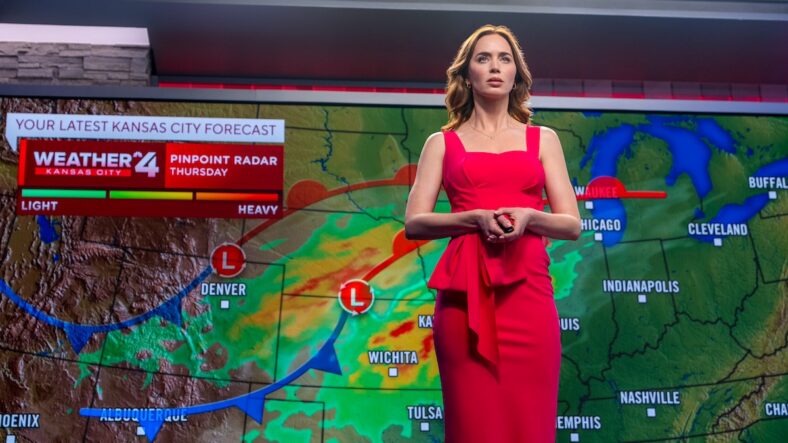
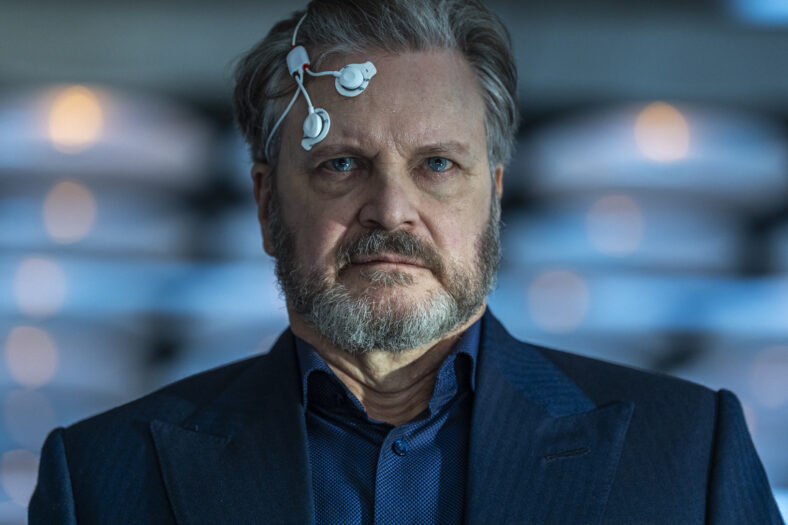
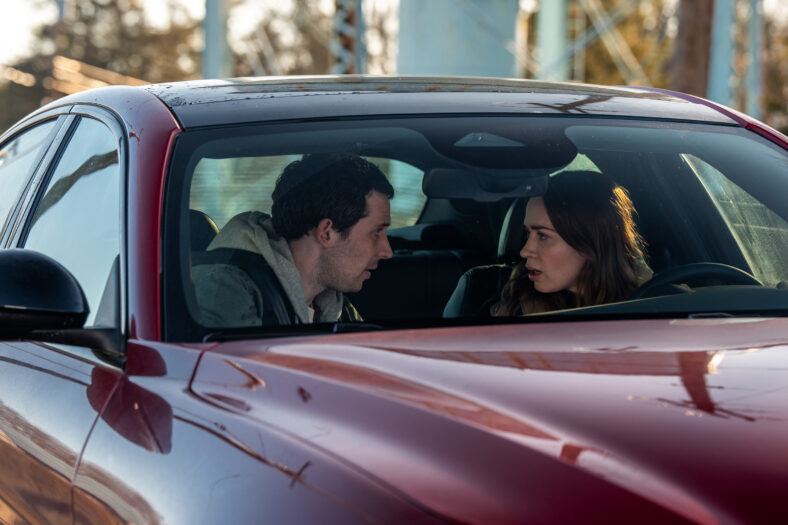
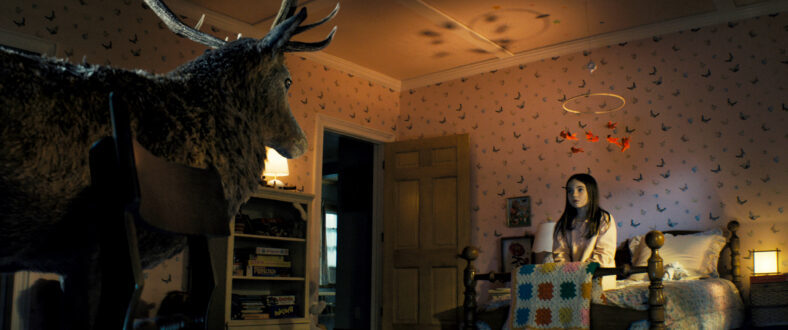
But as he explained in our talk about Disclosure Day — which stars Emily Blunt, Josh O’Connor, Colin Firth, Eve Hewson, Wyatt Russell, Colman Domingo, and more — Koepp still sometimes feels like he’s rediscovering fundamental truths about screenwriting.
David Koepp on God, UFOs, and His 42 Drafts of Disclosure Day
MovieMaker: Can you talk about how you added emotion to Disclosure Day?
David Koepp: Yes. I had a lot of help with this script, obviously. Steven wrote the story… I think he recognized that it’s a subject he’s made several other movies about, and each one of them is seminal in its own way.
He always feels pressure to make a great movie. I think he felt extra on this one, which is a long way of getting to answering your question about emotion, which is to say that we did a series of drafts in the middle of the process that I think really broke through and made the emotional aspects work.
Each draft we did only from one of the characters’ points of view. Not to say we rewrote the whole script, but whenever you write a script, you’re thinking of all the characters and the needs of the story, and you’re trying to balance all that stuff at once. And so, we went through this process where we would do a draft and only think about Emily Blunt’s character, so you just don’t worry about the rest of the plot. Don’t worry about anybody else. What is she feeling or doing in any given scene at any given time?
And then we did that for Josh O’Connor, Colin Firth, Eve Hewson and Colman Domingo, and everybody got this real focus of attention for a sustained period of time as a character in the script process, which I think makes it a little more emotionally truthful.
MovieMaker: Wow. I’ve never heard of that process before. Have you done that before for other films?
David Koepp: No, never once. And it sort of evolved. We did it first for one character, and then one of us said, ‘Well, let’s do it for so and so.’ And then once you’re in, you’re in, so we might as well do it for everybody.
MovieMaker: Was that a Spielberg request to take that approach with the first initial one you did?
David Koepp: Yeah. And then it just sort of naturally evolved to do it that way.
MovieMaker: What were your initial impressions of Spielberg’s latest alien story?
David Koepp: What I liked about it immediately was he had found another genre to put it in. If you look at each of the other movies he’s made on the subject, Close Encounters has a very certain 1970s paranoid vibe; E.T. is a whole completely different genre and tone; War of the Worlds is another genre and tone; and so is this. I found this to be more of a chase movie in a lot of ways.
It has a lot of thoughts in its head. It had a sort of Alan Pakula feel to it, I always thought. So, I liked that it was this whole other tone for this kind of story. And I said the sort of usual things that you would say if a friend sends you something, which is, “Less of this, more of that; maybe move this around. Keep going.” I assumed he was going to write it himself.
Then he sent another draft, maybe a month or so later, and I gave similar comments. And that just kind of began a conversation. And then I think sometime after that, he said, “Do you want to do it?” And I said, “Of course I want to do it. Yeah, you bet.” So I had, I think, a 40- or 50-page story outline to work with, which I re-outlined and sent back to him.
I was kind of anxious about that, because now I’ve taken his work and I’m changing it and moving this guy and combining that guy and, you know, doing a lot of stuff to it. But he said, “Great, keep going.” Now, unfortunately, the shoe was on the other foot, because after you read a friend’s thing, you can say, “Hey, you should keep going.” And now he was telling me. Like, I prefer poking holes in other people’s stuff and telling them to go finish it. But now it’s on me.
MovieMaker: I love that this started out as just two friends exchanging a cool story idea. I think people have this idea of Hollywood, that it’s like these deal-centric, packaged movies, and this kind of started very organically. It sounds like just two old friends spitballing a cool alien idea.
David Koepp: Yeah, I give him stuff to react to all the time. It’s just a natural part [of the process.] Steven’s made a lot of movies and done this for a lot of years, and I still think his favorite part of the process is, “Hey, wouldn’t it be cool if…?” And you know, just throwing stuff around.
Brian De Palma is also like that. He just loves to talk about an idea, because it’s when everything is possible… all the practical realities of making a movie don’t matter. It’s perfect in your head, and you can just make them up.
MovieMaker: You mentioned it kind of has a format of a chase movie. So what were the references that you’re diving into to inspire you?
David Koepp: I knew the Hollywood movies, not on this subject, but just that were of the type that I thought this might be like. But I knew them really well; I didn’t need to see them again. What I needed to do, what I started doing, was researching UFO lore. And, man, when you start to go down that rabbit hole…
I got a few books on the matter, which were helpful. I watched a lot of documentaries, and there’s a lot of them. If you decide to watch your average Netflix series about UFOs, there’s 30 of them. A lot of them tell the same stories. And then, God help you if you start looking around on the internet. You could get lost forever in that particular rabbit hole.
It was a matter of, I know what our story is. I want to familiarize myself with culturally what we think and have thought, traditionally, and then I would like to put all that away and make ours ours.
MovieMaker: Spielberg mentioned in a behind-the-scenes featurette that he feels like we’ve reached a critical mass of interest in the subject. A buzzy documentary, The Age of Disclosure, came out last year. There were these congressional hearings. There was footage released of a UAP from a jet fighter crew in the last decade. Are you talking to actual UFO investigators for this project at all? Any consultants?
David Koepp: I’m not. I don’t know if Steven is or not. The congressional hearings were going on as we were putting the story together, so we got to watch that. It really all changed with The New York Times investigative piece from 2017, because that really legitimized it. The New York Times, you know, “The Gray Lady,” was reporting on this in sober terms and taking it seriously. And that really shifted the tone of it all and made it, I think, a little safer for people who had experiences they wanted to talk about to come out and talk about them without being immediately labeled a nut.
And also I was bearing in mind, believe what you want to believe. We are telling a fictional story. These people didn’t really exist. Whether one believes that this stuff is real or not is an individual decision. I wanted to focus on the story, because you really have to make your story work. You’re there to do a specific job related to your story.
I think a lot of stories get wrecked when the writer becomes too interested in, “No, it really happened this way!” And you’re like, “Yeah, but that way is boring. Couldn’t it have happened in a way that’s entertaining?” So that was what I wanted to focus on.

MovieMaker: What were some of your favorite or most compelling UFO documentaries that you came across?
David Koepp: Well, Age of Disclosure is really good. UFOs: The Secret History, I liked that. I like things that take a slightly more sober approach to it. It’s a subject you don’t have to hype. Like, when you’re writing a story with a fantastical premise, they say, let the premise be the fantastic thing, and everything around it needs to be as ordinary as possible.
And I liked the documentaries that took that kind of approach and showed you real people who just had experiences that they didn’t quite understand. So, those were always the ones I gravitated toward.
MovieMaker: You mentioned belief; it’s a personal thing to believe. Do you personally believe in aliens? Do you have a favorite alien theory that you gravitate toward personally?
David Koepp: My personal belief is the same as my personal belief in God, which is why I think religion is an important part of Disclosure Day.
I was raised Catholic. I know people who are fervent atheists, and I know people who are fervent believers. And I’ve always felt like the only reasonable position is agnostic; is only to admit: Possibly. I don’t know.
And that ties into what is my favorite theory [about aliens], which is, yes, other intelligent life forms exist. Yes, they’ve been here. They may even be here now. We can’t perceive them.
I think that the visual spectrum is a very narrow thing, and we know that so much exists outside it, right? The things we can hear. The audio spectrum is narrow. Tons of sounds exist outside it. Those are just our biological senses, right? But all the things we’ve invented to sense things, all our modern technology, why don’t we believe that also has a narrow spectrum and that things may exist outside of it? Why should we trust our devices more than we trust the possibility that things exist we can’t perceive?
That’s kind of my favorite theory, because it is an agnostic theory. Maybe. I don’t know.
MovieMaker: I think humans have a tendency to forget how much we can’t possibly know, because we see such a limited spectrum of sensory capability.
David Koepp: Right. If your dog can get upset about something they heard that you just don’t even know is there, it’s possible there are other things you’re not perceiving as well.
MovieMaker: Yeah, and I particularly like that language you couched it in. We just can’t perceive them. And culturally, we’ve been so focused on the abduction experience, the UFO in the sky, the aliens physically coming to land. And to me, what you just said kind of connects to the whole channeling thing. I see a bunch of people on TikTok claiming to talk to aliens via meditation or channeling. It’s become a very popular part of the lore. So I was curious if, in your research, you dove into that aspect?
David Koepp: Not in any particular way. I think it’s an easy concept to grasp once you know it, once it’s explained. So I think from there, because it’s speculative, you can only fictionalize, if, in fact, we did, which I will neither confirm nor deny.
MovieMaker: I don’t want to go too far down a rabbit hole of UFOs, because you’ve just been doing this for so long, you’re such a master of the craft. I’m curious how your approach to screenwriting has evolved?
David Koepp: It hasn’t changed a great deal. I will say my writing style has changed as everyone’s attention span gets shorter, including my own.
If I look back at an old script from like the early ‘90s, the style was a lot more dense. I’d have longer paragraphs of description. It just took longer to read. Over time, I started to know people and how people, like studio executives, read scripts. A lot of the time they just skip to the dialogue.
And so, how can you make the reading experience easier so that people will stay in your script? How can you make your descriptions as succinct as possible? Terse, evocative language is what I’m looking for, whereas I used to go on a bit.
I feel like the way we read is different. Smartphones changed everything about our perception. That’s not news. But also, I think I developed a greater sympathy for the reader. Screenplays are very hard to read. You’re asking people to do a lot of work.
You read a novel, it’s all kind of spelled out for you. If you read a screenplay, you’re being asked to picture things and imagine what they sound like. And that’s hard. So I feel like we, the writers, need to make everything as easy as possible, and make the reading experience as visual as possible.
In terms of just how I approach the work, I don’t think anything’s changed. I have an idea, research it as much or as little as you need to write some little character bios, outline, write a draft, and then rewrite forever.
That process has not changed for me. I still use 3 x 5 cards laid out on the table.
What is surprising to me, though, is just the other day, I’m working on the second draft of something, and I was talking to the producer of it. I’d gotten a bunch of notes, and then I was working on the draft, and I called the producer, and I said, “You know that big scene at the beginning? I never tied that to the villain plot. How do you write a big, splashy scene like that and then not connect it to the villain story?”
They were like, “Yes, of course, you have to do that.” And I was like, “This is so fundamental. I’ve been doing this for almost 40 years. How do I not know that already? Why do I have to rediscover it?”
That’s what I like about storytelling. You forget everything every day and have to learn again.
MovieMaker: There’s a concept in Zen Buddhism called beginner’s mind, to always approach what you’re doing with a beginner’s mind, because you’re more curious, and you don’t have the arrogance of, like, I know it all. So, the best work comes from beginner’s mind, in theory.
David Koepp: I think storytelling will humble you and give you beginner’s mind every day, because it’s still just as hard. You learn a little bit better craft, but trying to make something original and interesting and truthful is still every bit as hard.
MovieMaker: You mentioned writing is rewriting. How many drafts of Disclosure Day did you write?
David Koepp: I know the exact number, because you have to submit it to the Writers Guild for credit. It was 42.
MovieMaker: Wow.
David Koepp: Yeah, it was a personal best for me.
MovieMaker: And were you on set during the production, like working on edits and pivots and stuff like that as well?
David Koepp: Yes, I was, almost the entire time. Maybe three quarters of the shoot I was there. It was quite a commitment.
I usually don’t go, so I didn’t go the first couple days, except to say hi once. And Steven said, “Why are you not here?” And I said, “I don’t know. I usually don’t go. Did you want me here?” “Yes!” “Okay.” So, I got a chair and came every day, and there was a lot of very good stuff we did at the last minute. It was fun.
Ninety percent of the time, it’s very boring. Ten percent of the time, you’re really super involved. Most days I had almost nothing to do. But then there’d be some days we were really working hard and fast.
Some of the stuff, you’ve seen it in the trailer; there’s scenes in a television station control room, and there were a lot of real people playing roles, and a lot of dialogue I was making up, and we were rehearsing at the last minute to try to get it as accurate as possible. Those were really fun days.
MovieMaker: And so that’s not necessarily the norm for you?
David Koepp: No, I don’t really like to go to the set. I feel like I’ve had my comment for a really long time, and if I have feelings about how it might be different, it’s not always appropriate to express them to the director while he’s shooting it. He knows what he wants. And it’s certainly not appropriate to go talk to the actors and tell them how they’ve got to change it. So normally, I don’t go very much.
MovieMaker: You’ve directed a lot in your career, as well. How has directing informed how you write? And do you think that every screenwriter should dabble in directing, even if it’s something no one will ever see? Do you think that experience enhances screenwriting?
David Koepp: I think it absolutely enhances screenwriting. I don’t know that every writer should go direct a movie, because I don’t think anybody should direct a movie. I think it’s really bad for you.
I think it’s bad physically. It’s bad for your personal life; you don’t get to see your people. And it creates this sort of unnatural feeling that I’m in charge and I can change the world on a whim.
But having said that, I’ve still directed six or seven movies, because when you have something very clear in your head, there’s some of them you just want to see. I want to see it the way I saw it in my head. And I want to see how close I can get to that. And even when you make mistakes and later look at it and realize, “Oh, that was a mistake,” it’s a little easier to live with your own mistakes than if you feel somebody else made a mistake with your material on your behalf.
Now, I’ve been very lucky, and I’ve worked with directors who make my material way better: Soderbergh, DePalma, Spielberg, Ron Howard. That’s pretty lucky, but then there’s ones where you think, “I could have done better.” But I choose, often, the lifestyle of a writer to the lifestyle of the director, because I just prefer it. I like being in a room all day making stuff up.
I do think what every single writer could benefit from is to shoot a scene and have to edit it, and then you truly understand the exposition. You know what you can say, not say, how to make something visual, and you see what it’s like to be screwed in the edit room, or you see the joy that a piece of visual exposition can bring instead of talking. So I think that’s super useful.
MovieMaker: Do you have any plans to direct again in the future? Any projects on your mind that you would like to direct?
David Koepp: Yes, I have a thing that I would very much like to direct, which is just a straight-up drama. So, good luck to me getting that made in today’s environment, but it’s the only thing I really care about as a director, so I will be patient and persevere and one day get that made.
Disclosure Day arrives in theaters June 12 from Universal Pictures.
Main image: David Koepp, writer of Disclosure Day. Photo by Niko Tavernise/Universal Pictures and Amblin Entertainment
