


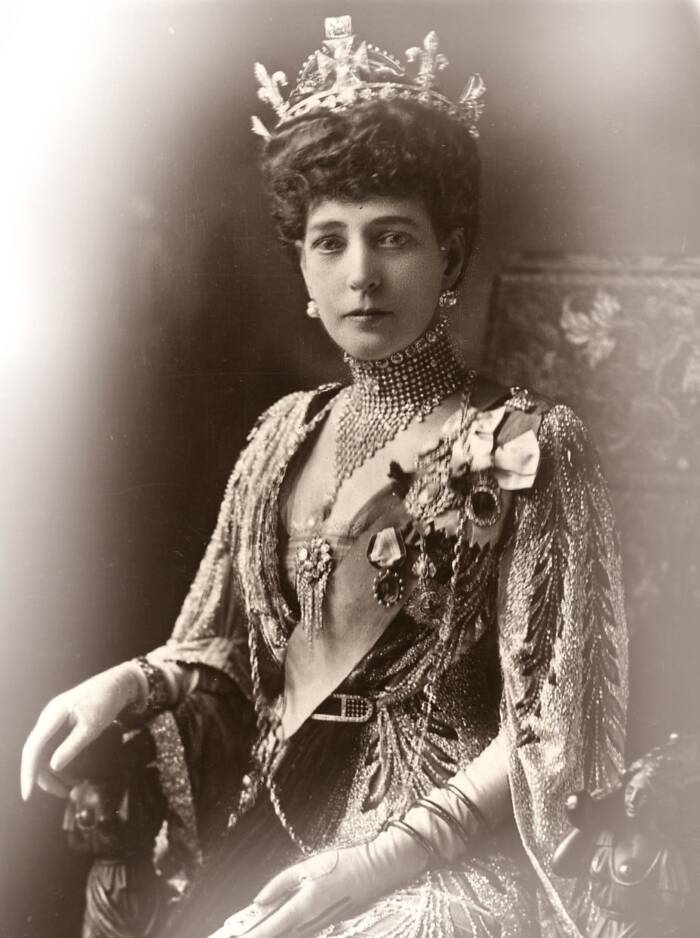
National Portrait GalleryA fashion trendsetter and beloved queen, Alexandra of Denmark was born into a minor branch of the Danish royal family before marrying into the British monarchy.
Alexandra of Denmark wasn’t born to be a queen. Her family was from a distant branch of Danish royalty, and she grew up relatively poor compared to most nobility of the time.
However, when Alexandra was eight years old, a succession crisis left her father heir to the throne of Denmark. Still, her day-to-day life wasn’t greatly altered — until Queen Victoria and Prince Albert selected her to become the wife of their eldest son, Albert Edward.
When they wed in 1863, Alexandra of Denmark became the Princess of Wales. In a few short years, she’d gone from an obscure minor royal to the wife of the man who would one day rule Britain.
When Queen Victoria died in 1901, Albert Edward took the throne as King Edward VII, and Alexandra was officially the queen of England. She held the title for just a few short years, as Edward died in 1910, but she’s remembered today as a monarch who was beloved by the general public — and the great-grandmother of Queen Elizabeth II.
The Early Life Of Alexandra Of Denmark
Despite the fact that she would go on to become the queen of England, Alexandra of Denmark wasn’t born into an elite royal household. While both of her parents were great-grandchildren of Denmark’s King Frederick V, they weren’t in line to rule themselves. In fact, her father, Prince Christian, was the fourth son of a duke.
Alexandra had a fairly modest childhood. She shared a room with her sister and made her own clothes, though she did sometimes get bedtime stories from Hans Christian Andersen.
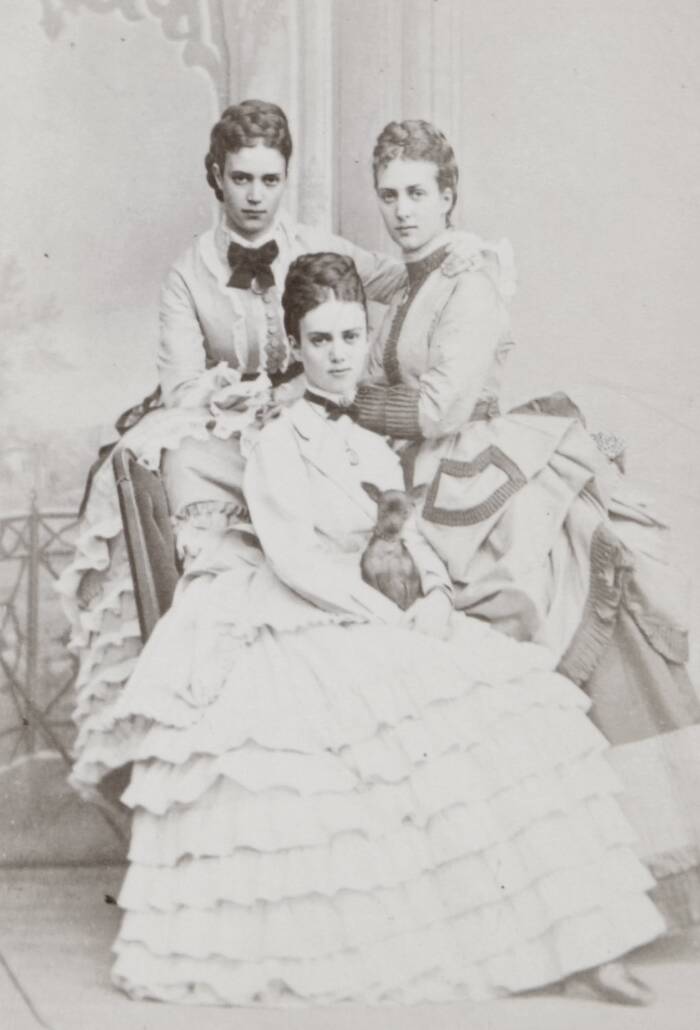
Royal CollectionThe three daughters of King Christian IX of Denmark (clockwise from top left: Dagmar, Alexandra, and Thyra) married into the Russian royal family, the British royal family, and the Hanover royal family.
In 1848, when Alexandra was four, King Frederick VII of Denmark ascended to the throne. However, he had no children, and European royal powers feared what would happen if he died childless. So, in 1852, they held a conference to select an heir to the throne — and they settled on Alexandra’s father.
Her family’s swift elevation through the royal ranks changed the course of Alexandra’s life. When Queen Victoria and Prince Albert began searching for a wife for their eldest son, Albert Edward (“Bertie”), in the late 1850s, Alexandra of Denmark was included on the list of options.
From Princess Of Denmark To Princess Of Wales
What made Alexandra a potential match for the future king of Great Britain? Many celebrated Alexandra for her beauty and grace. An equestrian and dancer, Alexandra was also a Protestant with royal blood, making her an attractive candidate to Queen Victoria.
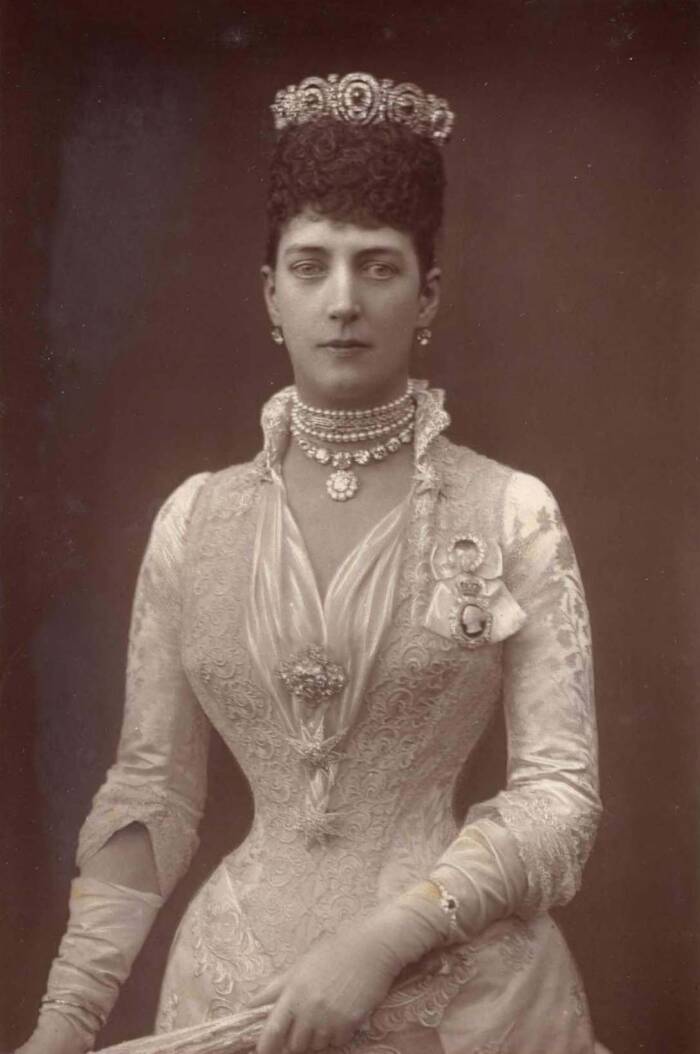
National Portrait GalleryAlexandra of Denmark started many fashion trends among the British public.
“Her voice, her walk, carriage and manner are perfect,” the queen’s eldest daughter, Vicky, wrote of Alexandra in 1862. “[S]he is one of the most ladylike and aristocratic looking people I ever saw!”
Bertie was known for his philandering ways, and the queen hoped that a beautiful wife would help him settle down. Indeed, when Bertie saw a photo of Alexandra, he reportedly immediately declared that he would marry her.
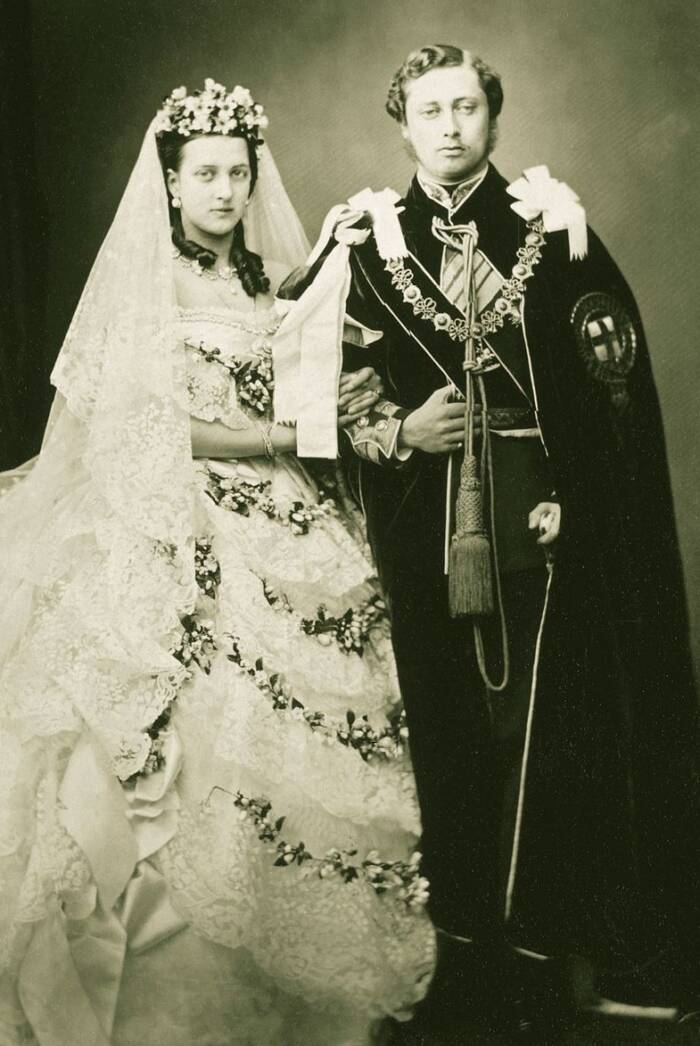
Public DomainHand-picked for her beauty, Alexandra of Denmark married Albert Edward, Prince of Wales, in 1863.
However, Queen Victoria and Prince Albert had their doubts. According to David Duff’s 1980 biography Alexandra, Princess and Queen, Albert once wrote to his brother, “There are positively no other princesses… All this made it clear to us that Princess Alexandra is the only one to be chosen… We know all the pros and cons, but if we wish to found a happy future for Bertie, we have no other choice.”
Alexandra of Denmark and Prince Albert Edward were married on March 10, 1863, and Alexandra immediately became popular with the British public. Women copied her fashion, and she sparked numerous fads, such as choker necklaces and high necklines. When she came down with rheumatic fever in 1867 and was left with a permanent limp, women across Britain even began wearing mismatched shoes to copy her uneven gait.
Shortly after their first anniversary, Alexandra and Bertie welcomed their first child, Albert Victor. Their next five children — George, Louise, Victoria, Maud, and Alexander — were born in quick succession over the next seven years.
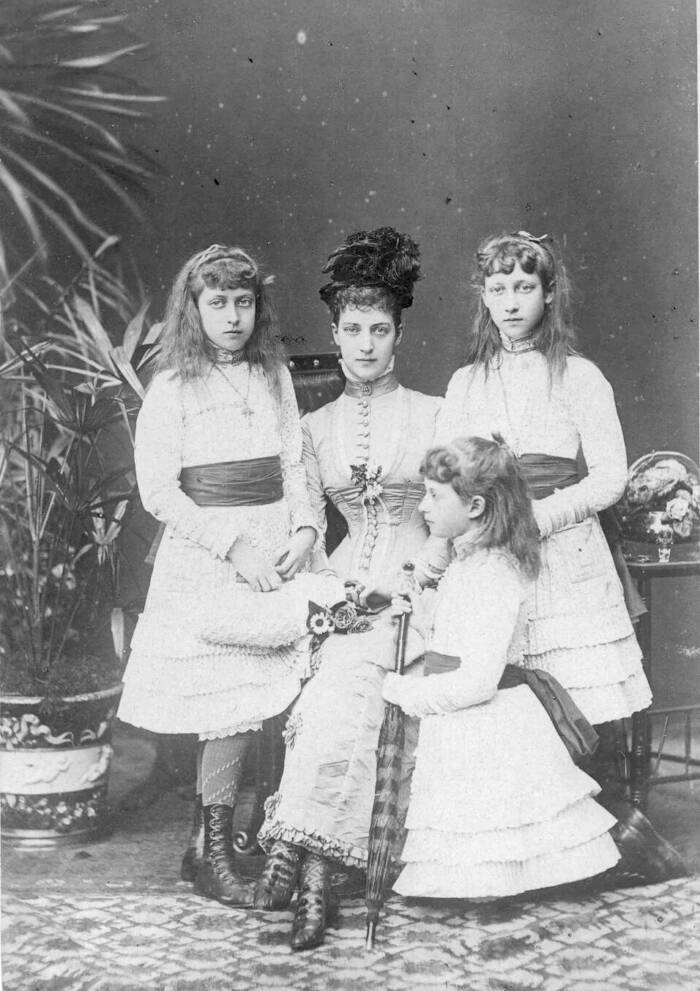
National Portrait GalleryAlexandra gave birth to three sons and three daughters between 1864 and 1871.
Albert Victor would have been next in line to the throne after his father, but he died during an influenza pandemic in 1892 at age 28, and his younger brother — the future King George V — became the heir instead.
Alexandra Of Denmark Becomes The Queen Of England
Less than 10 years after losing Albert Victor, the royal family suffered another great loss: the death of Queen Victoria. Alexandra of Denmark’s husband took the throne as King Edward VII, and Alexandra became the new queen of England.
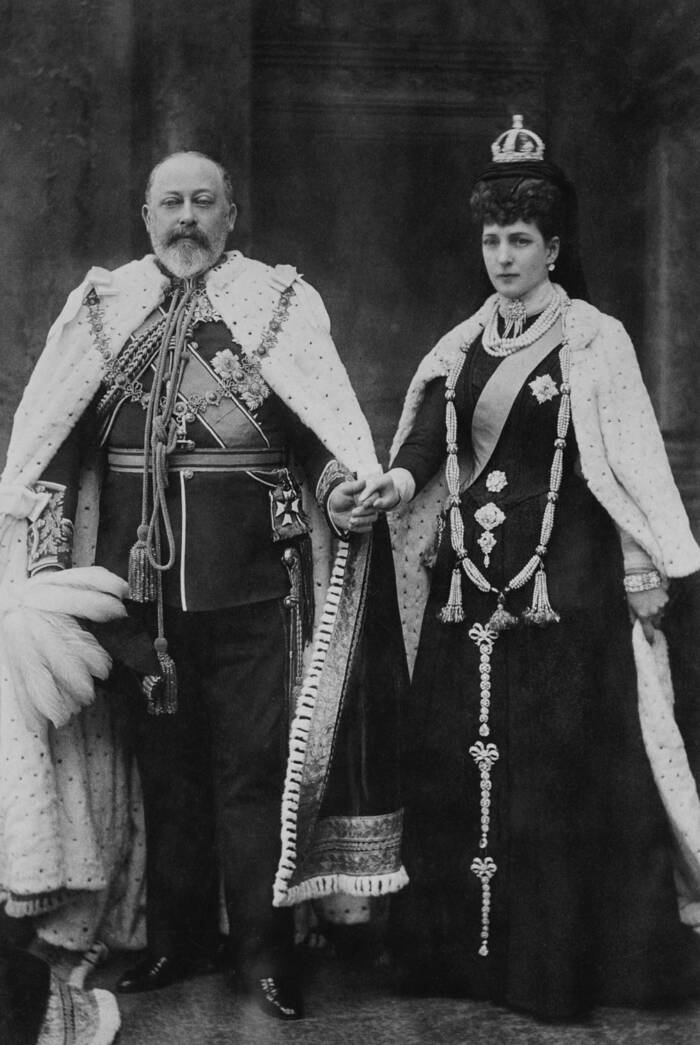
National Portrait GalleryIn 1901, Alexandra became the queen of the United Kingdom when her husband took the throne as King Edward VII.
Edward soon set some rules for his wife to prevent her from meddling in diplomatic affairs. Alexandra didn’t trust Germans — not even Edward’s nephew, Emperor Wilhelm II. Edward forbade Alexandra from reading his political briefings, worried that she would say something that influenced foreign diplomacy efforts.
Still, Alexandra played a prominent role in social matters. Even before Queen Victoria’s death, she would often attend events in the monarch’s place. According to Duff’s biography, Victoria once wrote that Alexandra “opens bazaars, attends concerts, visits hospitals… [S]he not only never complains, but endeavors to prove that she has enjoyed what to another would be a tiresome duty.”
Alexandra also funded numerous charities, waving away any concerns from her financial advisors about the liberties she took with money. She founded the Royal Army Nursing Corps and raised funds to refit a hospital ship to carry wounded soldiers back from the Boer War.
Alexandra of Denmark thrived in her role as queen — but it didn’t last long. King Edward VII died in 1910, and George V took the throne. Alexandra largely retreated from the public eye until her death from a heart attack in 1925 at age 80.
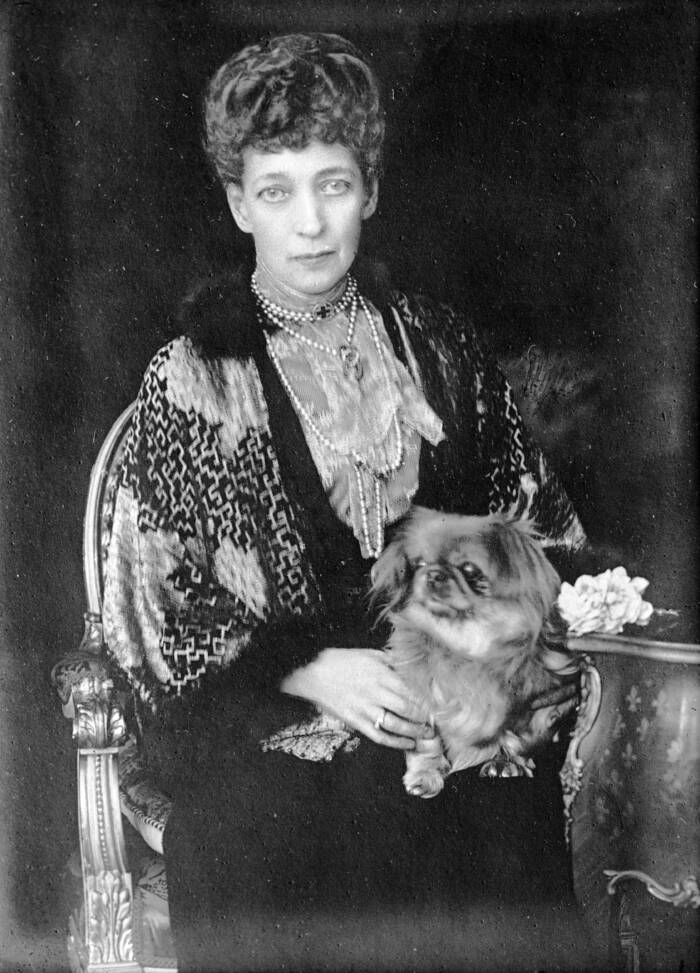
Library of CongressIn her final years as Queen Mother, Alexandra retreated from the public eye as her health declined.
Still, she lived long enough to see her family produce some of the most powerful monarchs of the time. Her father became King Christian IX of Denmark in 1863, and her brother inherited the title in 1906. Her sister, Dagmar, became the empress of Russia in 1883 through her marriage to Alexander III. Alexandra also saw her nephew become Czar Nicholas II — and die at the hands of Bolsheviks during the Russian Revolution.
For a minor royal who sewed her own clothing as a child, Alexandra of Denmark’s life turned out to be far more than she could have ever expected.
After reading about Alexandra of Denmark, learn more about Queen Victoria’s children. Then, go inside the life and death of Alexandra’s great-niece Anastasia Romanov.
The post How Alexandra Of Denmark Went From A Minor Princess To The Queen Of England appeared first on All That’s Interesting.


