


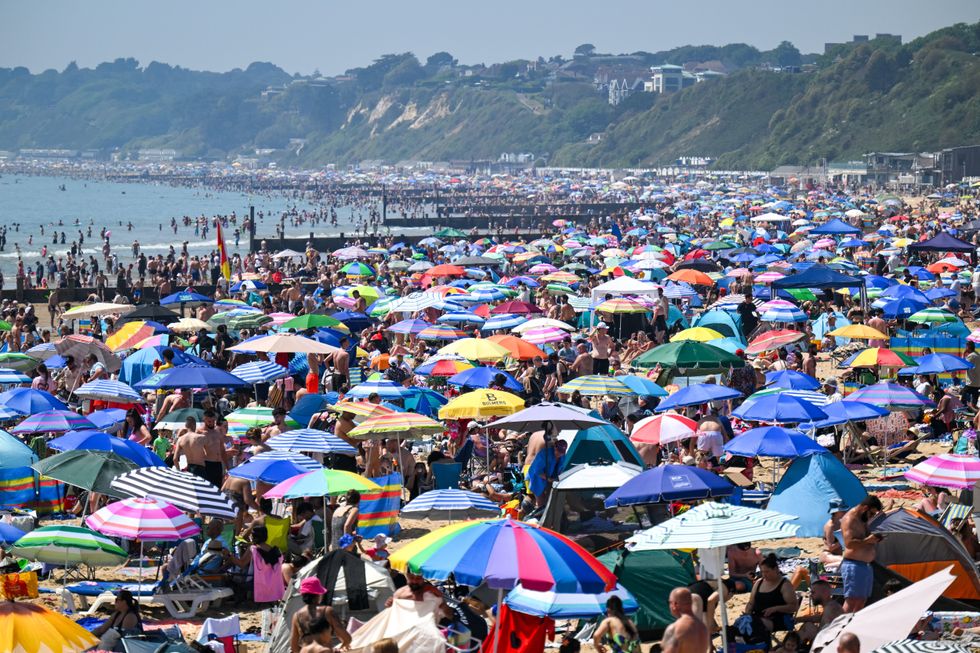
The summer of 2026 has been provisionally declared the UK’s warmest on record, with a mean average temperature across June, July and August of 16.5C.
The groundbreaking and consistent temperatures beat the previous seasonal high of 16.1C set last year, the Met Office said.
The four months from May to August saw five distinct heatwave periods blast Britain with consistent bursts of heat in the high 20s and low 30s, with millions placed under drought conditions.
Intense heat saw comparisons drawn to the renowned summer of 1976 – an iconic year of extreme heat and severe drought.
Since records began in 1884, the top six warmest summers have all occurred this century, including three this decade – 2026 in first place, followed by 2025, 2018, 2006, 2003 and 2022.
The Met Office said a summer the likes of the one we’ve just witnessed will become 130 times more likely due to climate change and is now a “one in nine year event”.
The lack of rainfall this summer season led to devastating wildfires, water restrictions for millions and many areas being declared in drought.
The June heatwave prompted a rare red alert from the Met Office for extreme heat and saw temperatures peak at 38.0C on June 26 in Lingwood in Norfolk – a new record for the month.

An estimated 2,877 deaths in England were associated with the heatwaves in May and June, according to the UK Health Security Agency.
As the scorching summer continued, England saw its driest July since data began, with only 7mm of rain measured, or 10 per cent of the long-term average.
The most recent heatwave in mid-August saw temperatures climb as high as 38.1C in Kew Gardens on August 13, making it the hottest day of the year.
It meant 2026 became the first year to see three separate days where temperatures exceeded 37C.
LATEST DEVELOPMENTS
- Met Office unveils storm names for 2026/27 as Shaun the Sheep tribute announced
- Record 636 people arrested at Notting Hill Carnival as Met Police releases revised figures
- Locals fight back after travellers bulldoze wildlife haven in bank holiday ‘land grab’
Met Office head of climate attribution, Dr Mark McCarthy, said: “The summer of 2026 has been remarkable and is an example of the extremes we can expect to see more frequently as a consequence of human induced climate change.
“In a climate unaffected by human emissions of greenhouse gases, a summer like this would be exceptionally unlikely – one in over 1,000 years.”
Fire and rescue services in England and Wales had responded to 1,132 wildfires so far this year as of August 16, surpassing the 1,017 total for the whole of 2025, according to the National Fire Chiefs Council.
Elsewhere, the Met Office weather station at Wisley in Surrey recorded 62 consecutive days with no rain, while those at Heathrow Airport in London and Odiham in Hampshire clocked up dry spells that lasted 56 days.
Responding to the provisional figures, Katie White, Minister for Climate Transition, said: “Our hottest summer ever is a brutal reminder that we’re not waiting for climate change to arrive in Britain, we’re living in the middle of it.
“With kids too hot to sleep, families worrying about older relatives, farmers watching fields dry out, and firefighters and our Armed Forces battling wildfires, we’ve all woken up to a reality none of us wants for the people and places we love.
“That makes us more determined to act, with some of the biggest and boldest action in a generation to electrify our economy and tackle climate change with clean energy made in Britain.
“We’re seizing the opportunity to upgrade Britain, backing our best scientists, entrepreneurs and technologies to make us happier, healthier and wealthier.”
Most of England and all of Wales remain officially in drought, the exceptions being the North East, North West and Yorkshire.
Reservoir storage in England currently stands at 60 per cent, 18 percentage points below the average for this time of year, with nine reservoirs classed by the Environment Agency as having exceptionally low levels.
No droughts have been declared in Scotland or Northern Ireland, though two areas in south-west Scotland have “significant scarcity” of water, according to the Scottish Environment Protection Agency.
The National Drought Group continues to meet weekly to coordinate action and monitor risks across the country.
Our Standards:
The GB News Editorial Charter


