


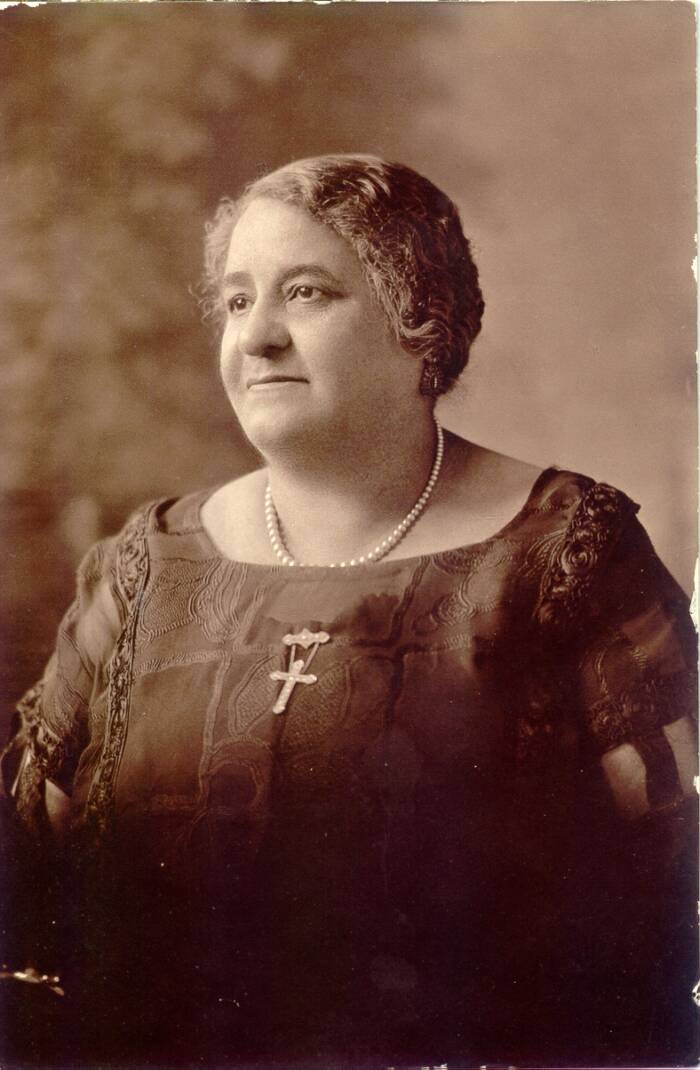
National Park ServiceMaggie Lena Walker devoted herself to improving the lives of Black Americans.
Born enslaved during the Civil War, Maggie Lena Walker grew up in Richmond, Virginia, the capital of the Confederacy. But during her life, she made incredible strides as a businesswoman and, in 1903, became the first woman to ever charter a bank in the United States.
But that wasn’t all Walker did.
The leader of a Black benefit society, Walker’s bank was just one part of her plan to advocate for her community. She also opened up a newspaper and a department store, with the goal of helping Black residents of Richmond to become economically independent. Maggie Lena Walker also fought against segregation and discrimination by organizing boycotts, co-founding the Richmond chapter of the NAACP, and by running for public office.
This is the inspirational story of Maggie Lena Walker.
The Early Years of Maggie Lena Walker
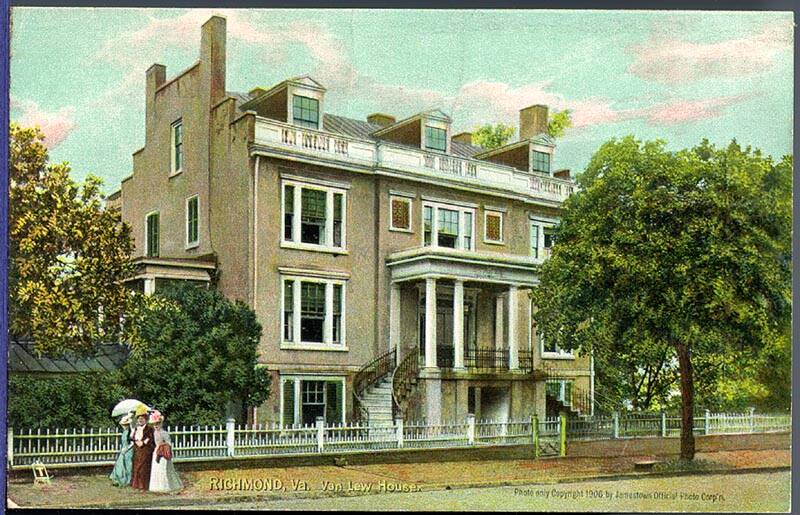
VCU LibrariesThe Van Lew House, where Maggie Lena Walker’s parents were enslaved. Elizabeth Van Lew was a spy for the Union.
“I was not born with a silver spoon in my mouth,” Maggie Lena Walker once remarked according to the Encyclopedia Virginia, “but with a laundry basket practically on my head.” Born on July 15, 1864, during the Civil War, Walker was the daughter of an enslaved woman named Elizabeth Draper and an Irish-American Confederate soldier named Eccles Cuthbert.
Shortly after her birth, Walker’s mother married William Mitchell, a butler at the house where Draper worked. Though the family was able to rent a house of their own after the end of the Civil War, tragedy struck when Mitchell drowned in the James River in February 1867. His death was ruled a suicide, but his family believed that he had been murdered.
Mitchell’s death left Draper a single mother with two children (Walker and her half-brother, Jonnie). She began a laundry business to keep the family afloat, and Walker helped by delivering laundry to white customers.
Despite her work supporting the family, Walker also had time to attend public school. And, when she was 14 years old, she also joined the Independent Order of St. Luke. The benevolent fraternal organization had originally been founded to help care for the sick and bury the dead, but it was also focused on supporting newly freed Black Americans.
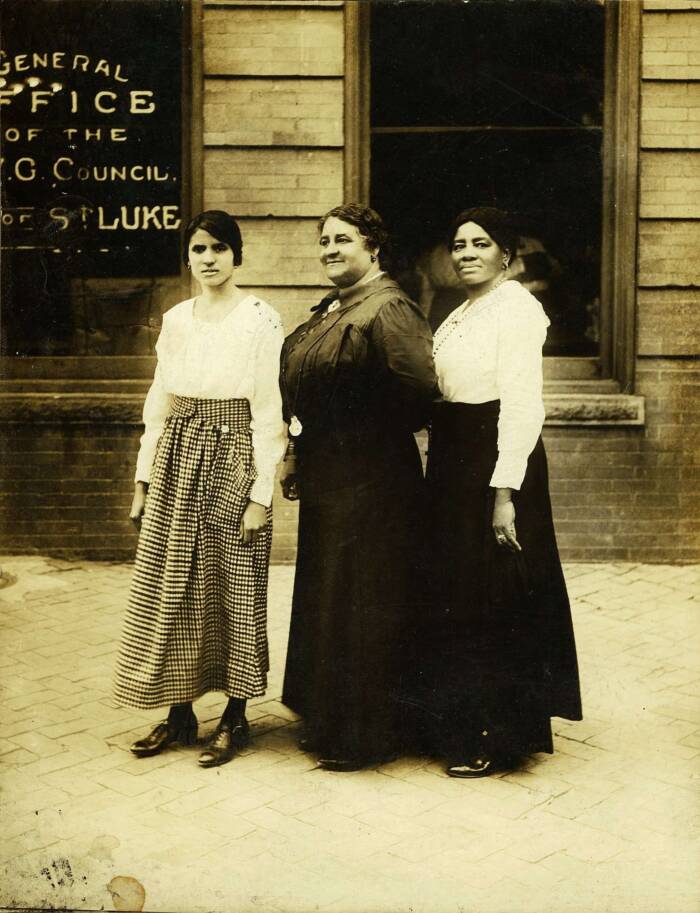
Valentine Richmond History CenterAfter organizing a juvenile branch of the Order of Saint Luke, Maggie Lena Walker rose to lead the organization.
In 1883, Walker graduated from Richmond Colored Normal School, a public school founded to educate Black Virginians after the war. For the next three years, Walker worked as a teacher. But when Walker married in 1886, she had to resign – only single women were allowed to teach.
That said, Walker continued her involved with the Independent Order of St. Luke’s. And in 1899, the order elected Maggie Lena Walker to its top position.
The First Woman To Charter A Bank In The United States
By the time Maggie Lena Walker was elected as Grand Secretary of the Independent Order of St. Luke’s, the organization was in trouble. Membership had plummeted, and it was nearly bankrupt. So Walker came up with a three-pronged plan: in 1901, she announced her intention to open a department store run by Black employees for Black customers, a newspaper to spread word about St. Luke’s, and a bank for Black investors.
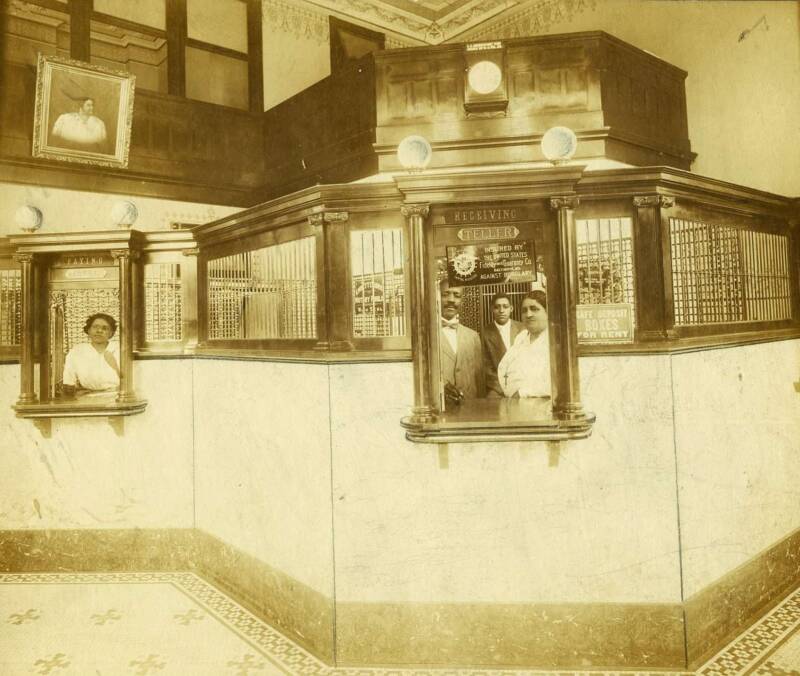
Valentine Richmond History CenterMaggie Lena Walker standing behind the till. A portrait of her also hangs on the wall.
In doing so, Walker became the first woman — of any race — to charter a bank in the United States. The Saint Luke Penny Savings Bank opened for business in 1903, and Walker saw it as a way to empower Black Americans.
“Let us put our money together,” she said, “let us use our money; Let us put our money out at usury among ourselves, and reap the benefit ourselves.”
Indeed, the Saint Luke Penny Savings Bank gave Black residents of Richmond financial independence and helped them to become more financially literate. It was more than a place for Black people to save money — it also offered mortgages and personal loans, helping Richmond’s Black middle class expand in the early 20th century. Walker encouraged children to invest from a young age, in order to build their savings and become independent from white employers, and the bank helped increase Black home ownership
“Let us have a bank,” Maggie Lena Walker declared, “that will take the nickels and turn them into dollars.”
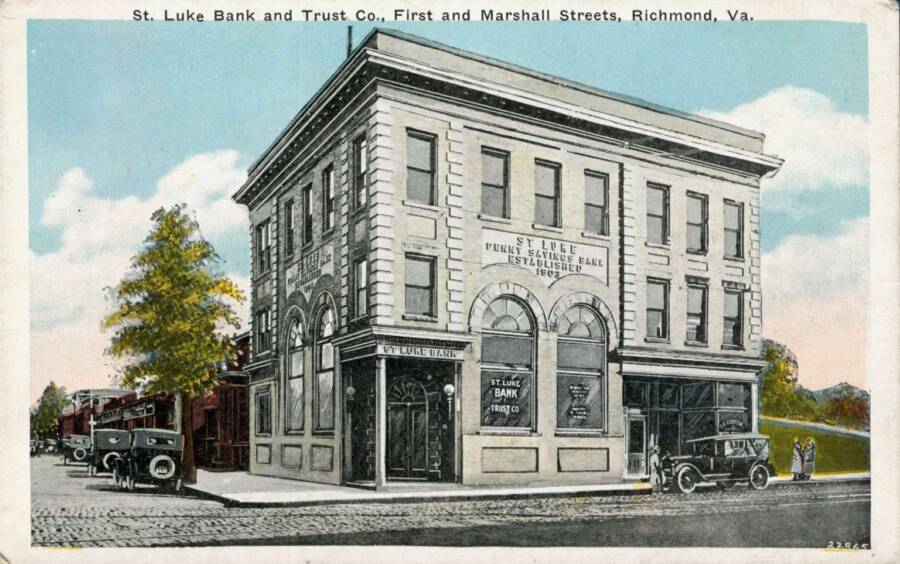
Virginia Historical SocietyThe St. Luke Penny Savings Bank operated at First and Marshall streets in Richmond, Virginia.
The bank was incredibly successful under Walker’s leadership. By 1924, more than 50,000 members had bank accounts, and the bank’s accounts totaled $500,000 in the mid-1920s. Even the Great Depression couldn’t derail Walker’s bank — though countless banks failed in droves across the country, Walker was able to save her bank by merging it with two others.
In fact, it still exists to this day.
The Proud Legacy Of Maggie Lena Walker
Maggie Lena Walker did not just open a bank, run a newspaper, start a department store, and lead the Independent Order of St. Luke’s. She also served as an inspirational leader for Black Americans.
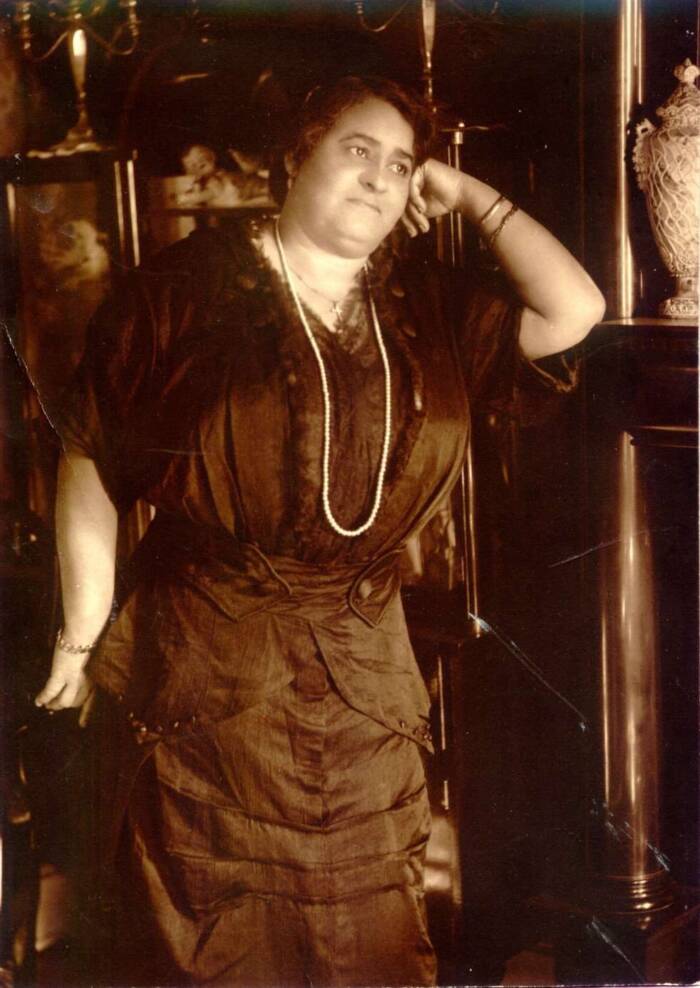
National Park ServiceThrough her entrepreneurship and activism, Maggie Lena Walker showed the power of collective action.
According to Smithsonian Magazine, Walker could be a demanding boss. But she also fostered her employees’ financial independence by encouraging them to set aside five percent of their wages in savings accounts.
What’s more, Walker was also a civil rights leader. She co-founded the Richmond chapter of the NAACP, held leadership positions in civic organizations like the National Association of Colored Women, helped organize a boycott against segregated seating on streetcars in 1904, and supported the anti-lynching movement.
Walker did all this — and more — despite dealing with multiple tragedies. In 1893, her infant son Armstead died. In 1915, her son Russell mistook Walker’s husband for a burglar, and accidentally killed him. Walker also struggled with diabetes, and relied on a wheelchair to get around at the end of her life.
Yet Maggie Lena Walker remained active, and served as the leader of St. Luke’s until her death. Walker passed away on Dec. 15, 1934, at the age of 70. She left behind a powerful legacy of activism and community involvement.
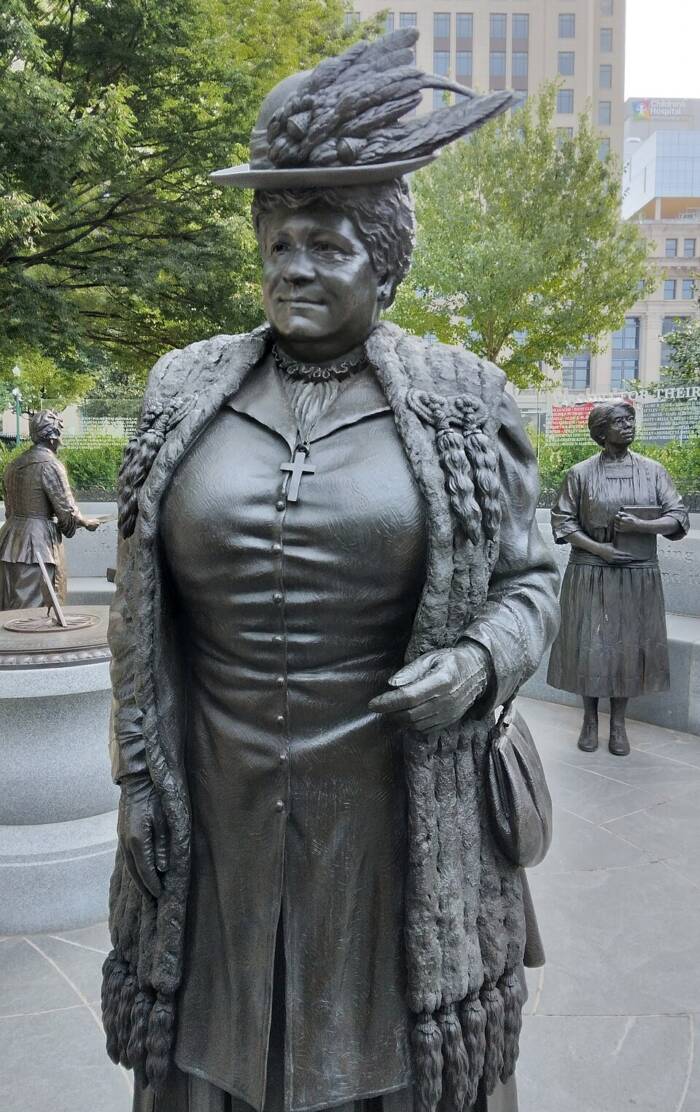
WomenArtistUpdates/Wikimedia CommonsAt statue of Maggie Lena Walker at the Virginia Women’s Monument.
“There are few of us who can give much,” she once remarked, “but there are thousands upon thousands who can give little, and the combining of the mites will produce the much, so necessary to success.”
After learning about Maggie Lena Walker, the first woman in the United States to charter a bank, learn about how Annie Malone became one of the first Black women millionaires. Then, read about Black inventor Sarah Goode.
The post The Incredible Story Of Maggie Lena Walker, The Daughter Of Slaves Who Became The First American Woman To Charter A Bank appeared first on All That’s Interesting.

