


Slava Denisov was born in Russia, but always loved classic American cars and the mythology that surrounded them. He loves them so much so that he’s made a very American car — a 1976 Plymouth Volare — the star of his short film “The Ride,” and blessed it one of the best voices in Hollywood, that of Sons of Anarchy star Ron Perlman.
The film plays this week at the Sedona International Film Festival, where your likely to see well-heeled retirees cruising beneath towering red rocks in classic cars. And Sedona’s a beautiful one-hour drive from Flagstaff and Historic Route 66. All of which makes it an ideal place to see “The Ride.”
The film — which screens Friday and Saturday, paired with the feature film Memo — follows the Plymouth through years and decades. It stars out as a teenage girl’s first car, a sweet gift from her parents, but then descends Boogie Nights-style into calamity. The car never gets to drive itself, and has to just hang on and watch as its drivers crash through drugs, desperation and violence. Even as he feels himself nearing death, the car waxes poetic in Perlman’s smooth, unrushable baritone.
The film is enjoying a strong festival run, dazzling audiences with its unconventional narrative and occasional — occasional! — use of AI. We talked with Slava Denislov about embracing the past, being present, and what he thinks is the future of filmmaking.
Slava Denislov on Making ‘The Ride,’ Hybrid AI, and Casting Ron Perlman
MovieMaker: Where did the idea for “The Ride” originate?
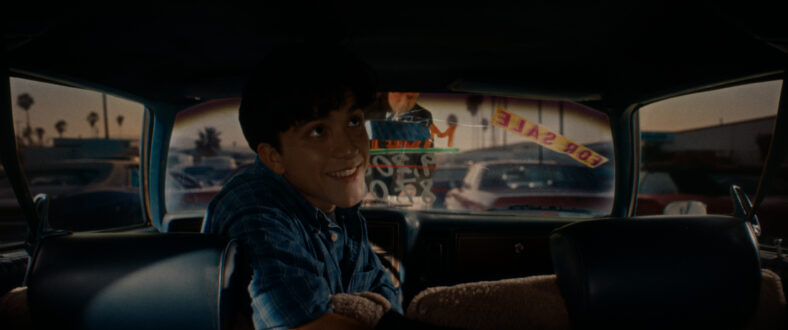
Slava Denisov: Like many unconventional projects, “The Ride” was born out of necessity. I wanted to make something original on a limited budget, and that forced me to think deeply about the medium itself. As an editor, I’ve always been fascinated by the power of the jump cut. With a single cut, you can leap seconds or decades in time. It all depends on framing. I realized that if we confined ourselves to one environment, and treated it as a storytelling engine, we could convey the passage of time through performance, costume, and production design alone.
Emotionally, I’ve always been intrigued by the relationship between people and objects, especially cars. We treat them like companions. They witness our lives, our freedom, our mistakes, our growth.
The spark came from a real story involving our cinematographer, Andrey Valentsov. He owned a beautiful yellow Mustang convertible that became almost communal among his friends. It went to Burning Man multiple times and carried countless stories. When he left the country for what was supposed to be a few months, he ended up gone for years. The friend who was watching the car let the registration lapse, got into an accident, and eventually abandoned it somewhere. The car disappeared.
One night we found ourselves imagining what that car must have seen, sitting alone on the side of the road, and what might have happened to it afterward. That conversation became the seed of the film.
MovieMaker: How did you recruit the awesome Ron Perlman as the voice of the car?
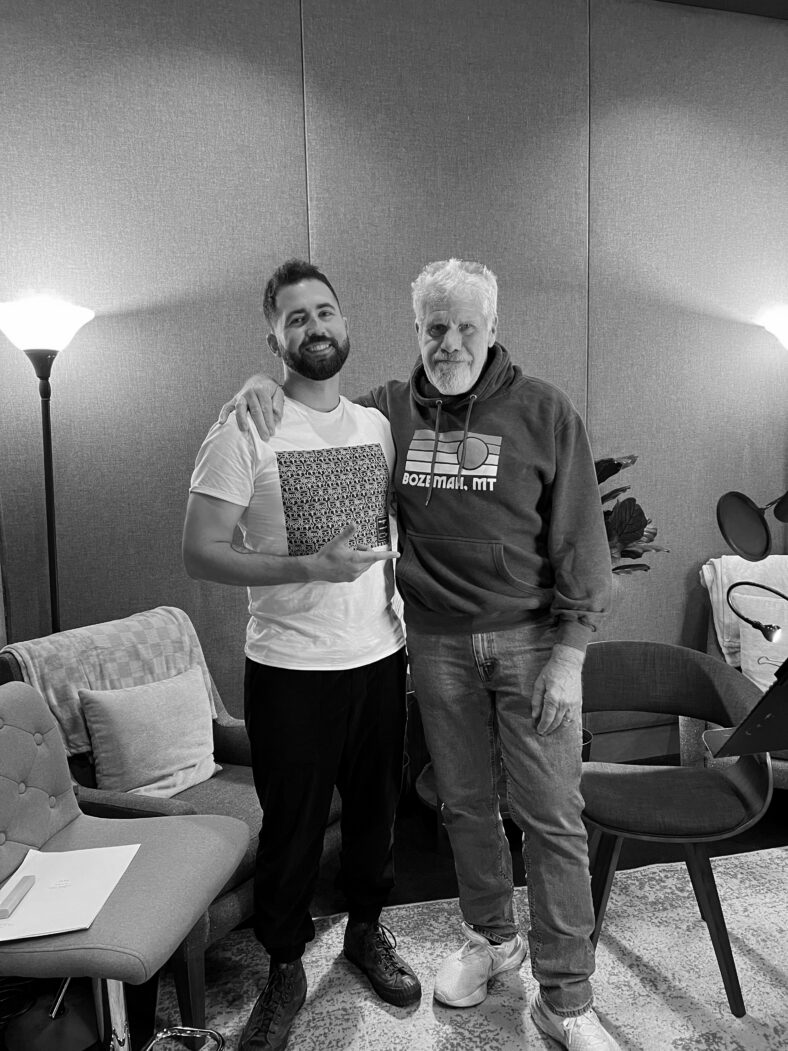
Slava Denisov: It was a mix of persistence and luck. We had already shot and edited the film and just needed the voiceover. I sent a cold email to Ron’s agent with a screener. They watched it, shared it with Ron, and he responded to it. He liked the concept enough to come on board.
We met in a recording studio in Los Angeles, and he was incredible to work with! I don’t think we would have broken through with just a script. Having a finished film to show made all the difference. It’s a reminder that sometimes the best way to convince someone is simply to make the thing and let it speak for itself.
MovieMaker: You take this car through several decades convincingly. How did you achieve that, in terms of cinematography and color especially?
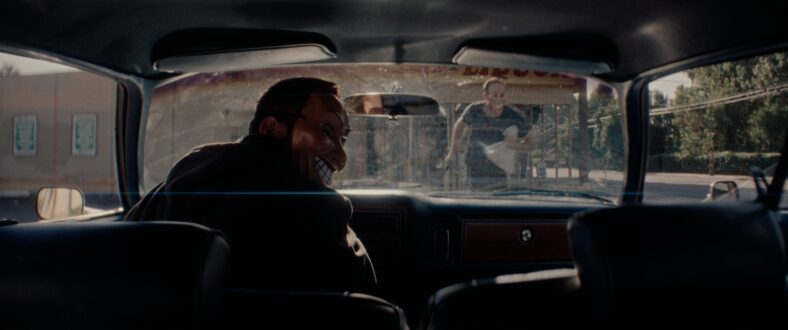
Slava Denisov: Period films are notoriously expensive because of the production design demands. But since our camera never leaves the interior of the car, we only had to control a very small environment. That constraint became our advantage.
The car itself already feels like a time machine. Costumes, props, and subtle production design changes inside the vehicle did most of the heavy lifting. What really unified the look was a vintage Soviet anamorphic lens from the 1970s that Andrey found. It gave us an organic texture and optical imperfections that immediately grounded the film in a specific era. Combined with careful color grading, it created a believable sense of time passing without ever leaving the back seat.
MovieMaker: Did you use any AI?
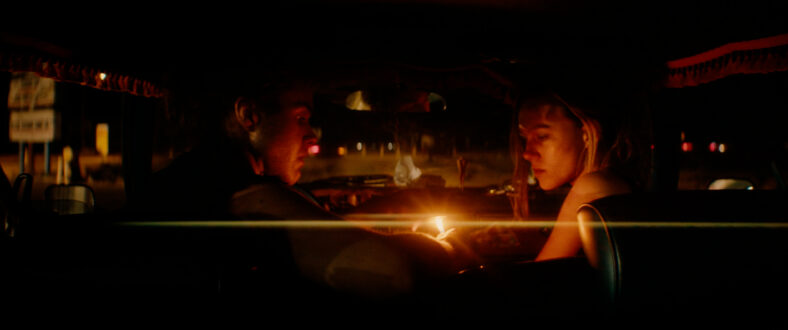
Slava Denisov: We made a deliberate effort to shoot as much as possible practically. However, some locations were simply out of reach. The drive-in theater scene, for example, would have been prohibitively expensive.
So we shot certain scenes on green screen and then used AI tools to generate backgrounds to replace those environments. It was a targeted, practical use of AI as a VFX tool rather than a creative shortcut. I see the future of filmmaking in that hybrid approach. Live action performances combined with intelligent digital tools can allow independent filmmakers to achieve things that were once financially impossible.
I’m currently experimenting with a “director’s cut” version of the film, where I’m using AI to refine and polish some of the original VFX work.
MovieMaker: Can you talk about how you became a filmmaker?
Slava Denisov: I started making amateur short films with friends in Russia around 2008. At first it was just fun. We were telling silly stories and editing them together. But very quickly I started taking it seriously. I applied to the St. Petersburg University of Film & Television to study directing.
A few years later, I got incredible lucky and won a green card in the lottery. It felt like a once-in-a-lifetime opportunity. I grew up on American cinema, and I always felt connected to that sense of Americana. So I took a chance and moved across the ocean to Los Angeles without knowing a single soul here.
I worked any job I could find on set: PA, grip, AC, DIT, while driving Uber and working construction to survive. But I always felt that I was good at editing and over time, it became my professional focus. I worked on indie and studio projects, which was an incredible education. But eventually I realized I was drifting away from my dream of directing my own stuff. So I invested all my savings into “The Ride.” That project brought me back to why I started in the first place. Now we’re developing it into a feature, which has always been the goal.
MovieMaker: Moving to the U.S. from Russia, how was it focusing on something as American as the car?
Slava Denisov: I’ve always loved classic American cars and the cultural mythology around them. The 1970s American aesthetic shaped so many of the films and music albums I grew up with. I knew from the beginning the car had to be from that era.
I couldn’t have done what we needed with a rented vintage car, so buying it was the only option. And I found that 1976 Plymouth Volare on Facebook Marketplace for very cheap. I was planning to sell it after the shoot to recoup some of the costs, but I felt we went through so much together that I owed it some love. I’m now restoring it in my spare time.
In many ways, America is a nation defined by the automobile. Nearly everyone has a first-car story. After screenings, people often approach me and say, “I never thought I’d cry over a car,” or they start sharing memories about their own first ride. That reaction tells me we touched something universal. The film may be about a specific car, but emotionally it’s about all of us.
You can read more of our Sedona International Film Festival coverage here.
Main image: Isabel Powell and Tori Zaitonia in “The Ride,” directed by Slava Denisov. Courtesy of the film.


