


When filmmaker Andrew Davies Gans set out to tell the story of his father, the late Danny Gans, he thought he could pay tribute to one of the all-time greatest Las Vegas entertainers: a singer, comedian and impersonator who enthralled audiences with spot-on imitations of Frank Sinatra, Sammy Davis Jr., Michael Jackson, and hundreds more that made people laugh one moment and cry the next.
It would be understandable if the first-time director’s film Voices: The Danny Gans Story, were simply a love letter to his dad. But it’s much more, thanks not only to the many displays of Danny Gans’ boundless talents, but also because of Andrew Davies Gans’ captivating direction as he ends up unraveling mysteries of his father’s life and death. The documentary plays this weekend at the Poppy Jasper International Film Festival.
When Danny Gans died suddenly in 2009 at just 52, he left countless fans behind — but also his wife, Julie, and their three young children. Like his famous dad and also his grandfather, Andrew Davies Gans wanted to play major league baseball, but an injury led him into the world of entertainment instead. He eventually made his way to producing, and ultimately to making Voices.
“I thought I was making a film about a legend who just happened to be my dad,” he tells MovieMaker. “What I ended up making was a film about a man I didn’t fully understand and, in a lot of ways, a film about myself.”
We asked Andrew Davies Gans about storytelling, baseball, and total commitment.
Andrew Davies Gans on Directing Voices: The Danny Gans Story
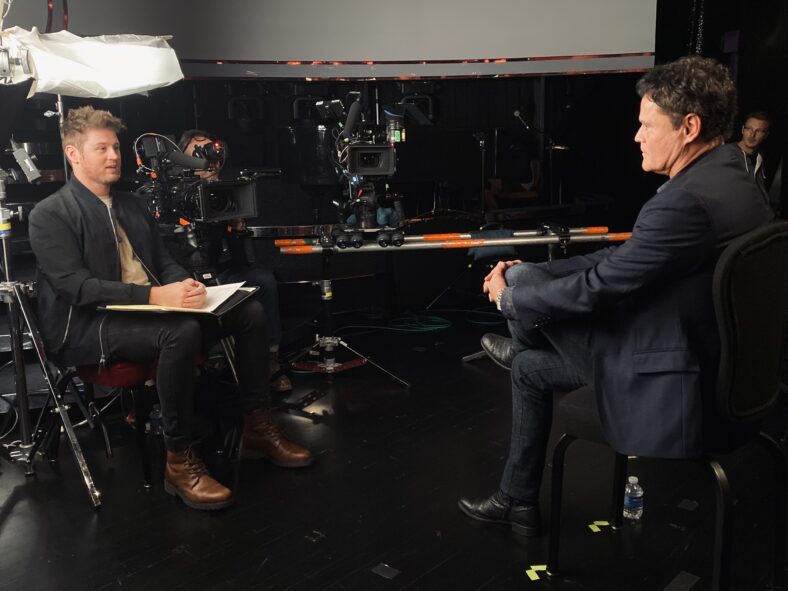
MovieMaker: This film seems to have turned out very differently than you expected. How did you first imagine it, and how did that change as you learned more about your dad?
Andrew Davies Gans: When you grow up around someone like my dad, the mythology comes first. The sold-out shows, the standing ovations, the way people talk about him like he was something more than human. You inherit that version of him before you ever get to know the man underneath.
I started the film wanting to honor that. But the deeper I went, the more I found the cost of it — the pressure, the physical toll, the loneliness that comes from being the thing everyone needs you to be.
And it forced me to confront my own version of that. I came up chasing baseball the same way he did. That same need to prove something. That same identity tied to performance. And when that path ended for me, I realized I didn’t just lose a dream, I lost the version of myself I thought I was supposed to become.
So the film shifted. It stopped being about “how did he do it?” and became “what did it take, and what did it leave behind?”
Because that’s where the truth lives. Not in the applause, but in what it costs to earn it.
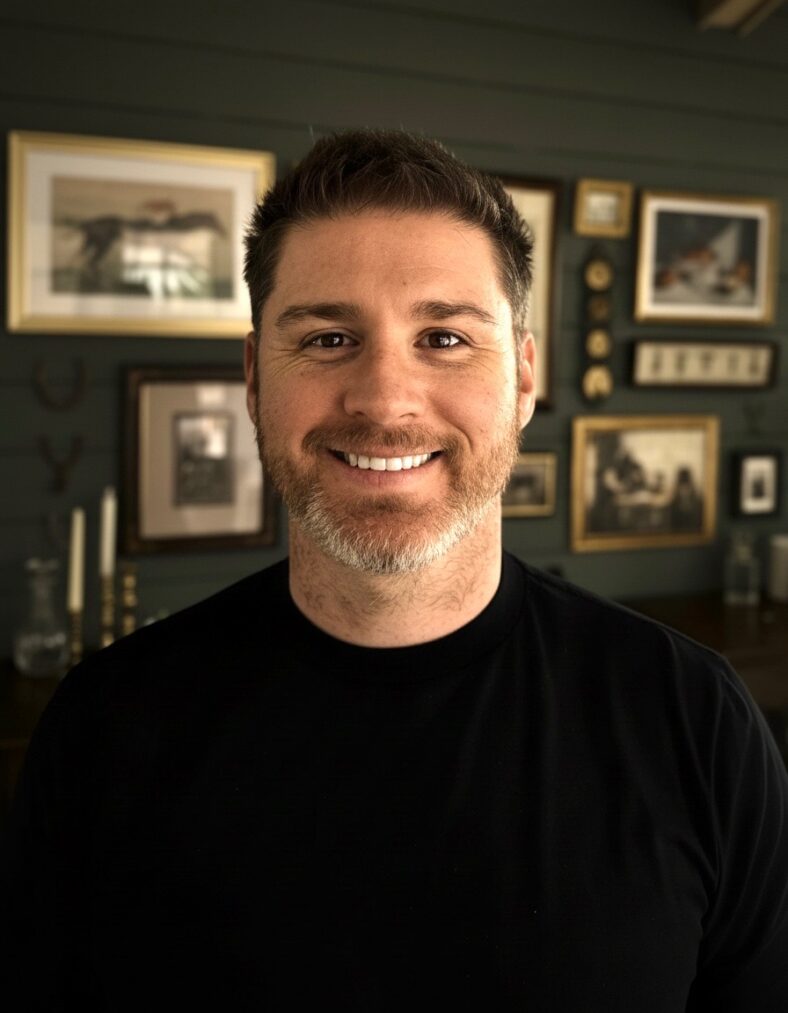
MovieMaker: Watching the doc, I wondered how he acquired his incredible skill as a singer and impersonator. He planned to become a pro baseball player, but then became an entertainer as a backup plan. How did he got good enough to land his first big gig in Palm Springs, which opened the door to all his other success?
Andrew Davies Gans: To a certain degree, he was born with this incredible ability to do voices and mimic people. But people assume talent explains it. It doesn’t.
What he had was obsession and drive. He didn’t just imitate voices. He studied people. The rhythm of how they breathed between lines, the way their jaw moved, the tension in their shoulders. He treated performance almost like a science. And he did the same with the structure of his show.
And I think losing baseball forced that intensity. When that door closed, he didn’t casually pivot, he redirected everything into mastering something else.
There’s a moment in the film where you realize… this wasn’t a backup plan. This became survival. Identity. Proof. I think that kind of drive comes from a deep desire to prove something and to matter.
MovieMaker: I was struck by how both you and your dad wanted to be ballplayers, and went to entertainment after an injury. If you could go back in time, would baseball still be your first choice? Do you think your dad would’ve rather played ball?
Andrew Davies Gans: I don’t think either of us really had a clean choice. Baseball was the dream but storytelling is where we both ended up telling the truth. I was the third generation of Gans men drafted to play professional baseball. My grandfather played until injury took it from him, and he became a singer and comedian. My dad followed the same path — drafted, injured, then entertainment. And then it happened again with me.
At a certain point, you stop seeing it as coincidence.
But I’d be lying if I said I don’t think about it sometimes. There’s something that gnaws at you, the not knowing. Was I good enough? Could I have made it? That question doesn’t really go away when the game is taken from you instead of you walking away from it.
I think my dad carried that too. But I also think the injury didn’t just take baseball from us, it revealed something else. Because both paths demand the same thing: performance under pressure, the fear of failure in front of people, the need to prove something you can’t quite name.
If I could go back… I don’t think I’d change it. Even with the doubt. Because I don’t think I would’ve found the same level of meaning anywhere else.
MovieMaker: This is your directorial debut, but you produced more than a dozen films before making this one. Why did you start with producing, and what did you learn from that experience that helped you as a director?
Andrew Davies Gans: I actually first started in acting. And if I’m being honest, that came out of a pretty disorienting time in my life.
I lost my dad and my baseball career in the same month. So the two things that defined me, who I looked up to, and who I thought I was going to be, were taken from me at the same time. Acting became an outlet. It gave me somewhere to put all of that. A way to process without having to explain it.
But it wasn’t until I took a screenwriting course that something really shifted. It opened up this entirely different way of thinking, where you’re not part of the story, you’re shaping it. You’re deciding what something means. Why it’s important. The idea of telling stories that way was very exciting and fascinating to me.
That’s what pulled me into producing. At first it was just curiosity, I wanted to understand how films actually get made. And once I was in it, I wanted to learn everything. Structure, performance, editing, financing… how all the pieces fit together.
Producing gave me the full picture. But it also clarified something for me: I didn’t just want to help make films, I wanted to be the one making the decisions that define them. I wanted to tell my stories.
By the time I started this film, I felt ready to take that step. And doing this first felt right.
And through the process, it became very clear that writing and directing is where I feel most aligned. It’s where everything comes together.
It’s not just what I do, it’s where I feel the most honest and fulfilled. The only other time I’ve felt that way was on the baseball field.
MovieMaker: Did you learn anything from watching your dad’s act that helped you as a storyteller?
Andrew Davies Gans: The biggest thing I learned from watching my dad was commitment.
He didn’t half-perform. Ever. It was all or nothing, every night. And I think audiences can feel that. they know when something is held back. I think that was one of his greatest strengths, but also became one of his biggest weaknesses.
What I’ve tried to carry into my storytelling is that same standard of commitment and honesty while maintaining balance in my life.
What’s interesting is that, as an athlete, you get immediate feedback, you either get the hit or you don’t. There’s nowhere to hide. Filmmaking doesn’t work like that. The feedback is delayed. Sometimes by years. So you have to develop your own internal standard for what’s true and what isn’t.
For me, that means I’m always asking: is this moment earned, or is it just working? Because something can “work” and still not be true.
What made my dad’s act so powerful was that it felt real — 100% authentic and sincere. And it was. I think that’s the line I’m always walking as a filmmaker. You’re constructing something, but it has to feel like it couldn’t have happened any other way. Like it’s happening for the first time and will never be done the same again.
That’s what I’m chasing in the work, moments that feel inevitable, not manufactured. And that requires the same level of discipline I had as an athlete. Repetition, standards, refusing to cheat a moment even when no one’s watching yet. Because eventually, they will be.
Voices: The Danny Gans Story plays Saturday at the Poppy Jasper Film Festival. You can read more of our coverage of Poppy Jasper here.
Main image: Danny Gans in Voices: The Danny Gans Story. Glanzrock Productions


