


Public Access, a new documentary from director David Shadrack Smith that premieres tonight at the Sundance Film Festival, is a hypnotic look back at people who, decades ago, managed to bypass all the gatekeepers trying to keep them off TV.
It’s also a strikingly relevant look at the making of our modern world.
As a “born and bred New Yorker,” Smith grew up with the bold, raucous, unpredictable, sometimes beautiful and sometimes ugly material that pervaded New York City’s Manhattan Cable Television, which began allowing pretty much anyone who turned in a tape to start showing their work in the early 1970s. Their programming ranged from talk shows to spontaneous interviews with average New Yorkers to hangouts to naked people dancing, and more.
“What happened here was particularly boundary pushing at a time when New York was a vital forefront of music, art, sexual politics and free-for-all experimenters,” Smith told MovieMaker. “A show like TV Party would have Basquiat in the control room and Blondie answering calls. Warhol’s crowd saw it as another space to play in.
“The vibrant LGBTQ community seized on it as a place to be seen and heard,” Smith adds. “Times Square filtered into your living room. Public access truly reflected the id of the city. So many of the characters we meet are truly ‘only in New York’ kinds of people, Brooklyn accents and all.”
Smith, who started out in broadcast journalism, made the film by culling through endless hours of forgotten shows, some of which haven’t been seen for decades. He and his executive producers — including Benny Safdie, Wren Arthur and Steve Buscemi — would sometimes go down rabbit holes based on something they vaguely remembered seeing in their youth.
The resulting film is a one-of-a-kind portrait of New York City at its most vibrant, alive, and uncontrollable, with fascinating dives into subjects as far ranging as the AIDS epidemic and the rise of teenage public access phenom-turned-MTV performer Jake Fogelnest.
But it also presents a world that will seem awfully familiar to anyone who’s spent any time online.
We talked with Smith about growing up in NYC, controlling who sees what, and how public access TV just may have saved lives.
David Shadrack Smith on His Sundance Doc Public Access
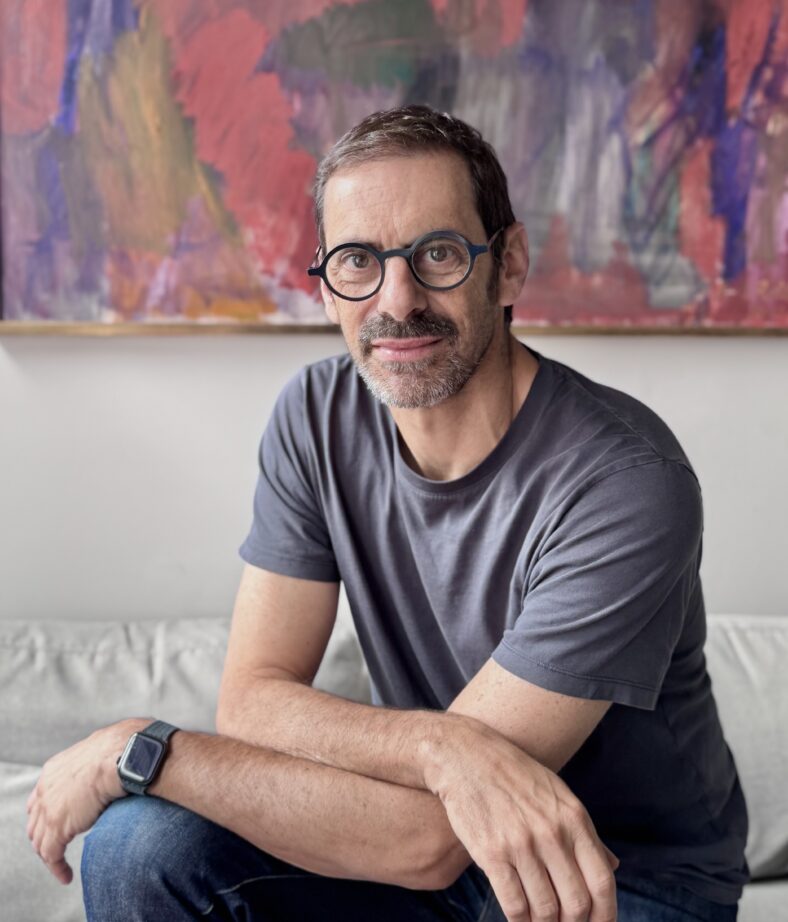
MovieMaker: There are so many parallels between early public access TV and the internet — including the freedom that came from no gatekeeping, and the sudden rise of adult content, and questions about if and how to regulate it. Were you struck by how much history repeats itself?
David Shadrack Smith: When we started the project or started thinking about it, I definitely saw those parallels as front and center. Growing up pre-internet but experiencing Public Access I immediately thought: Wow, this was like the internet before the internet. It was really the first time people could make their own content and broadcast it. The confluence of technology and an ethos of democratizing media made it possible.
Fast forward to now, when the film is coming out, and those parallels have become more urgent than we even imagined. How do we protect these spaces of self-expression from forces that want to co-opt, control or silence them? How do we ensure access to diverse voices? Who gets to decide what is okay and what is not?
The whole world is public access now. And many of the same challenges exist around harmful material and its ability to reach people, now on a global scale. But I also started to see the differences between then and today.
Today, algorithms control who sees what. Technology controls and monetizes the content and is making decisions about what is okay or not. The courts increasingly are okay with limiting free speech. These are not truly “public” services mandated to be inclusive on an equal basis.
The film doesn’t try to answer the question directly. But in the words of one of the early idealists who helped start New York’s public access channels: It makes you humble to realize you can’t decide what’s good or bad for the world. I hope our film spreads some of that humility around and reminds people that these spaces of self-expression are fragile.
MovieMaker: This film is built around some rare and truly jaw-dropping archival footage. How did you access it, and decide what to ultimately use?
David Shadrack Smith: The archive is the star of the film. We felt like archeologists uncovering a lost world so foundational to our own. But the process of finding and choosing our stories was as hard as it was exciting. Some footage was kept and maintained by the creators. Some lived in archives but maybe had never been unboxed and digitized. Some was lost forever, especially in the early days. As we started to dig, we might have a show in mind, something perhaps I remember seeing as a kid or one of our EPs recalled. Everyone we spoke to pointed us to someone else and an amazing new path of inquiry would open up.
And then it was a puzzle: Do we have the footage we need and a person who can speak about it? Was this show a significant milestone in the arc of the public access story we wanted to tell? We ended up with literally hundreds of hours — over 2,000 assets — to work with. Some absolute gems were left out, which is heartbreaking.
We always had to ask, does this story tell us something critical about the medium itself and the journey of this amazing utopian becoming altered by its real world application?
The ultimate final test was: Is this fun to watch? If we found ourselves laughing out loud or especially moved by a story, we knew it had a place. My deepest gratitude remains to all those creators who dared to put themselves out there… and saved their tapes!
MovieMaker: I kept thinking there could be at least five documentaries made from the material in this film — especially the segment about how cable access became one of the rare, real sources of good safe-sex education in the early days of the AIDS epidemic. Do you anticipate more projects growing out of this film?
David Shadrack Smith: My background is in television series, so early on we talked a lot about whether this should be a film or a series. Every story could spin out into its own, with these incredible characters and how they refracted and impacted the world around them.
The story of how public access became a vital outlet for information about AIDS when it was so shut out by the mainstream is one of our most beloved examples of the power of the medium. And there was so much more to say about that. There was so much more to say about every story. But we wanted people to have an immersive experience akin to watching public access in its time, wondering what was that I just saw and then it was on to the next thing.
I think we ultimately saw this as a curated mixtape of discovery for audiences. That said, I remain open to the possibility of it getting expanded and serialized and goodness knows we have the material to do it.
MovieMaker: Watching old Saturday Night Live sketches — you include a clip of “Wayne’s World” — you’re reminded that there were lots of public access stations in the ’80s and ’90s. Was the programming of Manhattan Cable Television, the focus of your film, any wilder or daring than that of other communities? Did NYC’s artistry and tumult lead to especially remarkable cable access shows?
David Shadrack Smith: That’s a great question and an early decision we had to make in order to contain the story. Public access existed and still exists around the country. Los Angeles had some incredible shows back then. Cincinnati embraced the LGBTQ programming, most of which started in New York but was shared by VHS tapes being passed around. … Miami, San Francisco, Austin: Each one had its own outlet that reflected its place and time.
I’ve heard that SNL writers were obsessed with public access and drew source material from it. MTV started here and was influenced by it. Comedy Central. It was in the air and that filtered out from New York to the world.
MovieMaker: I loved what a time capsule of NYC your film is — it felt like we were getting the perspective of regular New Yorkers, and not just the famous people who were on the other channels. Did you learn a lot about the city that went against your expectations?
David Shadrack Smith: I think everyone who grew up or has lived in New York has their version of the city. Many of these stories and the corresponding archive took me to times or corners of the city that were brand new to me. Some were more familiar and, for better or for worse, guided what I wanted to show about New York.
I think from my limited kid perspective at the time, I didn’t appreciate how all these disparate communities could overlap and co-exist, often influencing one another or just existing. I loved seeing those again or for the first time.
New York is a character in the film because it had to be. Its creative spirit but also its desperate and broken self, its yearning and hunger. I caught glimpses of that growing up and it influenced me entirely. I knew some of these people. I was in those spaces. I remember the sights and the smells and the sense of danger and openness.
The film is very personal for me — my love letter to my city — and a lot of the references in it harken back to experiences I had growing up and being inspired to try and live a creative life. That was the spirit that New York had — probably has always had and I hope always will — in spades.
MovieMaker: How did you become a filmmaker? You’ve done a lot of work on cable documentaries, and this was a passion project. What made it so different from your past work, and how did your past work inform it?
David Shadrack Smith: I started my career in broadcast journalism, first overseas in Beijing for many years and then as a producer on staff at National Geographic, which was an incredible adventure, it goes without saying. As my career moved ahead and television experienced a golden period of non-fiction series, that canvas was an incredible opportunity to create shows that could reach engaged audiences and have real impact.
The work I was involved in took shape around trying to both entertain and inform simultaneously. The craft of the storytelling evolved to try and make stories of all kinds connect with viewers. So that experience definitely came to bear in making this film: How do we make this world engaging and entertaining while still raising vital and urgent questions about our world?
At the same time, making an indiedoc turned me back into a first-time filmmaker in ways I didn’t expect. Working solely with archives, working without voiceover, working with only our small team to guide us, these were all new challenges. At times I wanted to forget everything I had learned so I could push past my own comfort zones and limitations.
Our great EPs, Benny Safdie and Wren Arthur and Steve Buscemi, challenged us to go further at critical moments. In the end, I feel like the film is a mix of everything I had learned and everything I didn’t know but had to learn for the first time.
MovieMaker: Can you talk about your memories of growing up with public access TV?
David Shadrack Smith: Yes, my encounters with public access at a young age are seared into my brain. I actually grew up in Brooklyn, which for most of my childhood, did not have cable or cable access TV. Every Friday I would go sleep over at my grandmother’s apartment on the Upper West Side and after everyone went to bed, I would sneak into the library and stay up watching public access.
Some of the most risqué and out there shows came on at those hours so there was a sense of the forbidden and disbelief. It had the feeling of a secret. Like, did anyone else see this? Who are these people and how is it they inhabit the same city but in such a different reality?
In a sense, it made me feel less alone — the power of the medium — to know that there were so many different communities out there and I could one day go find them. Back long before the internet, it was definitely the punk and sex shows that blew my mind.
But then, there were all these call in shows that regular people like myself could interact with. When before that moment could you talk to your TV set?! The whole thing felt like, I need to go out here and explore and find these people and find my community. And it was thinking about that time in my own life that inspired me to want to make the film.
Public Access premieres tonight at the Sundance Film Festival and will screen again several times during the festival.
Main image: A still from Public Access by David Shadrack Smith, an official selection of the 2026 Sundance Film Festival. Courtesy of Sundance Institute. Photo by David Shadrack Smith.


