


When cinematographer Alex Semikopenko walked into what was left of the Jewel Theater in Oklahoma City in 2022, he did not see a theater. He saw a shell.
Brick walls were punctured with holes, daylight cutting through in thin lines. The only hints of what the space used to be were small artifacts: a brick frame where the screen once lived, and a roll of damp, weathered ticket stubs sitting on a counter. As the crew filmed a walkthrough, the theater’s owner, Mr. Hurst, pointed to empty space and described what used to exist there. Semikopenko had to imagine it. Hurst did not.
“That was the first time I felt the power behind community resilience and heritage,” Semikopenko said. “The building was on the brink of collapse, but he was holding onto it so dearly with the hope of restoring it and giving this space back to the community.”
Deep Deuce was once a thriving Black cultural hub, known for jazz clubs and Black-owned businesses. Highway construction and redevelopment fractured much of it. The Jewel is one of the few anchors still standing.
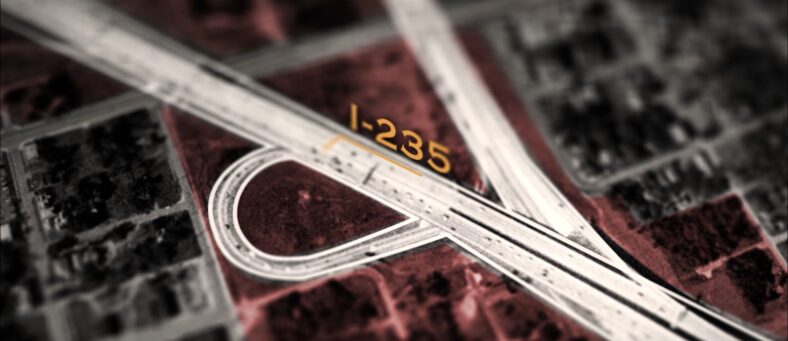
When journalist Mike Boettcher brought Semikopenko on as a camera operator for Marc Levin’s HBO documentary An American Bombing: The Road to April 19th, Alex witnessed firsthand how a physical space could carry the weight of collective memory.
“Being a part of that doc, I witnessed how important a physical site is in preventing history from being forgotten,” he said. “The tragedy had unified the community, and the existence of that site gave that remembrance a physical anchor.”
He was not from Oklahoma, and he felt the weight of filming a community’s public trauma. “I felt a huge honor being trusted to tell this community’s story,” he said. “To remotely feel their pain.”
In 2022, he joined Prairie Surf Studios as an in-house cinematographer and editor, working closely with award-winning filmmaker Matt Payne. Over three years, they focused on stories rooted in Oklahoma City’s civic memory. Two of those projects—The Jewel and If These Walls Could Talk—shared a common thread: the tension between preservation and erasure.
Holding Ground
The Jewel is the story of a place being held together by hope and will. The film follows the effort to restore the last Black-owned theater in Oklahoma City, with Mr. Hurst, the owner since the 1970s, at the center.

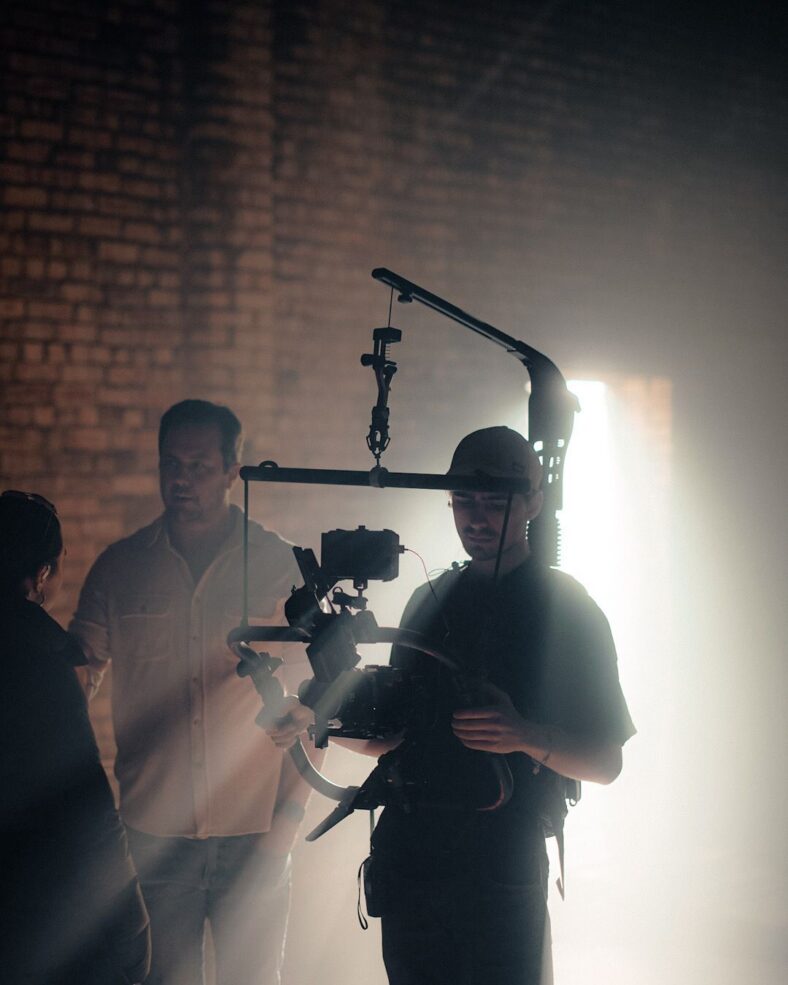
Semikopenko served as director of photography and contributed to early editing. He worked alongside award-winning documentary filmmaker Kevin Ford, who operated the B camera and served as a story consultant, bringing decades of experience in nonfiction storytelling to the project.

For nearly half a century, restoration felt more like hope than momentum. Then, soon after filming began, the community leaders behind the effort secured a $1 million Mellon grant, giving the project something it hadn’t had in decades: real forward movement. The filming began at the right moment to record that shift.
Semikopenko’s camera treats the Jewel like an archive you can walk through. He pays great attention to the lingering echoes of the past. Hanging light switches, scarred tiles, holes where seats were once bolted, ticket stubs, and a pile of bricks Mr. Hurst assembled over years of cleanup.

“The history was still lingering,” Semikopenko said. “It just needed to be noticed.”
The Jewel is an ongoing film that develops in parallel with the theater’s restoration, capturing the process as it unfolds. Semikopenko plans to continue filming through the remaining phases of the restoration and to lead the editing of the documentary as it moves toward completion.
A Final Record
The Heartland Emmy-winning project, If These Walls Could Talk, tells the opposite story. One about recording a place as it disappears.
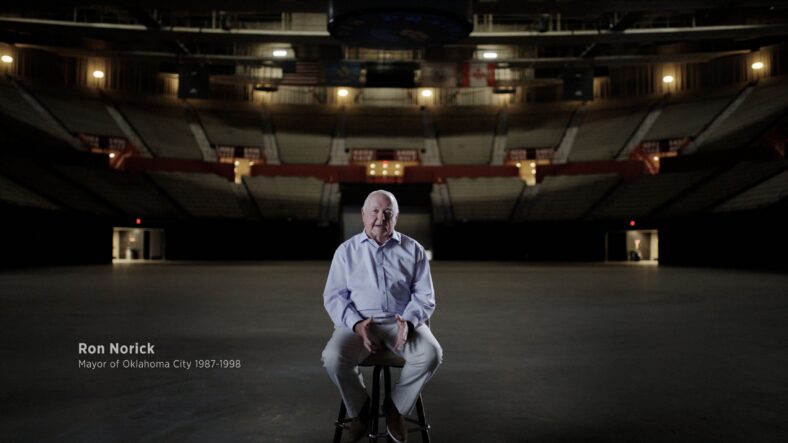
Produced for the Oklahoma City National Memorial and Museum to mark the 30th anniversary of the 1995 Oklahoma City bombing, the short documentary reflects on the Myriad Convention Center’s role in the immediate aftermath as a central rescue, aid, and coordination hub, serving as the building’s final tribute before its demolition. It combines archival material with firsthand accounts from civic leaders and key responders, treating the building as a character, not just a location.

Semikopenko served as director of photography, and the film went on to win a Heartland Emmy in the History category, honoring its visual and narrative approach to documenting the Myriad’s legacy.

For decades, the Myriad served as a civic hub—concerts, sporting events, political gatherings—before becoming a central coordination site in the aftermath of the 1995 bombing, the focus of If These Walls Could Talk. Semikopenko notes the irony of the building’s fate. The Myriad was built during an earlier wave of urban renewal that cleared parts of downtown, and it is now being demolished for the same reason. This time for a new NBA arena.
For Semikopenko, the project was also personal. Having spent a few years working inside the building when it operated as a soundstage, he approached the documentary as a final acknowledgment of the space itself. His visual approach leans into the building’s scale. He lets the Myriad’s sheer volume occupy the frame, using wide compositions and negative space to make the structure feel as imposing as it is. Symmetry shows up selectively, most notably in the arena frame, to highlight the building’s geometry.

Drawing on Semikopenko’s experience volunteering on restoration and heritage preservation work in Eastern Europe, along with his exposure to Asian and Western European cultures known for protecting historic spaces, he believes culture and heritage are not decoration in a city. Instead, they shape how people understand where they live.
The Jewel records a community’s effort to save a cultural anchor and the work behind bringing it back. If These Walls Could Talk serves a different purpose: to preserve a clear record of the Myriad’s crucial role in Oklahoma City’s life as the building is being cleared from the landscape.
To see more of Alex’s work and current projects, visit his website or follow him on Instagram.


