


Here 12 most revolutionary movies of 1976, a year when rebels and underdogs reigned at the box office.
As America marked its bicentennial, revolution was once again in the air, as stars of the screen rejected the status quo.
It was a peak time for daring movies that broke rules and didn’t care. Happy 50th anniversary to these 12 essential movies of 1976.
Network
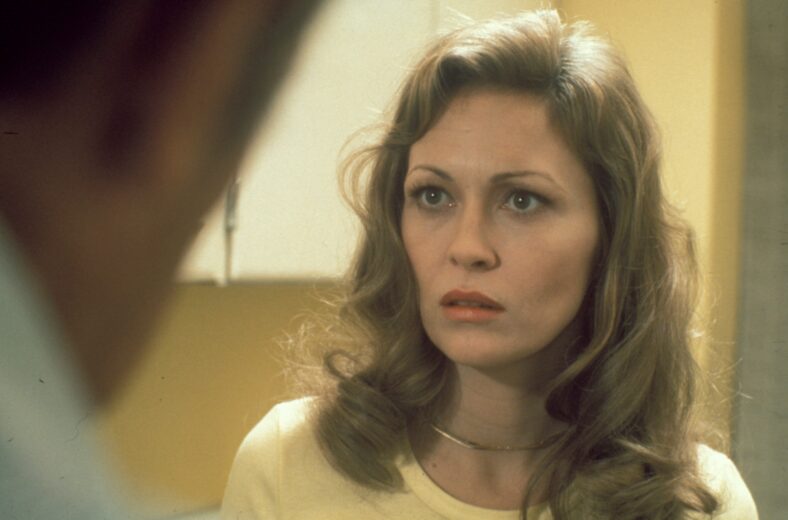
In the ultimate rejection of the powers that be, longtime news anchor Howard Beale (Peter Finch) has a righteous crashout and urges everyone in America to go to their windows and scream “I’m mad as hell and I’m not gonna take it anymore.”
What were they so mad about? Take your pick: government corruption, inflation, Vietnam, crime… Network is most mad at complacency, and the sense of learned helplessness that comes from watching a constant stream of bad news. Wonder what that’s like?
Finch posthumously won Best Actor, Faye Dunaway (pictured above) won Best Actress, Beatrice Straight won Best Supporting Actress, and Paddy Chayefksy won for best original screenplay — in a pretty incredible year for screenplays.
Carrie

Carrie remains one of the most affecting horror movies of all time — at least for anyone who’s ever attended high school.
Sissy Spacek is both vulnerable and terrifying as Carrie, a meek outsider harboring secret, astonishing rage — and power to back it up.
It was the first big hit for director Brian De Palma, and perhaps more importantly the first film to unleash the box office power of Stephen King adaptions.
Taxi Driver
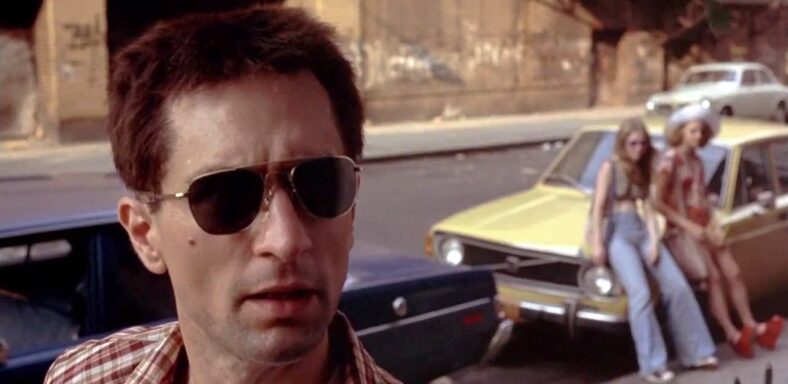
Taxi Driver feels more prescient than we’d like in this age of angry young men and assassinations. Robert De Niro is explosive as Travis Bickle, an unhinged loner obsessed with a campaign worker (Cybill Shepherd) and determined to clean up the mean streets of New York City.
A simpler movie would take Bickle’s side (in the vein of Death Wish), or condemn him. But Taxi Driver director Martin Scorsese and writer Paul Schrader refuse to do anything the easy way, or make Taxi Driver a cozy ride for the audience.
In the film’s fascinating finale, Bickle frees the exploited young Iris (Jodie Foster) from her horrible fate, and makes us re-evaluate everything we thought about the movie up until that point.
Rocky
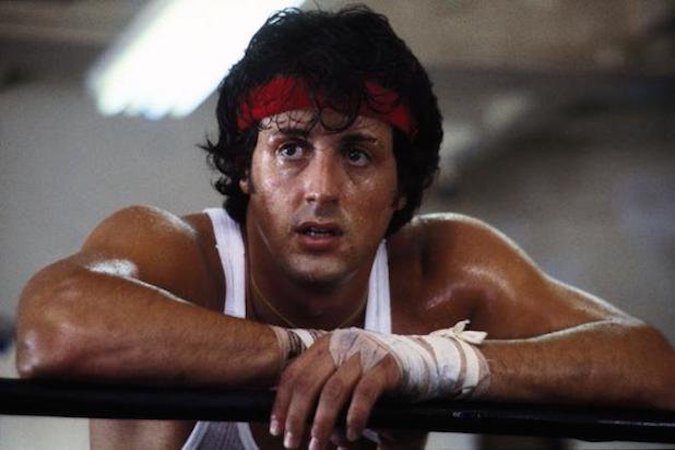
Downer endings became something of a given in the early 1970s, but screenwriter-star Sylvester Stallone decided it was time for American movie heroes to start winning again.
The Academy agreed: Rocky won Best Picture, and John G. Avildsen won best director. Stallone was nominated for best original screenplay, but the award went to the aforementioned Chayefksy for Network.
Hey, Rocky doesn’t win against Apollo Creed either — but like Stallone, he wins massively just by getting his moment in the ring. Rocky set the stage for Stallone to become one of the biggest stars of the next 50 years.
It also managed to earn more than 100 times its budget.
All the President’s Men
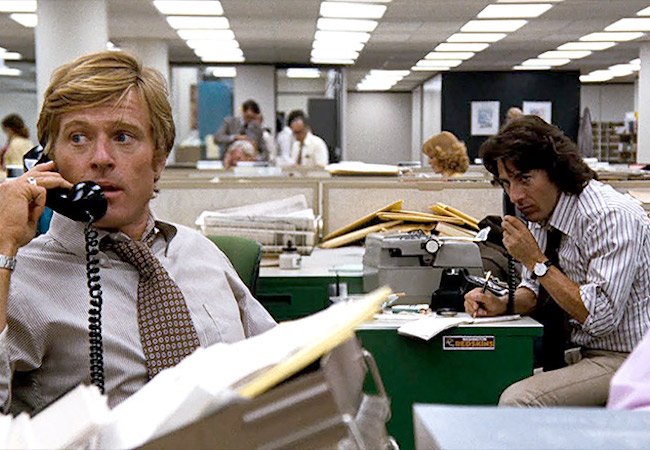
Robert Redford and Dustin Hoffman play Bob Woodward and Carl Bernstein, two tireless reporters for The Washington Post who figure out what really happened in the Watergate break-in — and help bring down President Richard Nixon in the process.
This is the rare 50-year-old movie that still feels intensely alive, thanks to the fly-on-the-wall direction of the great Alan J. Pakula, master of conspiracy thrillers, and a crackling script by William Goldman that brought us the phrase “follow the money.”
It’s a good axiom that still rings true.
Marathon Man

Amazingly, All the President’s Men was one of two 1976 movies that paired screenwriter William Goldman with acting powerhouse Dustin Hoffman.
Marathon Man, Goldman’s adaptation of his own 1974 novel, is an incredibly tense thriller about “Babe” Levy (Hoffman), a long-distance runner who becomes mixed up in a plot by a Nazi war criminal (Laurence Olivier) to retrieve stolen diamonds.
it’s most memorable for scariest dentistry scene in any movie, including Little Shop of Horrors, courtesy of director John Schlesinger.
Harlan County, USA

The ’70s had a slew of good films about life in rural America, but none cut to the truth as bluntly as Barbara Kopple’s Harlan County, USA. It’s as much of a rallying call as Network, but it’s all true.
The documentary follows a bitter, brutal 13-month coal miners’ strike against the Brookside Mine in Harlan County, Kentucky, and shows what happens when tough working Americans face off with a company committed to its bottom line.
Kopple spent much of her twenties with the miners, documenting their fight to unionize in a world of pickup trucks, shotguns, and backbreaking work. The film earned the Oscar for Best Documentary.
The Bad News Bears

The Bad News Bears broke the movie rule that kids are sweet and innocent.
Led by burnout Morris Buttermaker (Walter Matthau), the young ballplayers on the Bears weren’t great athletes and definitely weren’t good sports.
And like Rocky, they didn’t win at the end — but even coming as close to winning as they did was a huge victory. The Bad News Bears is also maybe the only movie where a grown-up buying beer for kids is part of a happy ending.
The Omen

Speaking of bad kids: The Omen is about a sweet-faced boy (Harvey Spencer Stephens) who turns out to be the antichrist.
Directed by Richard Donner, just before he made Superman, the film works extremely well by taking everything very seriously. The cast is stocked with great actors, like Gregory Peck and Lee Remick, playing it completely straight.
It followed a cinematic fascinating with the devil nicely set up by Rosemary’s Baby (1969) and The Exorcist (1972.) And like those classics, it remains chilling.
Assault on Precinct 13

This grim, grimy action film also deserves a place in horror movie history, even though it isn’t horror — it was the second film by John Carpenter, just before he had explosive success with the horror masterpiece Halloween.
Carpenter not only wrote and directed Assault on Precinct 13, but also composed the score and edited it, demonstrating his intense work ethic and boundless creativity. It was also a breakthrough for indie filmmaking: Carpenter agreed to make it on a shoestring budget of just $100,000, in exchange for creative control.
The film reflected the decade’s well-placed anxiety about urban crime, but had a very Carpenter twist: The hero is a police officer (Austin Stoker, above) who stands up to a biker gang to protect a police precinct. But he’s aided by a convict — played by Darwin Joston — who is on his way to death row.
King Kong

The remake of the original 1933 King Kong has nowhere near the enduring power of the original, but it is an excellent time capsule of the mid-’70s.
Written by Lorenzo Semple Jr., known for the Batman TV show and the political thrillers The Parallax View and Three Days of the Condor, it casts a greedy oil company as the villains and culminates in a battle atop the then-new World Trade Center.
It also made a movie star of Jessica Lange, who was a little-known model at the time of her casting, and added to the stardom of Jeff Bridges.
Logan’s Run
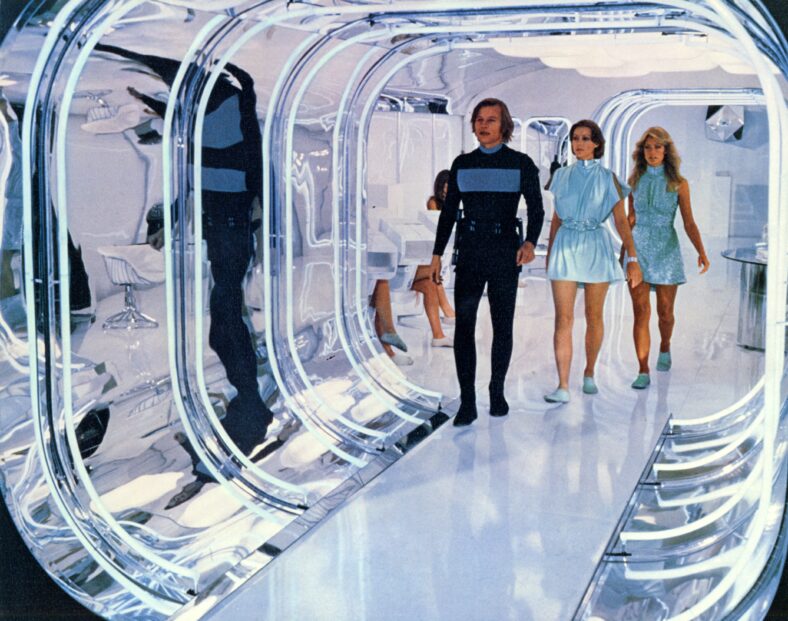
Logan’s Run took the ’60s maxim of not trusting anyone over 30 to the extreme — it takes place in a futuristic world in which everyone is reincarnated when they turn 30.
But a select group of runners learn that, in fact, those young reincarnates are actually killed to ensure everyone else has plenty of resources.
The daring Logan (Michael York) and Jessica 6 (Jenny Agutter) try to flee their domed city, and to change everything in the process. Logan’s Run has a great concept and a very cool retro-future look that would be eclipsed, a year later, by the even more influential aesthetics of another sci-fi adventure.
Main image: Jessica Lange and a friend in King Kong. Paramount Pictures.


