


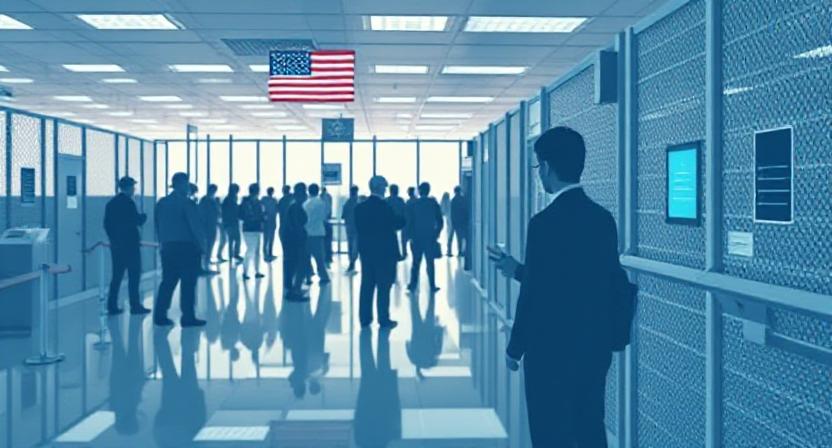
The United States is taking a transformative step to modernize its borders by introducing a comprehensive biometric entry-exit system for all international travelers. Under new guidance issued by the Department of Homeland Security (DHS), effective December 26, U.S. Customs and Border Protection (CBP) will have the authority to collect biometric data, including photographs, from all non-U.S. visitors both entering and exiting the country.
This initiative marks a major milestone for a long-anticipated biometric exit system. CBP anticipates that full implementation across all commercial airports and seaports will be achieved within the next three to five years, fundamentally reshaping how travelers experience U.S. borders.
The move places the U.S. firmly alongside other regions advancing digital border management. The European Union, for example, recently launched its digital Entry/Exit System, capturing facial images and fingerprints from all non-EU travelers. By adopting cutting-edge facial recognition and comparison technology, the U.S. is embracing a global standard that prioritizes security, efficiency, and convenience for travelers.
Enhanced Security Through Advanced Biometric Verification
The adoption of facial comparison technology provides a significant upgrade over traditional manual checks. CBP’s biometric system can verify traveler identities with more than 98% accuracy, offering near-certain confirmation of an individual’s identity. This represents a substantial improvement in border security, reducing the risk of fraud and unauthorized entry while ensuring that legitimate travelers can move through U.S. ports of entry more efficiently.
Streamlined Travel Experience
For travelers, the benefits are immediate and tangible. By reducing the reliance on manual identity verification and paper-based documentation, biometric technology shortens wait times and alleviates congestion at airports and seaports. Passengers can move through checkpoints more smoothly, often without needing to present passports or boarding passes at multiple stages, creating a seamless travel experience.
Unlocking Visa Waiver Program Opportunities
The full implementation of biometric exit procedures is poised to reshape the U.S. Visa Waiver Program (VWP). With precise tracking of international departures, visa overstay rates—rather than visa refusal rates—can serve as the primary metric for determining VWP eligibility. This adjustment opens the door for additional countries to join the program, further stimulating international travel to the U.S.
Historically, VWP participation has had a measurable impact on tourism. On average, six months after a country joins the program, arrivals increase by 18% relative to overall visitation. Three years post-admission, arrivals rise by 24%. South Korea’s inclusion in November 2008 serves as a compelling example: within three years, South Korean visitation to the U.S. surged nearly 50% above pre-admission levels. Expanding VWP eligibility through biometric exit completion promises similar long-term economic gains, including increased travel spending, job growth in the travel sector, and higher tax revenue.
Years of Advocacy Lead to Critical Milestone
The implementation of a full biometric entry-exit system is the result of extensive advocacy and legislative support. Funding for biometric technology was secured through the One Big Beautiful Bill Act, while travel industry stakeholders have consistently emphasized the importance of modernized border management. The Commission on Seamless and Secure Travel recommended completing the biometric air exit system by 2026 to enhance identity verification and strengthen national security while facilitating efficient traveler movement.
Preparing for Major Global Events
With major international events on the horizon, including the 2026 FIFA World Cup and America 250 celebrations, the U.S. is moving decisively to ensure it remains competitive as a global travel destination. Biometric technology is no longer a distant innovation—it is the foundation for the future of secure, efficient, and welcoming travel.
By fully deploying biometric entry-exit systems, the U.S. will not only bolster national security but also deliver a smoother, faster travel experience, stimulate economic growth through international tourism, and position itself as a leader in the evolving landscape of global travel management.
The post U.S. Accelerates Travel Security with Full Biometric Entry-Exit System Transforming Global Travel Experience – You Need to Know appeared first on Travel And Tour World.

