


Here are 12 Twilight Zone episodes that predicted the future.
The Twilight Zone, which Rod Serling led from 1959 through 1964, was a show of the moment — but it also had an eye on the future. Serling realized that he could use genre stories to talk honestly about the real world in ways that network censors would typically never allow.
He also recognized how the time were a-changin’ — and often anticipated modern life.
Here are the Twilight Zone episodes.
“The Lonely” (Season 1, Episode 7)
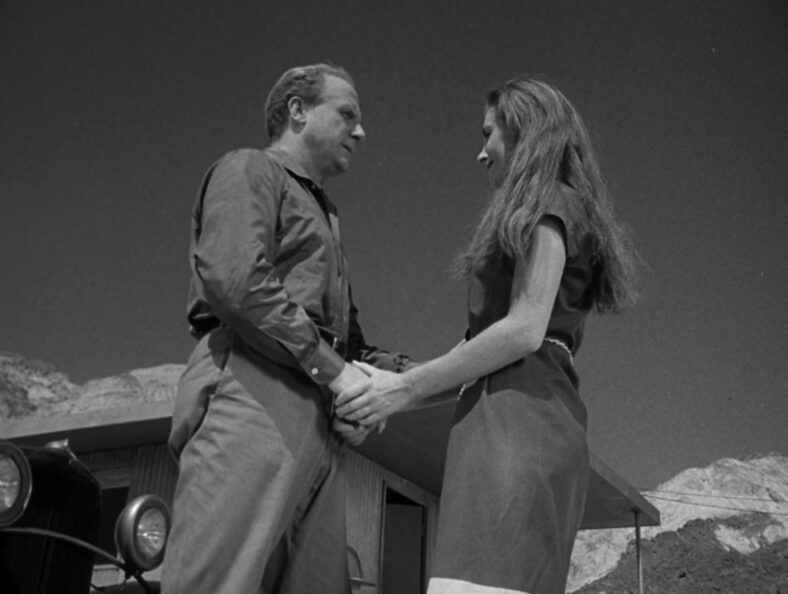
The Twilight Zone was teeming with stories of humans in solitude — sometimes of their own design, sometimes not.
Several episodes of the show feature one to three people stuck on some planet or asteroid, isolated from the rest of humanity. “The Lonely” is one of the best.
Jack Warden plays Corry, who has been sentenced to 50 years of solitary confinement on an asteroid for murder. His loneliness and isolation is only interrupted in fits and starts by the supply ship. One day the ship has to leave immediately, though it leaves behind a box. In that box is Alicia, a female, humanoid robot. At first, Corry is not interested in Alicia, because she’s just a bunch of robotics to him. However, as his isolation eats at him, she becomes a companion.
That may have seemed far-fetched once, but now its an all-too-familiar scenario for people in so-called relationships with AI “partners.”
“The Midnight Sun” (Season 3, Episode 10)
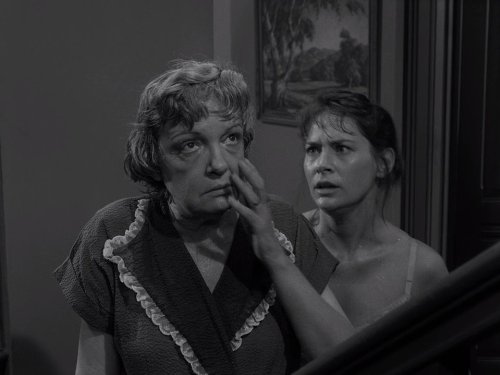
“Global warming” as a term was popularized around 1975, and then “climate change” became the euphemism of choice. Years before that, in 1961, “The Midnight Sun” anticipated anxieties about the planet heating up.
Since the Twilight Zone is science fiction, the heating was caused by the planet being knocked off its orbit, rather than burning fossil fuels. In “The Midnight Sun,” denizens of a New York City apartment building deal with near-perpetual sunlight and temperatures over 100 degrees.
The twist, if we may spoil the twist, is that one of the characters is having a fever dream, and in reality the planet is actually getting alarmingly colder.
“The Brain Center at Whipple’s” (Season 5, Episode 33)
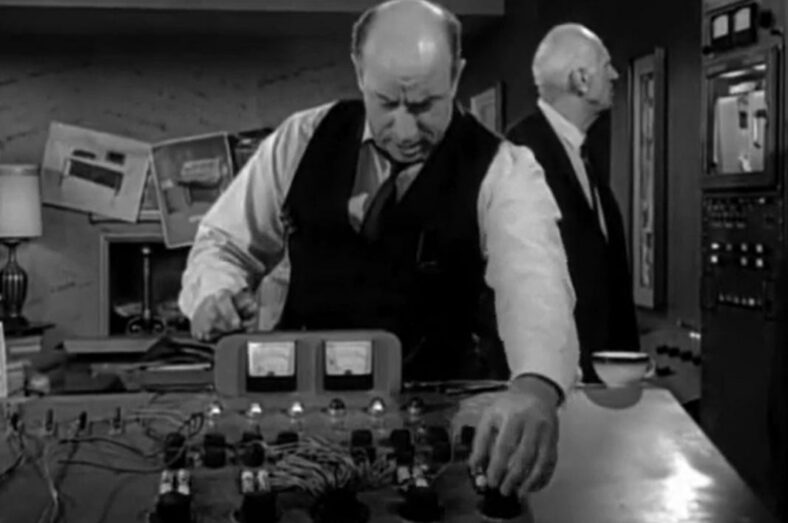
One of the final episodes of The Twilight Zone is one of the most relevant episodes these days. It was written by Serling, as most episodes were, and directed by Richard Donner, who would go on to direct films like Superman, The Goonies, and Lethal Weapon.
In “The Brain Center at Whipple’s,” Wallace Whipple owns a manufacturing plant, and decides to replace his laborers with machines. He also fires his plant manager to replace him with a robot, and fires the secretaries so he doesn’t have to worry about maternity leave.
When he becomes obsessed with the possibility that the robots are going to turn on him, though, Whipple is then fired and, yes, replaced by a robot.
Has the prediction of human laborers being replaced by machines come true? Maybe you can think about that while checking yourself out at the grocery store or while waiting for a drone to deliver your package to you. Or while you scroll through articles that were, unlike this one, produced by AI.
Serling’s big moral for the bigwigs remains true: Someday the machines will come for you as well.
“Escape Clause” (Season 1, Episode 6)
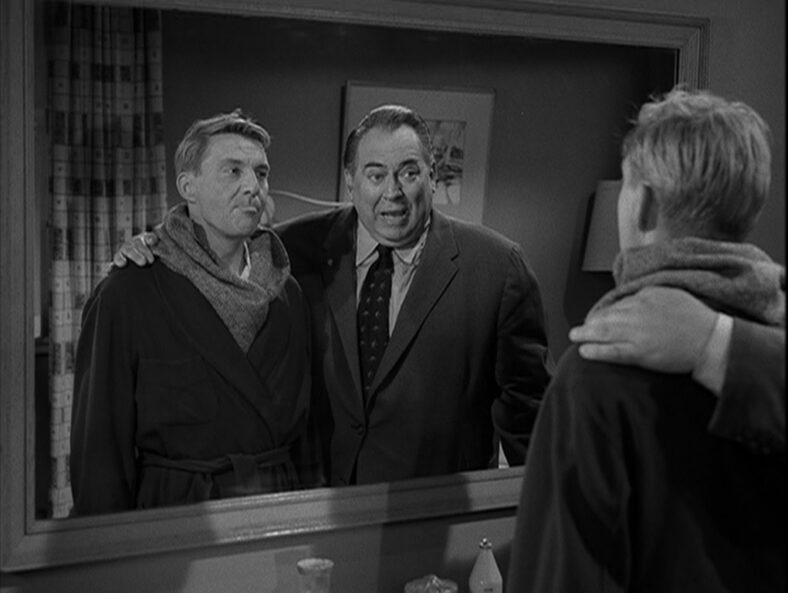
Walter Bedeker (David Wayne) is afraid of death. He’s also only interested in himself. In a quest for immortality, to avoid illness and aging, he makes a deal with the devil, a semi-frequent guest star on The Twilight Zone. Soon Bedeker achieves his dream of immortality at the mere price of his soul.
Of course, Bedeker immediately begins enjoying his inability to die, or even be injured, by using it to make money and enjoy cheap thrills. He has no concern for others, and even uses the death of his wife to confess to murder because he wants to try out the electric chair.
Today, there are so many wealthy people, billionaires in particular, obsessed with living as long as possible. Many of them have gone to bizarre extremes to try and avoid aging, or to avoid dying. As Walter Bedeker learned, and as they will learn, we all die.
As Serling’s closing narration notes, perhaps this is as it should be.
“The Fever” (Season 1, Episode 17)
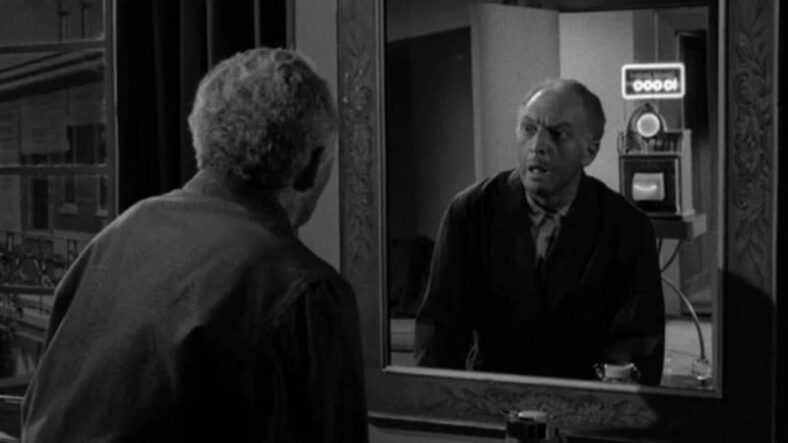
“The Fever” is not subtle, even by the standards of The Twilight Zone. A couple go to Las Vegas, and the husband, Franklin, hates gambling. Then, a slot machine starts calling his name. Whether he’s awake or asleep, the machine calls Franklin. So he plays, and he keeps playing.
Eventually, he is driven mad, and his madness is presumed to be delirium and addiction.
Gambling of course existed in the 1960s, but the show predicted its modern-day pervasive nature, where a high risk game is as far away as your phone. “The Fever” never broke.
“A Thing About Machines” (Season 2, Episode 4)
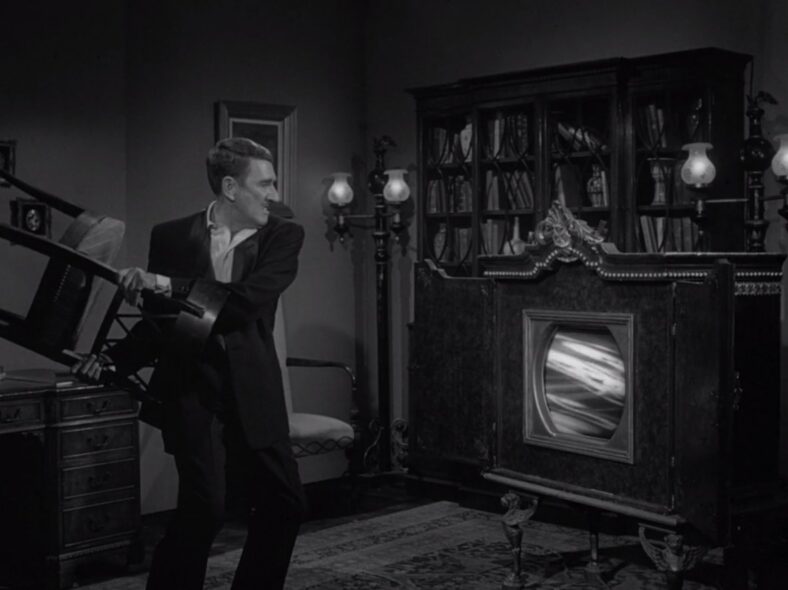
Bartlett Finchley — a strong name for a character right out of the gate — is a high-minded writer for a gourmet magazine. He’s not much for people, but is particularly not much for machines. Technological advances mean little to nothing to him, and he even views them with contempt.
Soon, it turns out the feeling is mutual. Telephones, televisions, and even typewriters deliver ominous messages. Cars and electric razors seem to be attacking him. Eventually he drowns in a pool, and the speculation is that he had a heart attack. Or maybe the machines were out to get him?
We are now surrounded by machines, some of which seem not particularly helpful. A scene of a car chasing Finchley feels especially of the moment, given the attempted rise of self-driving cars.
“Valley of the Shadow” (Season 4, Episode 3)
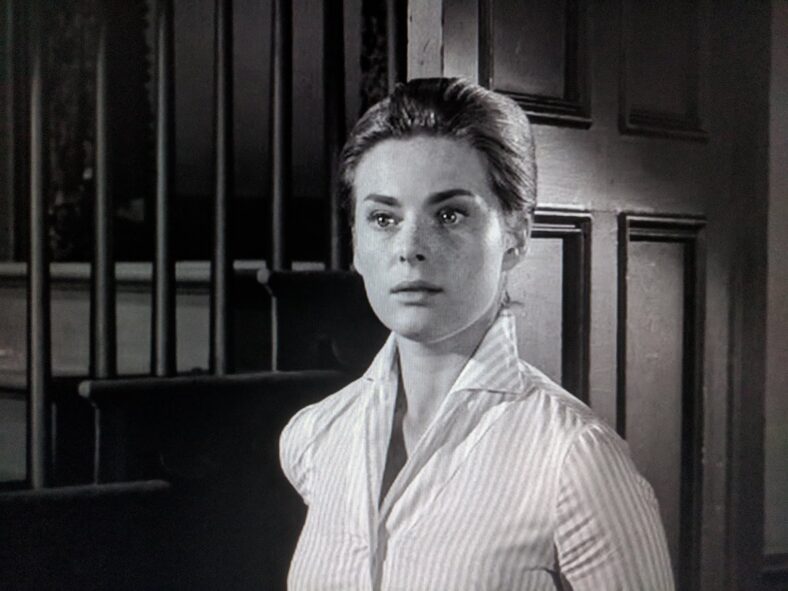
Peaceful Valley isn’t as welcoming as its name suggests: The locals turn a cold shoulder to reporter Philip Redfield, and eventually, he comes to realize why.
The town has a secret, and that secret is alien technology. They have a replicator device, and a device that can heal all injuries, and even reverse death. They also believe they are the only ones who can be trusted with it.
Philip is livid at the town for holding onto the technology for themselves, but his violent attempt to escape being held prisoner in Peaceful Valley only “proves” to the town elders that nobody can be trusted with the technology. They decide to continue hoarding it.
Many advances in technology in recent years could benefit humanity as a whole, but it’s up to governments and corporations to decide who gets access and when.
“On Thursday We Leave for Home” (Season 4, Episode 16)

This episode is set in 2021, and feels strikingly contemporary.
The episode is about settlers on a distant planet, but the settlement has gone poorly. Life is hard, and after 30 years abroad many of the denizens have no memory of Earth. Still, people dutifully follow their leader, William Benteen,who was a child when the settlement began.
Then a modern American spaceship arrives. And suddenly Benteen’s grip on the community dissolves: He’s like a tech bro, from, well, 2021.
“A Short Drink from a Certain Fountain” (Season 5, Episode 11)
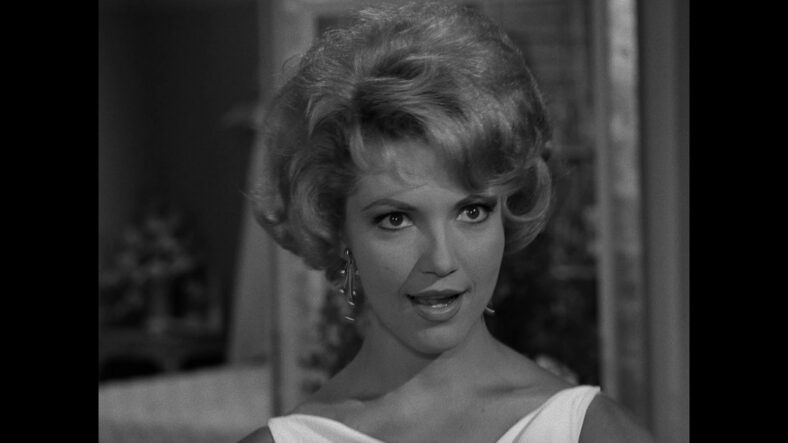
This one’s for all the Curious Case of Benjamin Button fans out there. And, like “Escape Clause,” it focuses on the fear of mortality.
A rich old man marries a woman decades younger than him. Though their marriage is bad, the man clings to it. Unable to keep up with her lifestyle, he asks his scientist brother to inject him with a youth serum he’s been working on. It works…too well. The old man keeps de-aging until he is an infant.
At this point, the brother, who despises his brother and his young sister-in-law, insists she will be financially cut off unless she raises her husband up back into adulthood. By the time he’s the virile adult he wanted to be, she will be an old woman.
Do we have to tell you how relevant this one is, in our age of youth obsession and age-gap relationships?
“What’s in the Box” (Season 5, Episode 24)
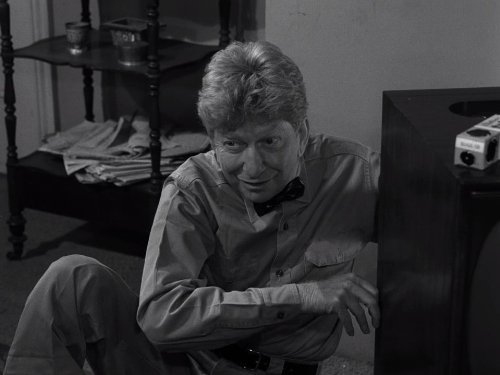
No, this episode did not inspire Se7en.
“What’s in the Box” is a television episode about…television. It has a cast of faces that were quite familiar to 1960s audiences.
A TV repairman “repairs” the set of Joe Britt, but the TV begins showing him his past, his present, and even potentially his future with his wife Phyllis. When Joe sees himself murdering Phyllis, he freaks out, at which point a doctor gives him a sedative and says that seeing yourself on TV is a “common delusion.” Of course, in the end, Joe does kill Phyllis.
“What’s in the Box” presages our modern obsessions with reality TV, true crime, and social media. What is the latter if not a way to track your past and present, in order to algorithmically shape your future?
“Living Doll” (Season 5, Episode 6)
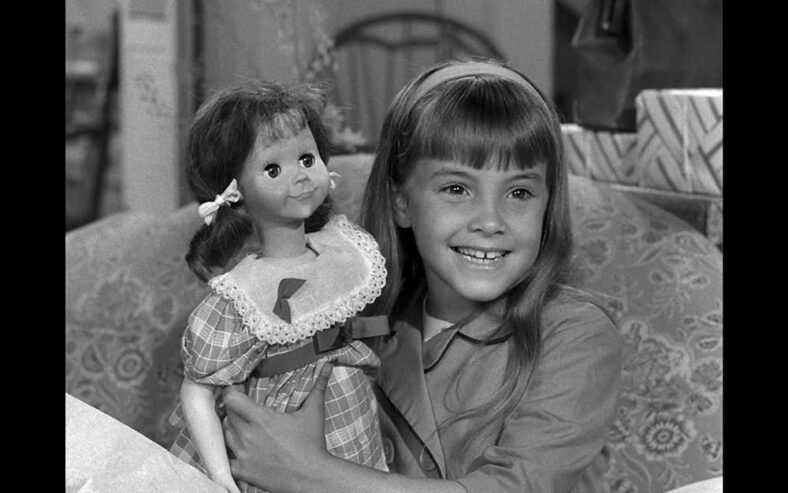
This is the fabled “Talky Tina” episode of The Twilight Zone, which both helped popularize the killer doll trope and gave us a fun “Treehouse of Horror” episode of The Simpsons.
Pre-Kojak Telly Savalas plays a man who is harsh to both his wife and her daughter from a previous marriage. The daughter gets Talky Tina, but the doll starts to threaten the man, and he can’t seem to do anything to stop her. When the man dies, the doll talks to the mom with similar menace.
Foreshadowing about artificial intelligence abounds. If you like M3GAN or the most-recent Child’s Play movie, know that The Twilight Zone got there first. It always did.
“The Incredible World of Horace Ford” (Season 4, Episode 15)
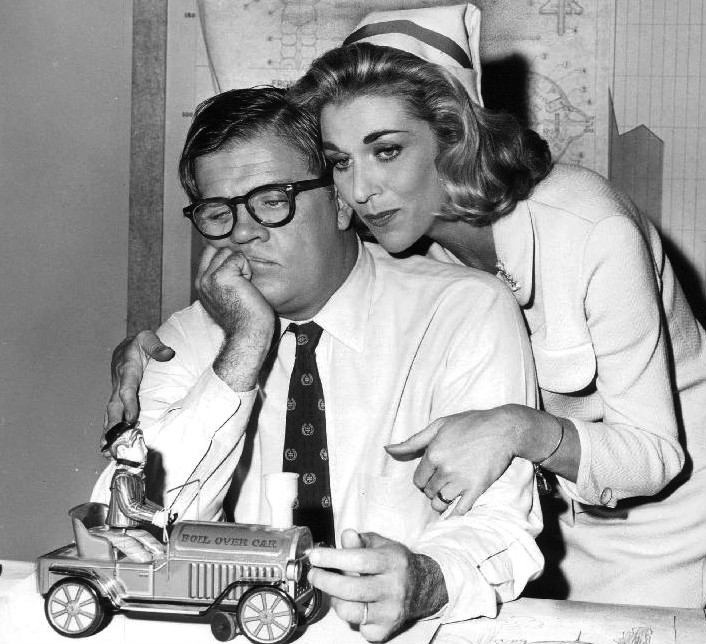
Horace Ford (Pat Hingle) is a 38-year-old toy designer obsessed with his childhood. Driven by his nostalgia, he visits his childhood home, and finds the neighborhood to be exactly as it was when he was a kid — right down to the neighborhood kids.
At first he is alarmed, but Horace keeps returning. One day, when the kids talk about Horace, he talks to them, and he too is transformed into a kid. However, he’s beaten up by the other boys, and only his wife finding him allows him to return to adulthood, to grow up as it were. He soon comes to appreciate adulthood without the nostalgia-tinted glasses of his childhood.
“The Incredible World of Horace Ford” seemed to predict, oh, about half of current adults? Obsession with the past has metastasized, thanks in part to an internet that makes it all seem so close.
You can learn more about The Twilight Zone creator Rod Serling here, and watch every episode of The Twilight Zone on Paramount+.
Main image: Ruta Lee in The Twilight Zone episode “A Short Drink From a Certain Fountain.” CBS
