


In the early 1900s, the White Star Line became synonymous with luxury travel. The company had been established in the 1840s, and over the decades, it transformed from a small fleet that carried passengers from Britain to Australia into one of the top shipping lines of the era.
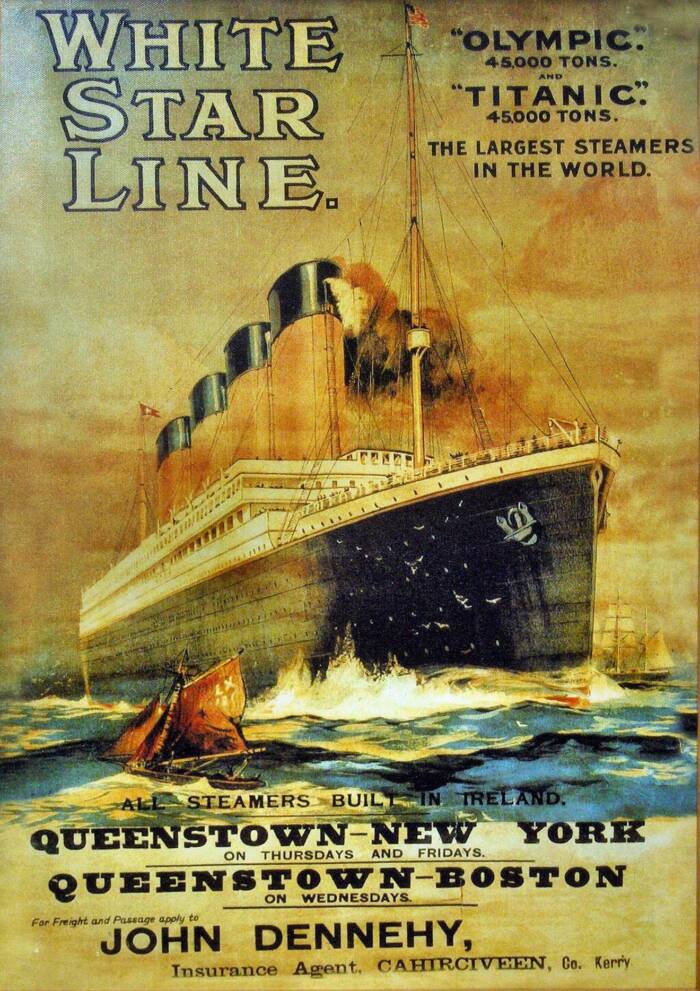
Public DomainA poster from circa 1911 advertising the White Star Line’s newest ocean liners, the Olympic and the Titanic.
In 1907, White Star Line executives began planning their most opulent ships yet: the Olympic, Titanic, and Britannic. These ocean liners were meant to transport passengers of all classes across the Atlantic, but tragedies ultimately struck each one of them — and they were largely preventable.
Although the three liners were supposed to be the epitome of luxury, the White Star Line cut some corners during their construction. The Titanic infamously lacked enough lifeboats to hold everyone on board, as those in charge of the design saw no safety or financial incentives to add more than the legal minimum. This decision would lead to 1,500 deaths when the Titanic sank into the Atlantic Ocean during its maiden voyage in April 1912.
By the 1950s, the White Star Line had been bought out by a rival company, and today it’s part of the Carnival Corporation. It could have gone down in history as the luxury line it set out to become — but its legacy was marred by disaster.
The Early History Of The White Star Line
The first iteration of the White Star Line was founded in 1845. John Pilkington and Henry Wilson noticed the demand for travel to Australia, and they created a fleet of small wooden ships to carry Europeans to the distant continent.
From the beginning, the company focused on giving passengers a pleasant experience. The ships featured musicians and held dances to attract customers. The shipping line also emphasized safety — but it wasn’t immune to the dangers of the sea.
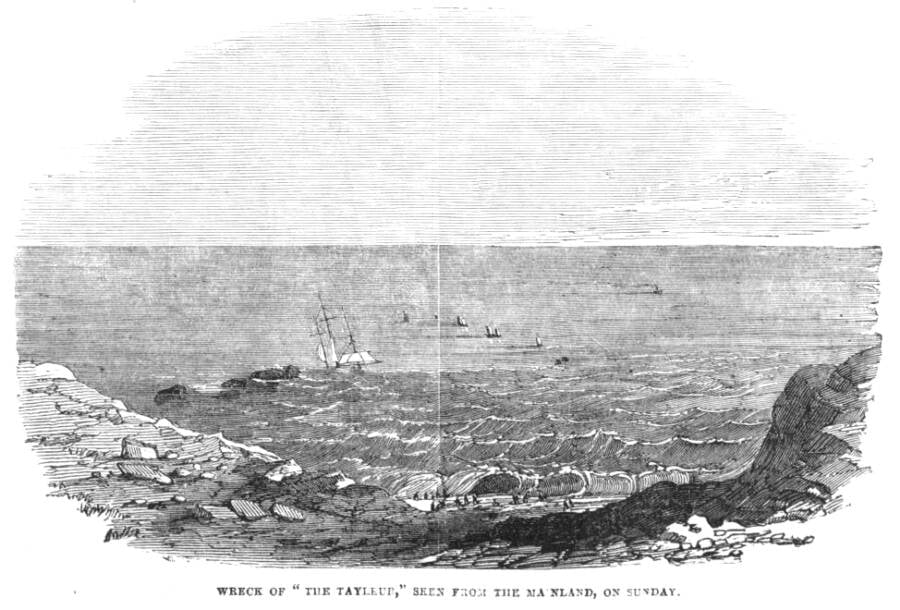
Public DomainAn 1854 illustration of the wreck of the Tayleur from the Illustrated London News.
In January 1854, the White Star Line’s Tayleur sank during its maiden voyage after striking rocks off the coast of Ireland. Nearly 400 people died — an eerie harbinger of the shipwreck that would make the company infamous 58 years later.
By the late 1860s, a series of events had forced the White Star Line into bankruptcy. It was purchased by Thomas Ismay, who planned to operate steamships on a route between Liverpool and New York City. The company launched its first transatlantic service in 1868, and it soon emerged as one of Britain’s top shipping lines.
Ismay died in 1899, and his son, J. Bruce Ismay, took over as the chairman of the White Star Line. J. P. Morgan’s International Mercantile Marine Co. bought the company three years later, but Ismay stayed on as the director.
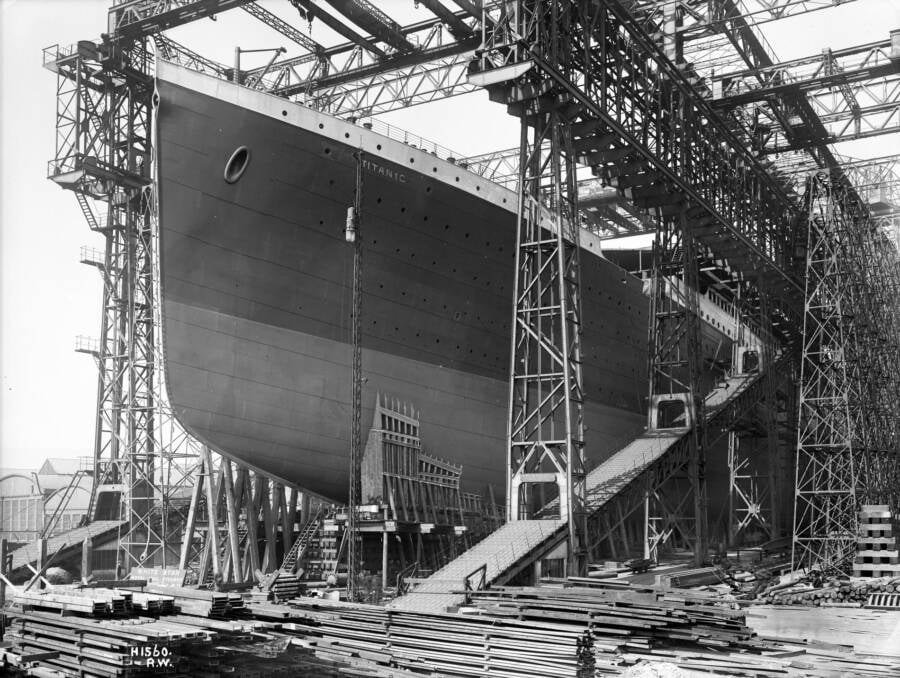
Public DomainThomas Ismay began the White Star Line’s longstanding partnership with the shipbuilding company Harland & Wolff, which constructed the Titanic (pictured here in 1911).
As competition with the rival Cunard Line heated up, Ismay decided to commission three massive ocean liners that would soon make history — for better or for worse.
The Olympic, The White Star Line Ship That Escaped Tragedy Twice
The RMS Olympic was the first of these three luxury ships, followed by the more famous Titanic and Britannic. When the Olympic launched in 1910, it was the largest ocean liner in the world at 882 feet long and 92 feet wide. At full capacity, the ship could hold more than 2,400 passengers.
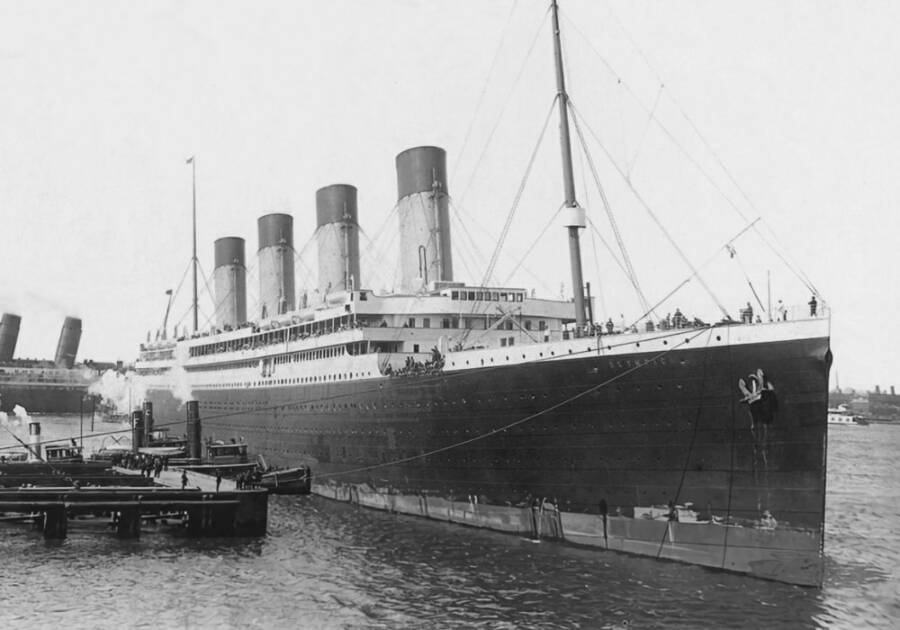
Library of CongressThe RMS Olympic in New York City after a successful maiden voyage in June 1911.
When the Olympic first docked in New York after its maiden voyage in June 1911, the world saw a new dawn for transatlantic travel, boosting the White Star Line’s global profile. But despite its success, the Olympic faced two close encounters with tragedy.
In September 1911, the Olympic was traveling through a strait between Great Britain and the Isle of Wight when it turned in front of a warship called the HMS Hawke. The Hawke was unable to avoid a collision and struck the starboard side of the ocean liner, leaving two gashes in its hull. While nobody was seriously injured, the Olympic had to return to Belfast for repairs, leaving it out of commission for six weeks and costing the White Star Line a fortune.
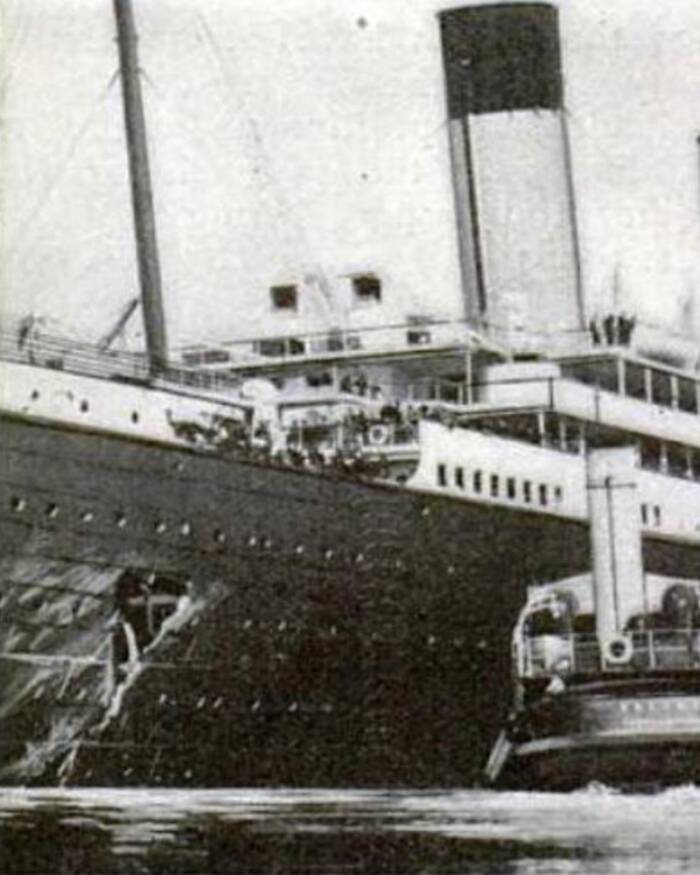
Public DomainThe RMS Olympic after its collision with the HMS Hawke.
The vessel’s second brush with fate occurred during World War I, when it was refitted as a troop transport ship. While carrying U.S. troops through the English Channel in May 1918, the Olympic spotted a German U-boat and rammed into it. It was later discovered that the U-boat had intended to fire torpedoes at the Olympic but was thwarted by mechanical problems.
While the Olympic had escaped complete tragedy, the White Star Line’s other luxury liners were not so lucky.
How The Titanic Sank On Its Maiden Voyage
The RMS Titanic embarked on its maiden voyage on April 10, 1912. The most privileged passengers enjoyed all of the luxuries the ship had to offer, from Turkish baths and a heated indoor pool to 11-course meals.
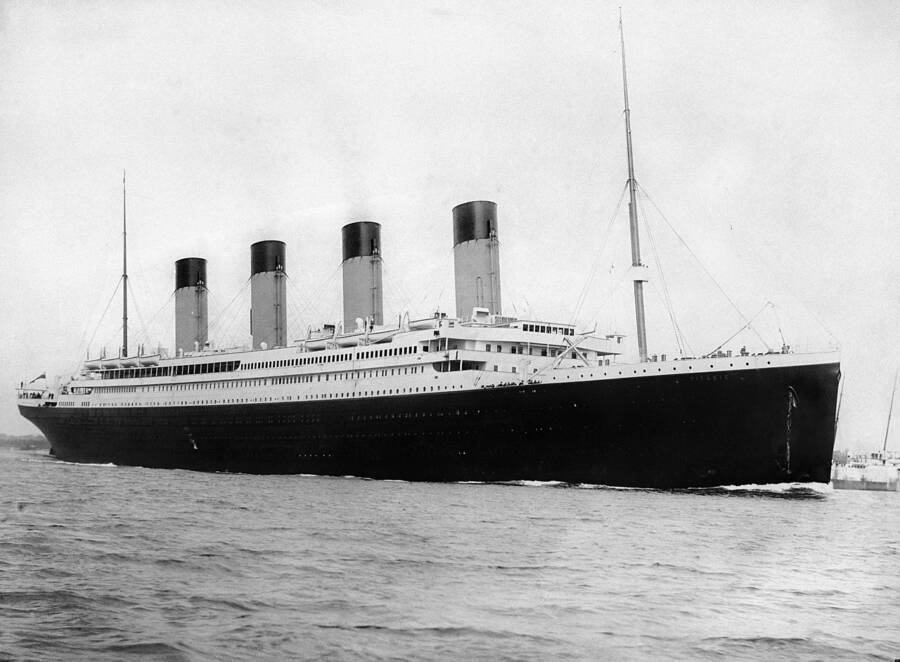
Public DomainThe Titanic leaving Southampton on April 10, 1912.
But even a first-class ticket couldn’t protect passengers from disaster. On the night of April 14, the Titanic struck an iceberg and quickly sank into the icy Atlantic. Out of the 2,224 people on board, approximately 1,500 died. The survivors were rescued by the RMS Carpathia — one of the Cunard Line’s steamships.
While the Titanic had the legal minimum number of lifeboats, they would only hold 1,178 people at full capacity — leaving over 1,000 passengers and crew members with no way to escape. And in the panic of the sinking, many of the vessels launched with empty seats.
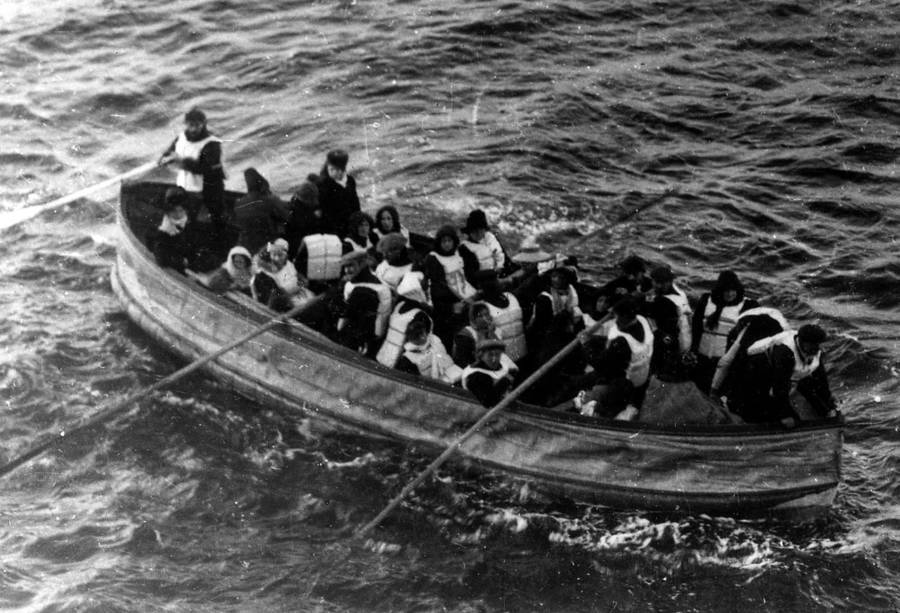
U.S. National ArchivesA lifeboat full of Titanic survivors approaching the Carpathia on the morning of April 15, 1912.
As dawn broke on April 15, rumors started flying that something terrible had happened to the Titanic. According to a 1912 report by United Press International, Philip Franklin, the official in charge of the White Star Line office at the International Mercantile Marine Co., released a statement that read: “While we are not in direct communication with the Titanic, we are perfectly satisfied that the ship is unsinkable.”
He would soon discover just how wrong he was. And four years later, disaster struck the White Star Line once again.
The Sinking Of The Britannic During World War I
Construction on the third of the three White Star Line Olympic-class sister ships, the HMHS Britannic, began in November 1911. Work was still ongoing when the Titanic sank, and the White Star Line authorized several design changes to the Britannic so it could avoid a similar fate.
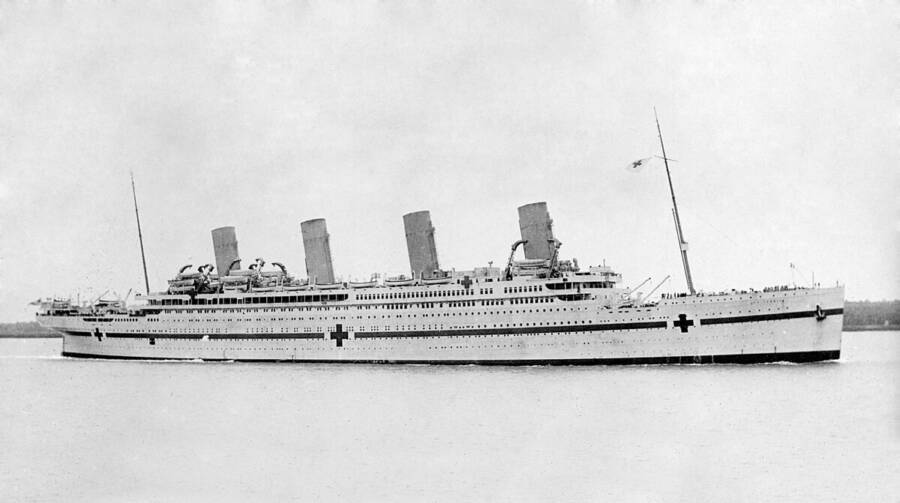
Public DomainThe Britannic was transformed into a hospital ship during World War I.
The ship’s width was increased to 94 feet, the watertight compartments were bolstered, and 48 lifeboats were added — enough to carry every passenger at full capacity with 300 seats to spare. The Britannic officially launched on Feb. 26, 1914.
While the ship was originally intended to be a luxury ocean liner like the Olympic and Titanic, it was requisitioned by the British government and converted into a hospital ship in November 1915. The dining rooms were turned into operating rooms, and medical equipment was installed alongside the opulent finishes.
After completing five successful voyages between England and the Mediterranean, the Britannic set off once more on Nov. 12, 1916, toward the Greek island of Lemnos. But on the morning of Nov. 21, as the ship was traveling through the Aegean Sea, it struck a German naval mine.
An explosion rocked the Britannic, and it began to sink. There were 1,066 people on board — and the safety measures the White Star Line had taken proved successful. While 30 people perished, most of the deaths occurred when two lifeboats were launched prematurely and sucked into the ship’s propellers.
Several more people were injured by the propellers — including two Titanic survivors. Violet Jessop, who was working as a nurse on the Britannic, had been a stewardess during the maiden voyage of the Titanic and escaped on a lifeboat. What’s more, she’d been on board the Olympic when it collided with the Hawke in 1911. Jessop suffered a traumatic head injury while jumping out of her Britannic lifeboat, but she survived a third White Star Line disaster.

Public DomainWhite Star Line employee Violet Jessop survived collisions and shipwrecks on the Olympic, Titanic, and Britannic.
Archie Jewell had been a lookout on the Titanic, though he wasn’t on duty when the ship struck the iceberg. He also escaped on a lifeboat, and it seemed as if history were repeating itself when he climbed into a lifeboat once more on Nov. 21, 1916. Then, the vessel started drifting toward the propellers.
As reported by the BBC, Jewell later recalled in a letter to his sister, “…most of us jumped in the water but it was no good we was pulled right in under the blades… I shut my eyes and said good bye to this world, but I was struck with a big piece of the boat and got pushed right under the blades and I was goin around like a top.”
Jewell left the service of the White Star Line after escaping death for a second time, but he was tragically killed while working on another hospital ship that was struck by a German torpedo five months later.
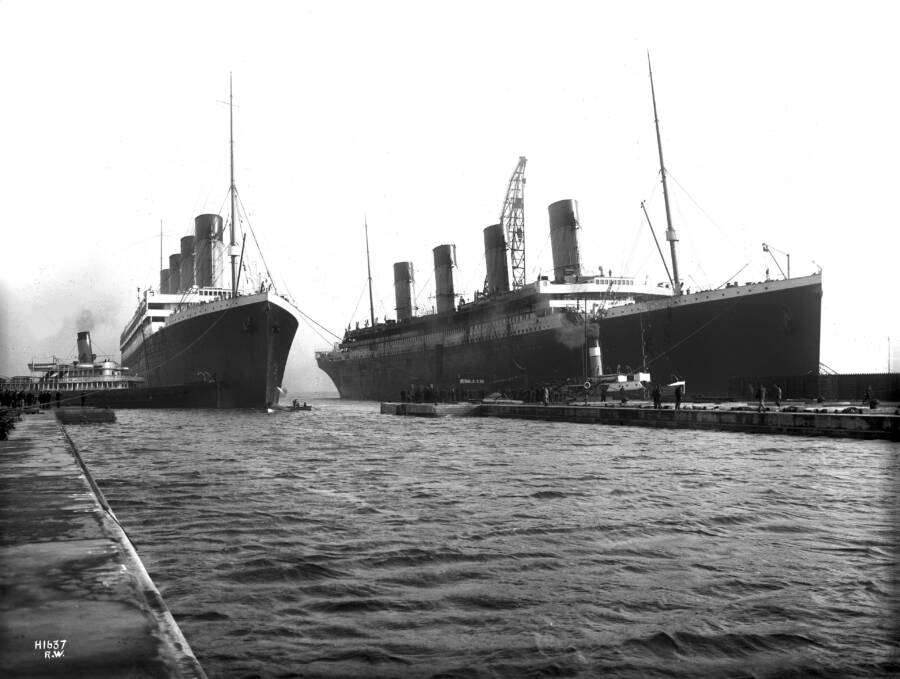
Public DomainThe Olympic (left) and Titanic (right) at dock together in March 1912.
Astonishingly, a third Titanic survivor was also on board the Britannic. Arthur Priest was a stoker who was working on the Olympic when it struck the Hawke and escaped the Titanic by swimming through the icy water until he reached a lifeboat. He also made it off the Britannic alive — and in April 1917, he survived the same disaster that took Archie Jewell’s life.
After the sinking of the Britannic, it seemed as if the White Star Line was cursed. Still, the company didn’t face a serious drop in business until the Great Depression in the 1930s.
At that point, it merged with its main rival, the Cunard Line, which bought out the company completely in 1950. Cunard is now part of the Carnival Corporation, so, in a way, the White Star Line is still traveling the seas to this day.
After reading about the history of the White Star Line, discover the stories of 10 famous sunken ships around the world. Then, learn about Kate Phillips, the Titanic survivor whose story may have helped inspire the 1997 film.
The post The White Star Line, The Shipping Company That Insisted The Titanic Was ‘Unsinkable’ appeared first on All That’s Interesting.


