


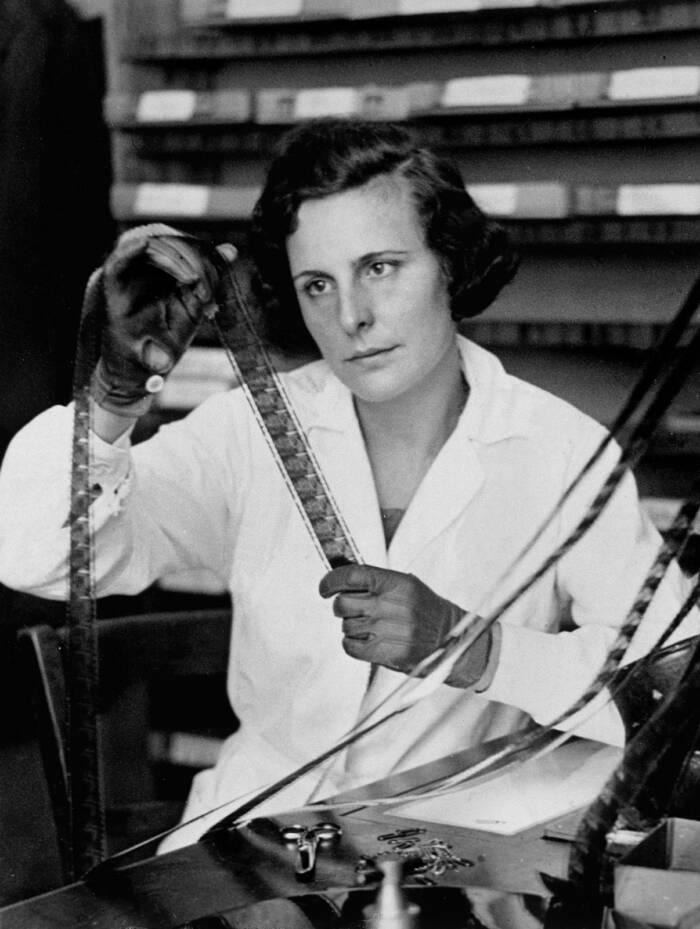
Wikimedia CommonsLeni Riefenstahl, the filmmaker behind some of Nazi Germany’s most infamous films.
After getting her start as a dancer and an actress, Leni Riefenstahl began directing films in the early 1930s. And when she crossed paths with Adolf Hitler, he hand-picked Riefenstahl to document his rise to power.
For a decade, Nazi Germany funded Riefenstahl’s career. Her propaganda films, including “Triumph of the Will” and “Olympia” celebrated and glorified Nazi ideas. Meanwhile, Riefenstahl rubbed elbows with many prominent Nazi leaders, from Hitler to Joseph Goebbels.
But when Adolf Hitler died by suicide and Nazi Germany collapsed, Riefenstahl had to account for her choices. However, she spent the rest of her life denying any complicity with the Nazis.
“If Stalin had invited me to Moscow to make a movie about the Russian army, if Roosevelt had said, ‘Come to America, make a documentary on the navy,’ I would have gone,” Riefenstahl told Vanity Fair in 1984. “I think no one would have stayed in Germany if they had seen the future.”
This is the controversial story of Leni Riefenstahl.
How Leni Riefenstahl Became A Director
Born on Aug. 22, 1902, Helene Bertha Amalie “Leni” Riefenstahl grew up in Berlin. She studied ballet and, in her teens, toured throughout Europe as an interpretive dancer.
After a knee injury interrupted her dancing career, however, Riefenstahl pivoted to acting. In her 20s, Riefenstahl starred in multiple Bergfilme (“mountain films,”) shot amid the Alps.
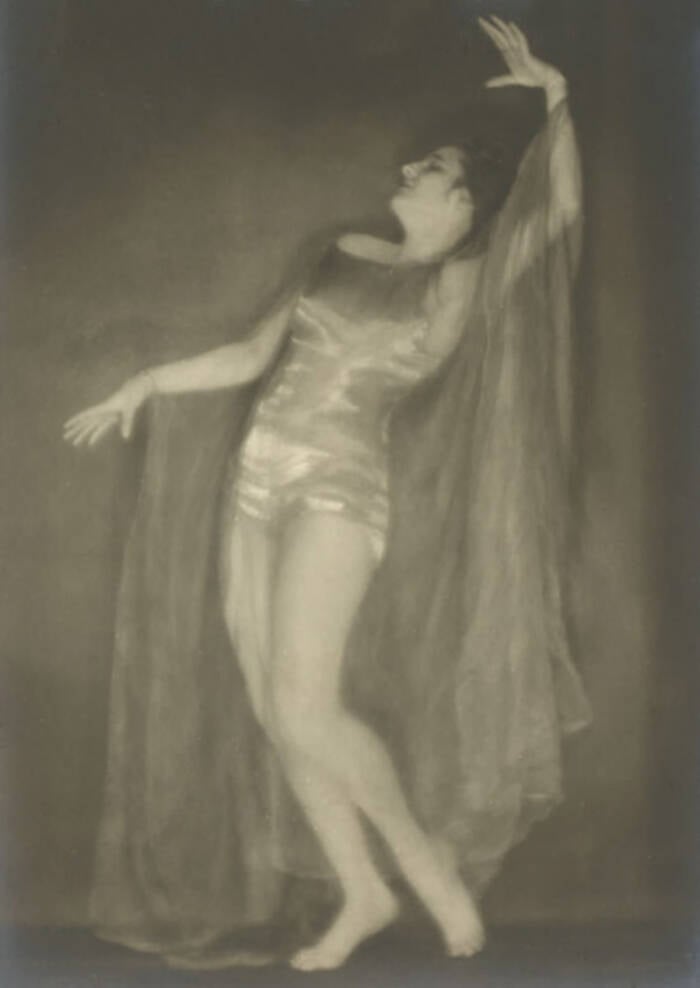
Wikimedia CommonsBefore she became a director, Leni Riefenstahl worked as a dancer and actress.
Next, Riefenstahl moved behind the camera. In 1932, Riefenstahl wrote, directed, and starred in the film, The Blue Light. She also played a fairytale-like mountain woman misunderstood by the villagers.
The film found a fan in Adolf Hitler, then on his ascent to power. So when Riefenstahl saw him speak at a rally and asked to meet him, Hitler readily agreed. According to Riefenstahl’s obituary in The New York Times, he even told her: “Once we come to power, you must make my films.”
Making Nazi Propaganda Films, From ‘Triumph Of The Will’ To ‘Olympia’
Shortly after they met, Hitler became the chancellor of Germany. Leni Riefenstahl then produced a documentary called “Victory of the Faith” (1933) about a sprawling, boisterous Nazi rally in Nuremberg. Purportedly unhappy with the results, she then prepared to make a second film, which would document the 1934 Nazi Party Congress in Nuremberg.
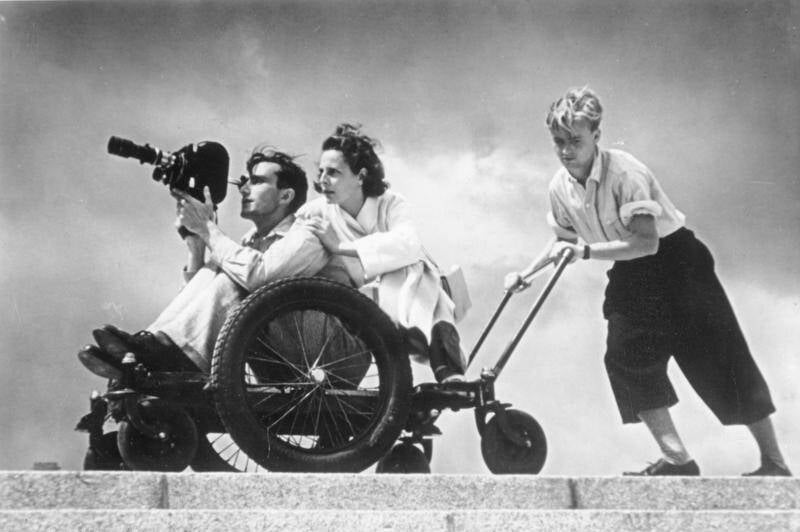
German Federal Archives As a director, Leni Riefenstahl developed innovative techniques like tracking shots.
With the support of Hitler and Germany’s Minister of Propaganda Joseph Goebbels, Riefenstahl documented the event in chilling, vivid detail. Her film, “Triumph of the Will,” (1935) used innovative techniques including moving cameras and telephoto lenses, and juxtaposed crowd close-ups with towering shots of Hitler speaking. The film also used real sound, which had rarely been done at the time.
Indeed, “Triumph of the Will” popularized a new Nazi aesthetic, defined by orderly soldiers in sharp uniforms, stone eagles, and hanging swastika banners. Shots of marching stormtroopers, adoring Aryans, and a powerful dictator made Hitler and the Nazis seem invincible and inevitable.
That was Riefenstahl’s goal. As she wrote to Hitler while touring “Triumph of the Will”: “the film’s impact as German propaganda is greater than I could have imagined and your image, my Fuhrer, is always applauded.”
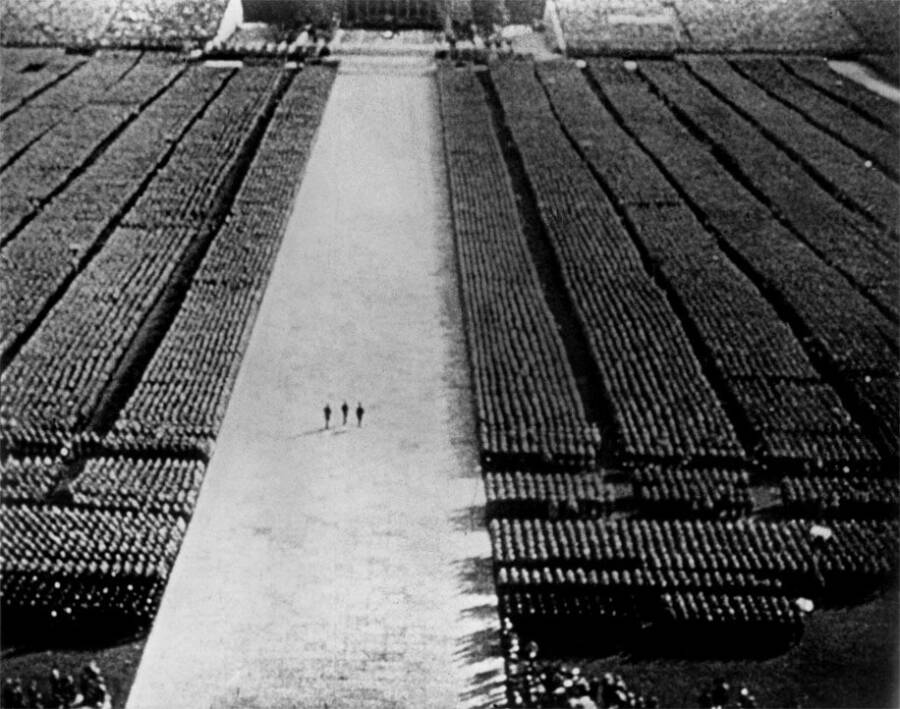
Museum of Modern Art“Triumph of the Will” (1935) used visuals to communicate the overwhelming strength and power of the Nazis.
It wasn’t the only film Riefenstahl made for the Nazis. Two years later, she also documented the 1936 Olympic Games in Berlin with her film “Olympia” (1938). As The New York Times reports, Riefenstahl drew a direct line between Nazi Germany and the ancient Greeks. Lingering shots of heroic athletes and tumbling divers linked modern Germany and its Aryan worldview to the traditions of ancient Greece. Evidence suggests the film was quietly funded by Goebbels’ Ministry of Propaganda.
Both films were huge successes. The Venice Film Festival gave awards to both “Triumph of the Will” and “Olympia,” and The International Olympic Committee also gave Riefenstahl a gold medal.
Leni Riefenstahl During World War II
When World War II began in 1939 with the Nazi invasion of Poland, Leni Riefenstahl adapted. In the early days of the conflict, she went to the front as a war correspondent. But she quickly encountered the horrors of war.
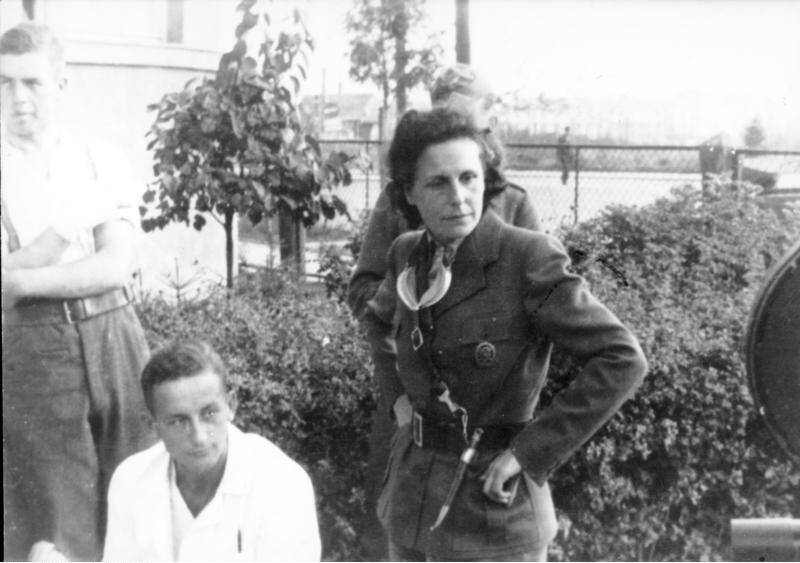
German Federal ArchivesLeni Riefenstahl in Poland during her time as a war correspondent.
As the United States Holocaust Memorial Museum noted, Riefenstahl witnessed German troops execute Polish civilians near the town of Konskie. She was purportedly so upset by what she saw that she stopped filming, and wrote to Hitler in protest.
However, as the museum notes, Riefenstahl had no qualms about filming Hitler’s victory parade in Warsaw just a few weeks later.
But she did take a step away from propaganda. In 1940, Riefenstahl began making “Lowlands,” a film she shot in Kitzbühl, Austria. During the film, she used dozens of Romani men, imprisoned at a nearby concentration camp, as extras. Many were later deported to Auschwitz and executed.
Then, when Nazi Germany fell in 1945, Leni Riefenstahl had to account for her actions. Many saw her as the Nazi regime’s chief propagandist, but Riefenstahl denied that her films were propaganda.
The Murky Legacy Of Leni Riefenstahl
After World War II ended, Leni Riefenstahl spent four years in a French detention camp for Nazi sympathizers. However, Riefenstahl had never been a member of the Nazi party, and was never found guilty of any crimes.
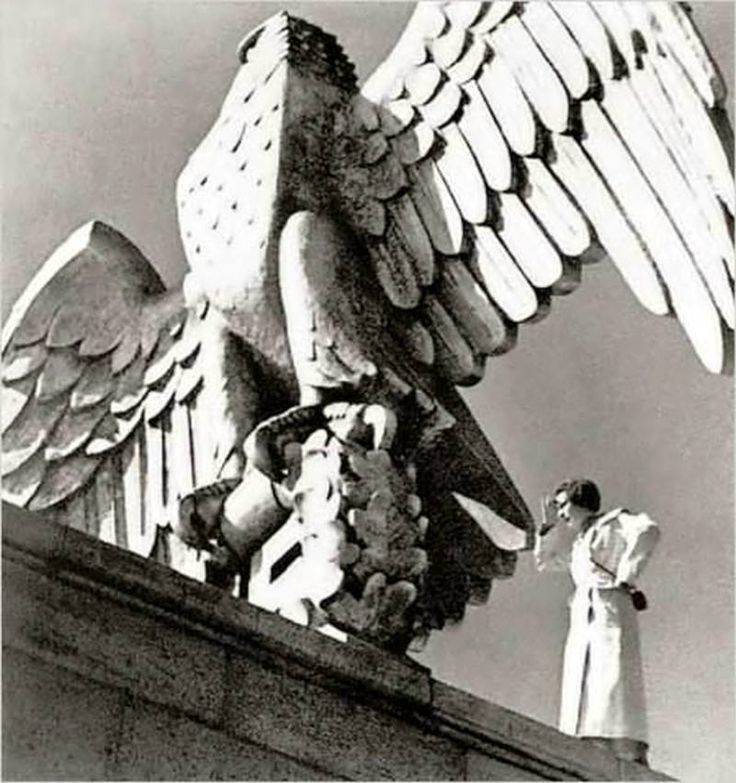
Library of CongressThough Leni Riefenstal denied that her films were propaganda, she had a close relatoinship with the Nazis.
Before her death in 2003 at the age of 101, Riefenstahl largely lived a quiet life. Effectively blocked from making films, she pivoted to photography. Riefenstahl published collections of underwater photography, as well as a photography featuring Sudan’s Nuba tribe.
And she steadfastly maintained her innocence when it came to the Nazis.
“Where is my guilt?” she asked in the 1993 documentary The Wonderful, Horrible Life of Leni Riefenstahl. “I can regret. I can regret that I made the party film, ‘Triumph of the Will,’ in 1934. But I cannot regret that I lived in that time. No anti-Semitic word has ever crossed my lips. I was never anti-Semitic. I did not join the party. So where then is my guilt? You tell me. I have thrown no atomic bombs. I have never betrayed anyone. What am I guilty of?”
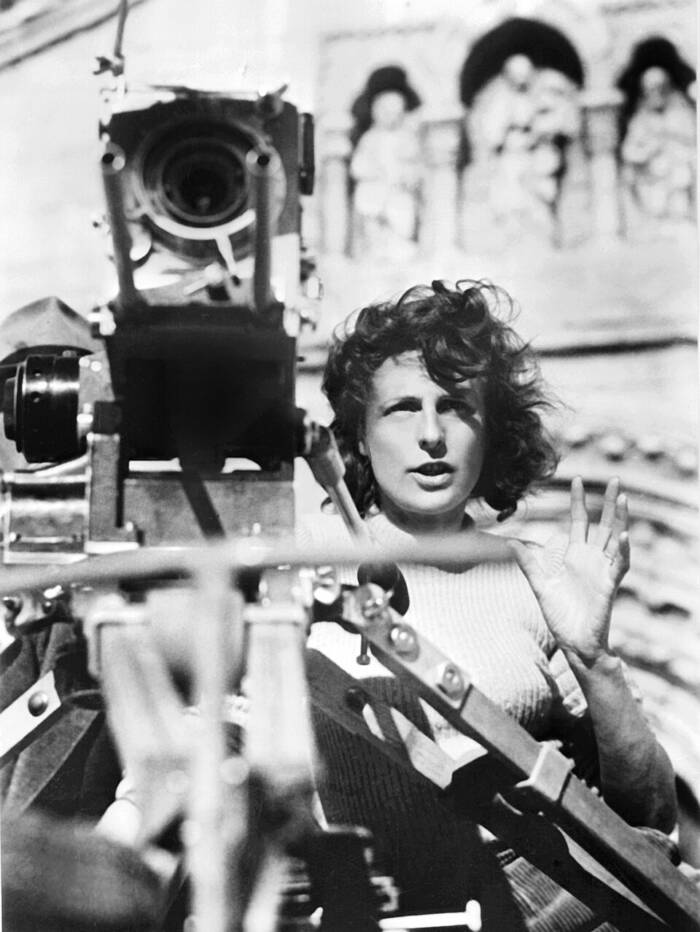
Public DomainLeni Riefenstahl making “Lowlands,” the controversial film that used Romani prisoners as extras.
Riefenstahl also swore that the Romani extras in her film survived the war — a claim that launched multiple lawsuits against Riefenstahl. In the 2024 documentary Riefenstahl, she stated: “I’m not saying Gypsies need to lie, but really, who’s more likely to lie under oath: me or the Gypsies?”
Indeed, she disputed the idea her films were propaganda. “Triumph of the Will,” she said, was a documentary with “no other political goal or motive” beyond “peace and work” which contained “no mention of racial theory.” The film, however, does capture Nazi ideology, including one Nazi who declares that “a people that does not hold dear its racial purity will perish.”
The director spoke similarly of “Olympia” stating: “There is no propaganda in “Olympia” except for sport and beauty, for the grace of the human body.”
But despite Leni Riefenstahl’s claim that “art is the opposite of politics,” her films clearly served political ends. In the 1930s, millions of people watched Riefenstahl’s documentaries. Her films glorified the Nazis, and celebrated Adolf Hitler. But Riefenstahl refused to admit that they caused harm.
“I didn’t do any harm to anyone,” she told The New York Times. “What have I ever done? I never intended any harm to anyone.”
After reading about Leni Riefenstahl and the films she made for the Nazis, then learn about Eva Braun, Hitler’s wife. Or, look through these chilling photos that explain how the Nazis rose to power.
The post Leni Riefenstahl, The Controversial Filmmaker Behind The Nazis’ Most Notorious Propaganda Films appeared first on All That’s Interesting.


