


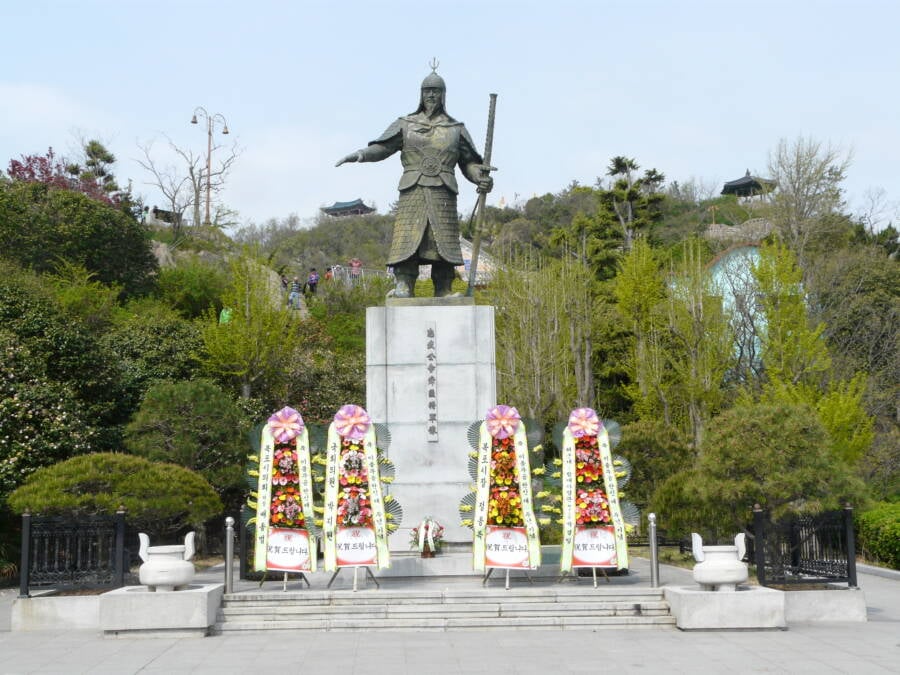
Piotrus/Wikimedia CommonsA statue of Yi Sun-sin at Yudalsan Mountain Park in Mokpo, Korea.
Between 1592 and 1598, Japan invaded Korea. During the Imjin War, Japanese warriors swept across the country, leaving millions starving and homeless. But one man, Korean Admiral Yi Sun-sin, stood up to the invading Japanese force — and dealt them multiple, stunning defeats at sea.
A hero in Korea today, Yi was a fearless tactical genius who triumphed over the Japanese despite having a much smaller fleet. In fact, during all the battles he fought during the Imjin War, Yi never lost a single Korean vessel.
Despite his success, however, his enemies in the Korean court plotted against him, and Yi temporarily was arrested, tortured, and stripped of his command. But he continued to fight for his country once he was released.
“Today I am to die,” Yi Sun-sin declared before his final battle. “Give me but one more victory over these Japanese and I shall die content.”
The Rise to Command
Born on April 28, 1545 to an aristocratic Korean family in present-day Seoul, Yi Sun-sin sought a career in the military. In the 1560s, he studied archery, horseback riding, and swordsmanship in preparation for his military examinations in 1572.
Though Yi fell off his horse during the exam and broke his leg, he showed his tenacity. As the Association for Asian Studies reports, he splintered his broken leg with a willow branch and completed the assessment.
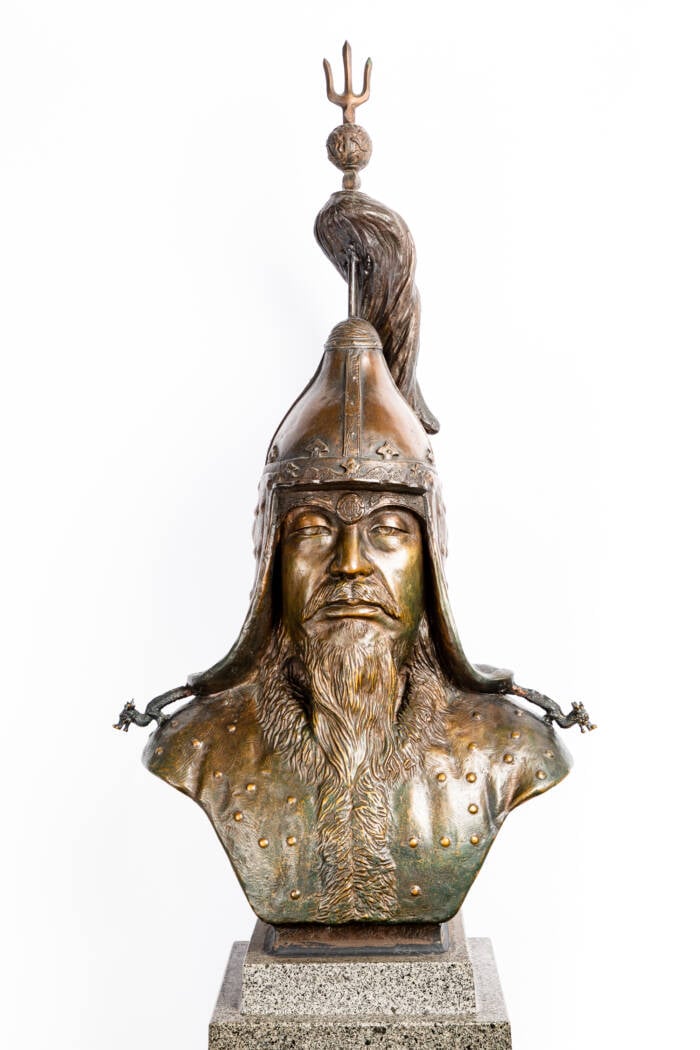
War Memorial of KoreaYi Sun-sin was a tactical genius and a determined warrior.
In the 1580s, Yi distinguished himself while fighting Jurchen forces from China. He lured them into a trap, defeated them, and captured their leader.
However, suspicion and jealousy from his superiors lead to Yi’s arrest, imprisonment, and torture. Yi was stripped of his rank and forced to serve as a common soldier until King Sǒnjo pardoned him in 1588.
Then, in 1591, Yi Sun-sin was fatefully given command of the Left Jeolla Navy along the country’s southern coast. Yi educated himself about naval strategy, and uncovered archival records about “turtle ships,” encased in armored plates, which had never been built. He then ordered the construction of these turtle ships, which some consider to be the first ironclad ships.
It was a serendipitous decision. Japan was preparing to invade Korea, and Yi’s turtle ships would play a crucial role in repelling its forces.
Japan Invades Korea — And Yi Sun-Sin Fights Back
In 1592, Japan — hoping to attack China — triggered the Imjin War by launching 800 ships toward Korea. The conflict lasted six years, and would prove devastating for the Korean people.
That May, more than 150,000 skilled Japanese soldiers landed at Busan and marched toward Seoul. They killed civilians, destroyed Buddhist monuments and monasteries, and kidnapped skilled workers to take back to Japan. In just a few years, 90 percent of Koreans had lost their homes, and burned fields spread starvation across the peninsula.
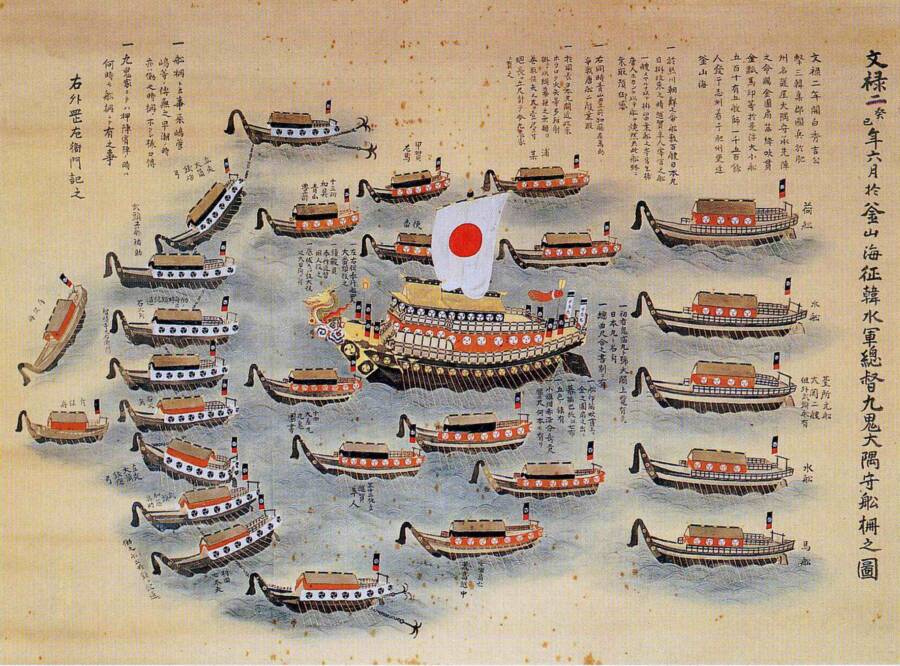
Wikimedia CommonsHundreds of Japanese ships carrying tens of thousands of samurai invaded Korea during the Imjin War.
But while some Korean admirals, including Won Kyun, fled before the Japanese, Yi Sun-sin prepared to fight back.
He had identified his enemy’s weakness: an overreliance on land warfare. Japan’s samurai warriors had made its military strong, but at sea, Japan used its ships primarily to transport warriors, not to engage in naval battles. Most of the Japanese ships were not even armed with cannons. Instead, they fired arrows and relied on their ability to board enemy vessels.
But the Japanese would need to control the sea around Korea in order to reach China.
With this in mind, Yi protected his ships from arrows and boarding. As History Net reports, his turtle ships had a protective, rounded cover, and were armed with spikes as a defensive measure against anyone who tried to board. He also made sure that they were armed with cannons.
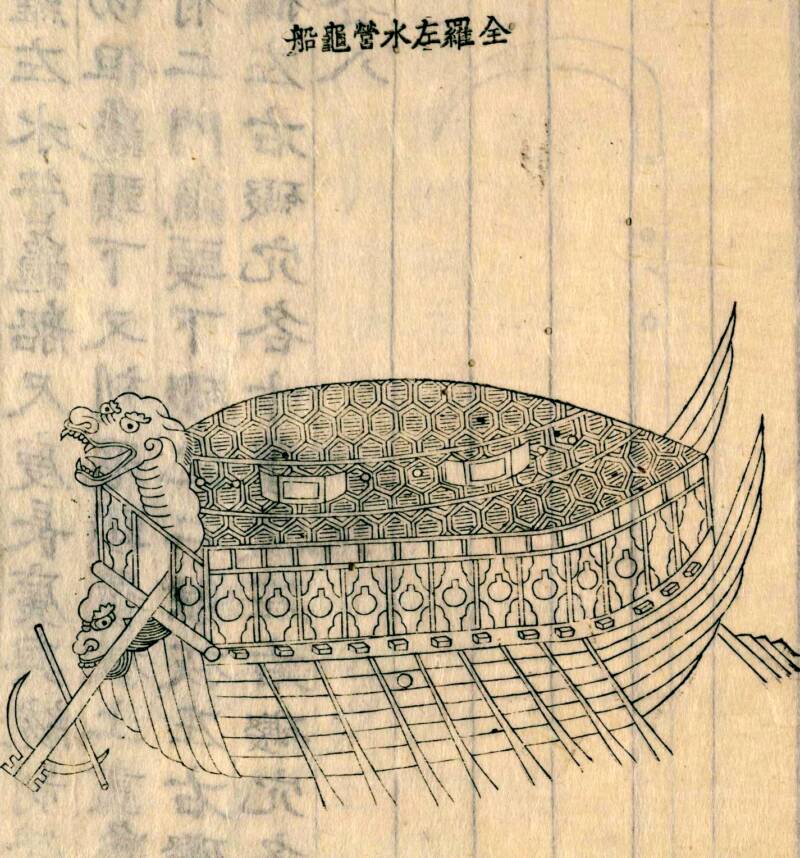
National Diet LibraryYi Sun-sin’s turtle ships had ironclad tops, spikes, and a dragon head.
That June, Yi met the Japanese at sea — and destroyed dozens of their ships, while losing none of his own. Over the next several years, he continued to batter the Japanese forces, at one point destroying 128 Japanese vessels near Busan.
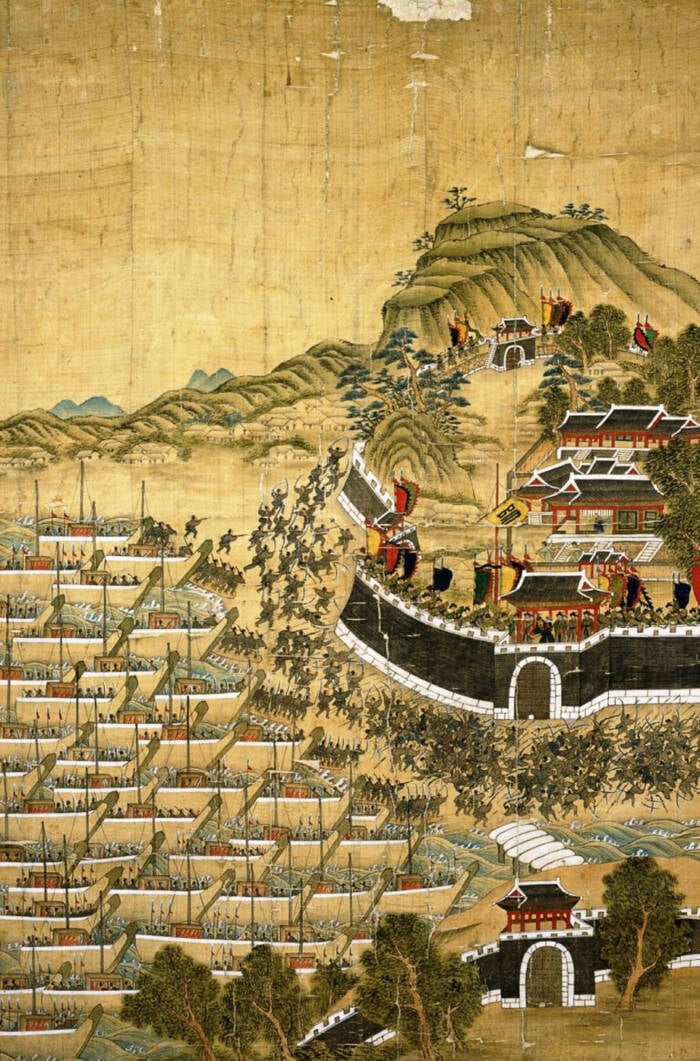
Wikimedia CommonsJapanese armies ravaged Korea during the Imjin War, and Japan’s ships played a critical role in resupplying the samurai.
“Our warships spread their sails, turned round in a ‘Crane-Wing’ formation and darted forward, pouring down cannon balls and fire arrows on the enemy vessels like hail and thunder,” wrote Yi’s nephew about one naval battle. “Bursting into flame with blinding smoke, seventy-three enemy vessels were soon burning in a red sea of blood.”
The Betrayal of Yi Sun-sin
As History Net reports, Yi Sun-sin had destroyed over 352 Japanese ships by 1597. But while he protected the coast, his enemies plotted against him at court. Won Kyun, another admiral, accused Yi of cowardice. Other schemers accused Yi of “disloyalty and disobedience.”
Korea’s King Sǒnjo folded to the pressure — and issued an arrest warrant for the admiral.
Won Kyun took over the Korean fleet while an ox cart transported Yi to Seoul in chains. Korea’s war hero went on trial and was found guilty. He was tortured and exiled.
“What shall I do?” Yi wondered. “Is there anyone else under heaven in such a pitiful plight as myself? The sooner I die the better.”
But without Yi’s tactical brilliance, Won sailed Korea’s fleet into a trap, losing nearly every ship under his command. Realizing his error, King Sǒnjo reinstated Yi as Supreme Naval Commander.
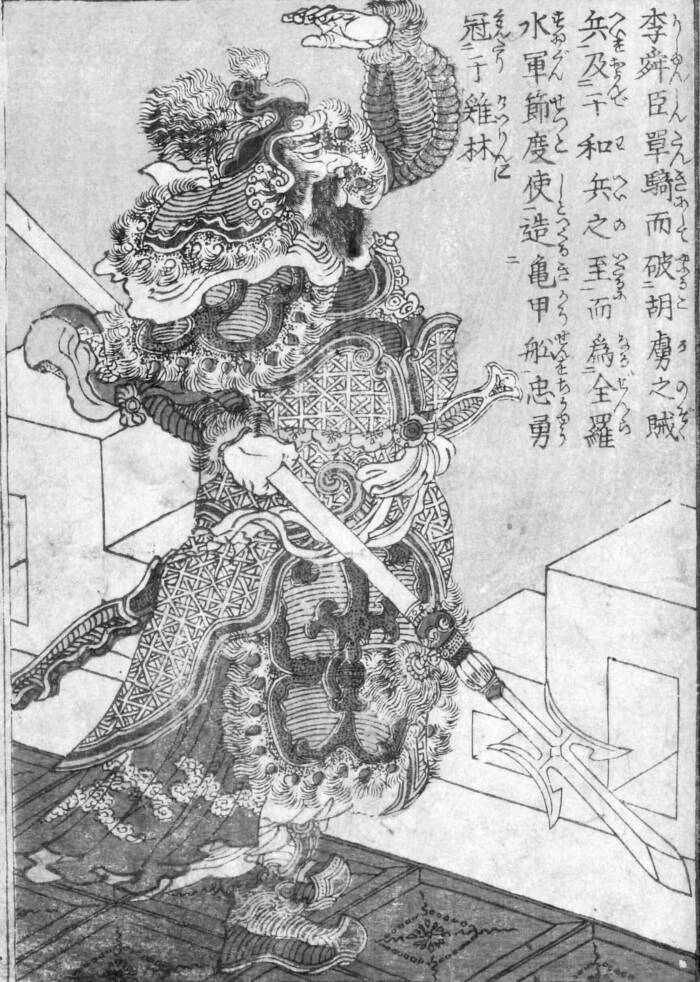
National Institute of Japanese LiteratureEven after Korea’s king ordered Yi Sun-sin’s arrest and torture, the commander returned to the battlefield to fight for his country.
Yi took command of a fleet that consisted of just 12 ships and 120 soldiers. But that didn’t intimidate Yi. “After all, I still have twelve ships!” he declared. “As long as I live, [our] enemies will never look down on us.”
Yi soon proved his strategic value. As a Japanese fleet of 300 vessels, including 130 warships, sailed toward Korea, Yi set up a trap in a narrow strait with strong tidal surges. Thanks to his knowledge of local waters, Yi pinned the fleet in the narrows and battered the Japanese ships with cannon fire.
After the battle, Japan’s fleet retreated – minus the 31 ships Yi sank. The Korean fleet did not lose a single ship.
The Death of Admiral Yi
In the end, Yi Sun-sin died as he lived. While chasing a Japanese fleet of 500 ships on Dec. 18, 1598, he was fatally shot in the leg.
“The battle is at its height,” Yi called to his son, “do not announce my death!”
Yi’s son followed the order, hiding his father’s body in a cabin of the ship and returning to lead the battle – so that no one knew that Yi had died until the battle had ended. The Koreans had emerged triumphant, and the Imjin War ended with the Japanese withdrawal.
During his six years as a naval commander, Yi fought in 23 battles. He never lost, and destroyed hundreds of Japanese ships without ever losing a single one of his own.
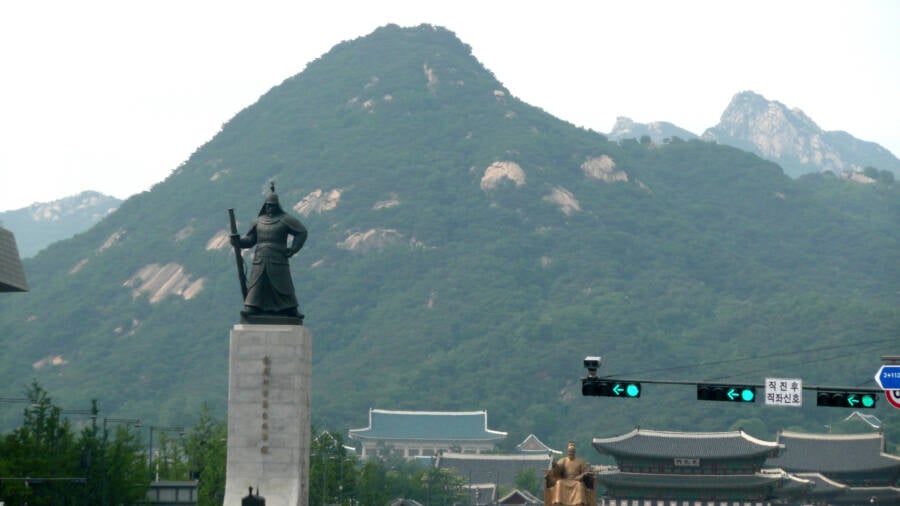
Wikimedia CommonsStatues of Yi Sun-sin stand across South Korea, including this statue in Seoul.
Sine his death, Korea has celebrated Yi Sun-sin as a legendary military hero. Statues in Busan and Seoul memorialize the leader who protected the shores of his country, even when his own king turned against him.
And in 1905, when Japanese Admiral Heihachiro Togo was compared to Horatio Nelson and Yi Sun-sin for his stunning defeat of the Russians at Tsushima Strait, he demurred.
“It may be proper to compare me with Nelson,” Togo stated, “but not with Korea’s Yi Sun-sin, for he has no equal.”
After reading about Yi Sun-sin, one of Korea’s most celebrated military heroes, discover the story of the Haenyeo, the all-female divers in South Korea who harvest seafood. Or, look through these rare photos from inside North Korea.
The post Yi Sun-Sin, The Fearless Korean Admiral Who Never Lost A Single Ship appeared first on All That’s Interesting.


