


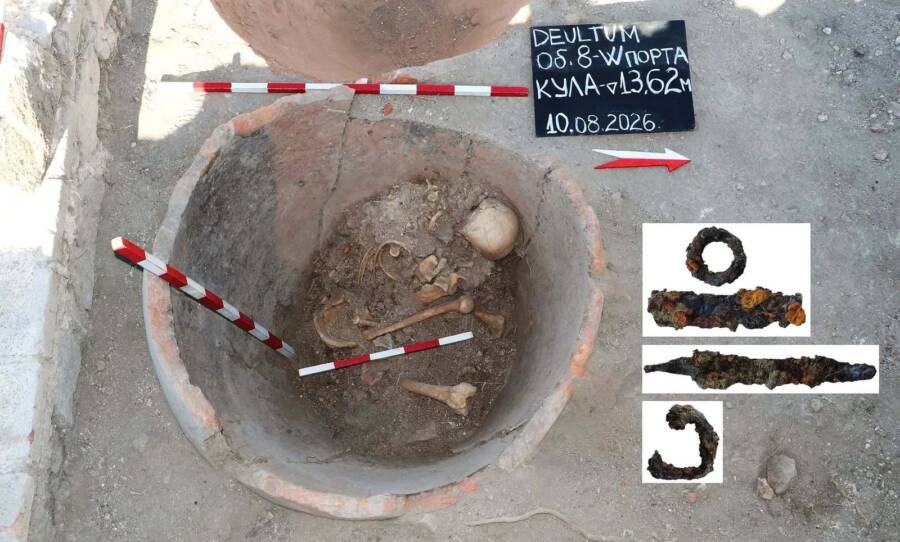
Archaeologia BulgaricaArchaeologists excavating the Roman ruins of Deultum in eastern Bulgaria found a 1,600-year-old skeleton inside an enormous storage vessel.
During excavations of the ancient Roman colony of Deultum near the Bulgarian village of Debelt, archaeologists discovered something highly unusual: a complete human skeleton curled up inside a gigantic jar known as a dolium.
Researchers believe that this skeleton of a young man dates back to around 400 C.E., at a time when this Roman city faced a high concentration of enemy attacks from Germanic tribes. Archaeologists believe the man hid inside the jar to seek shelter during an invasion — but perished when a fire tore through the area.
The Discovery Of A Skeleton Inside An Ancient Roman Jar In Bulgaria
Archaeologists discovered the giant jar inside the northern turret, or small tower, near the city’s western Roman gate.
Excavation leader Dr. Lyudmil Vagalinski told Live Science that they were shocked to discover human remains inside the tower.
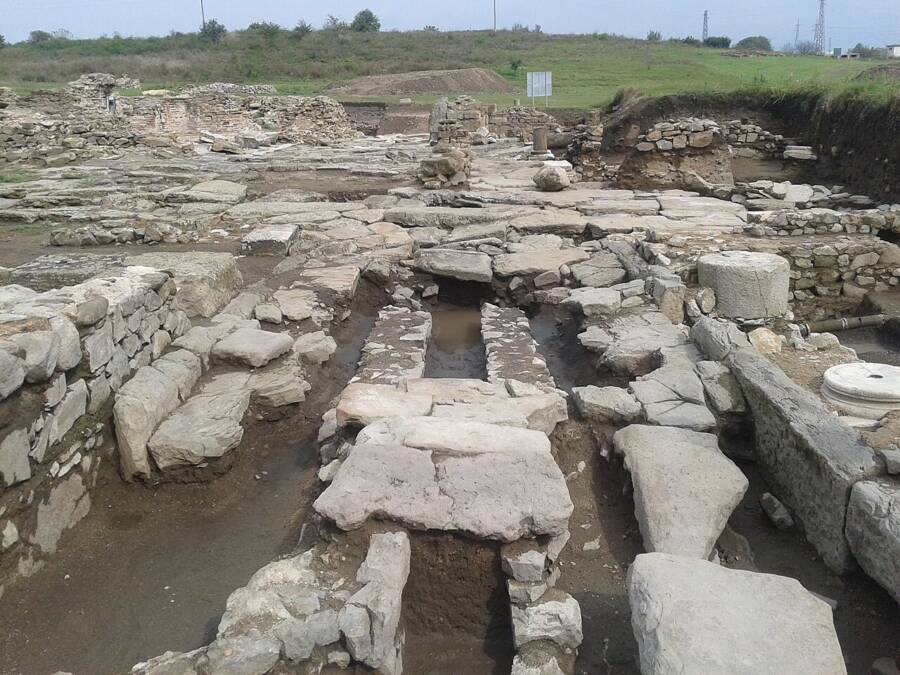
Wikimedia CommonsThe Romans flourished in Deultum for nearly 400 years before it was sacked by invaders.
“We were surprised,” Vagalinski said, adding that it’s rare for archaeologists to uncover skeletons among the ruins of ancient cities that aren’t in designated burial areas — unless there are “extraordinary circumstances,” like natural disasters or enemy attacks.
The skeleton was found alongside two iron knives and a belt inside the dolium. These huge jars are the largest-known type of pottery from antiquity. They were used to store goods like oil and wine, and the largest dolia had a capacity of 260 gallons. This recently discovered dolium was smaller, however, measuring approximately three feet in diameter.
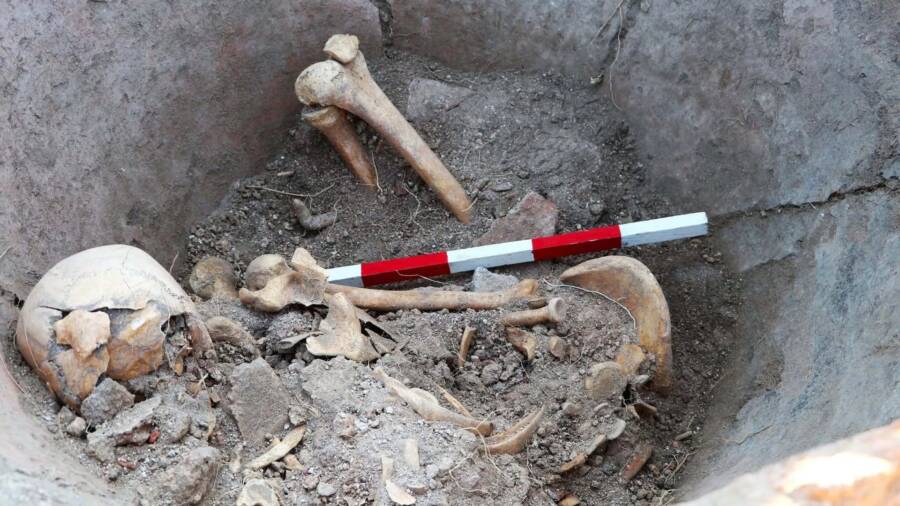
Archaeologia BulgaricaExperts believe the man was hiding from Germanic invaders and was prepared to strike with his knives if they found him.
Researchers estimate that the young man died around 400 C.E., but a more precise date will come after analyzing the rest of the field data. However, that dating would make sense, given the preponderance of enemy attacks that occurred in the area at that time, as the days of the Roman Empire’s dominance were coming to an end.
How This Man May Have Ended Up Inside The Dolium 1,600 Years Ago
Vagalinski believes that this recent discovery represents one of the “extraordinary circumstances” that would lead to human remains being found scattered among the ruins of an ancient Roman city: in this case, an enemy attack.
In the areas surrounding the dolium, archaeologists found a large amount of burned materials, including ashes and coals, broken bricks, tiles, blackened walls, melted glass, and livestock bones. Likely, when people heard of an imminent attack, they brought their livestock into the turret.
The researchers are uncertain which specific battle led to the young man’s death, but Deultum faced a lot of pressure from East Germanic tribes and the Huns in the fourth and fifth centuries, according to Vagalinski.
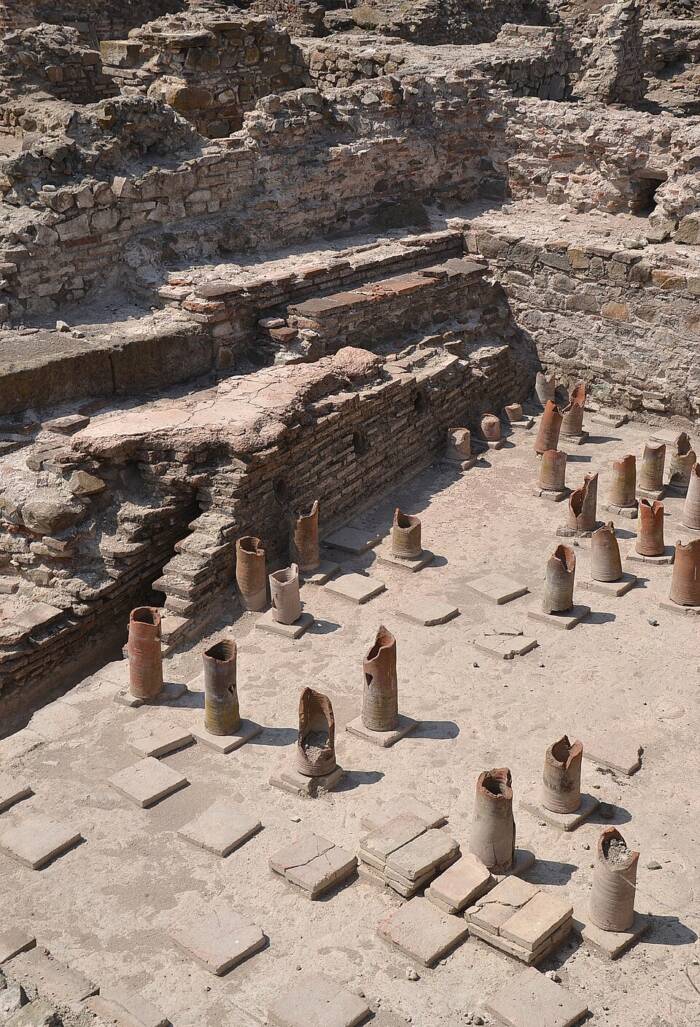
Wikimedia CommonsThe man likely died during a fire amidst an enemy attack, possibly by the Huns or another Germanic tribe.
The young man likely went into the dolium to hide from the attack, though it’s probable that the invaders had already begun setting the city ablaze before the man hid inside, Vagalinski said.
“The man had found refuge in the pitos, crouched there with his knees pressed to his chin and his face turned downward. He was clutching an iron knife in his right hand, and he had a second, smaller one hanging from a ring, but he was not a warrior,” Vagalinski told the Bulgarian news outlet Standart News.
Although he was not a warrior himself, the young man kept the knives with him in case attackers found him.
“In any case, he made no attempt to get out of the ceramic vessel,” Vagalinski told Live Science, based on his position, which was similar to that of a sleeping man.
Following the attack, the survivors leveled the floor of the ruined tower and replaced it with a new one, without knowing that a fellow citizen was dead inside the dolium that they were then building on top of.
The skeleton has now been transported to Sofia, Bulgaria, where it will be analyzed by a physical anthropologist. Next summer, the team plans to excavate the entire western Roman gate in Deultum, which dates back to around 300 C.E. They aim to finish their investigation of the northern turret, and, hopefully, finish filling in the details behind this young man’s tragic end.
After reading about the skeleton found inside a giant Roman jar in Bulgaria, see some of the most fascinating ancient Roman facial reconstructions. Then, learn about the mass grave of Roman soldiers found beneath a soccer field in Vienna.
The post Archaeologists In Bulgaria Just Found The Remains Of A Man Who Died Inside A Gigantic Jar As He Tried To Hide From Invaders appeared first on All That’s Interesting.


