


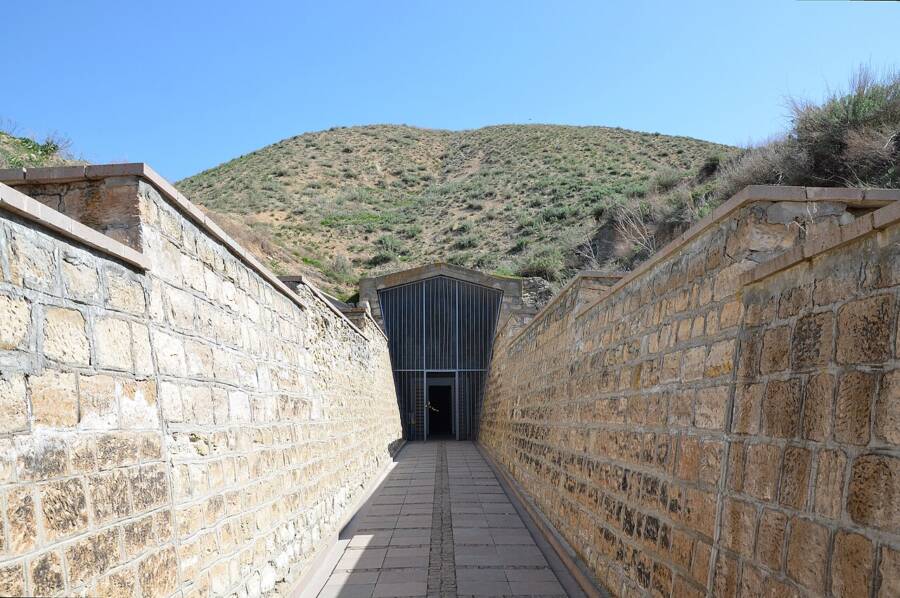
Wikimedia CommonsResearchers believe that the massive tomb known as the “Midas Tumulus” in the ancient city of Gordion was actually the resting place of his father, Gordias.
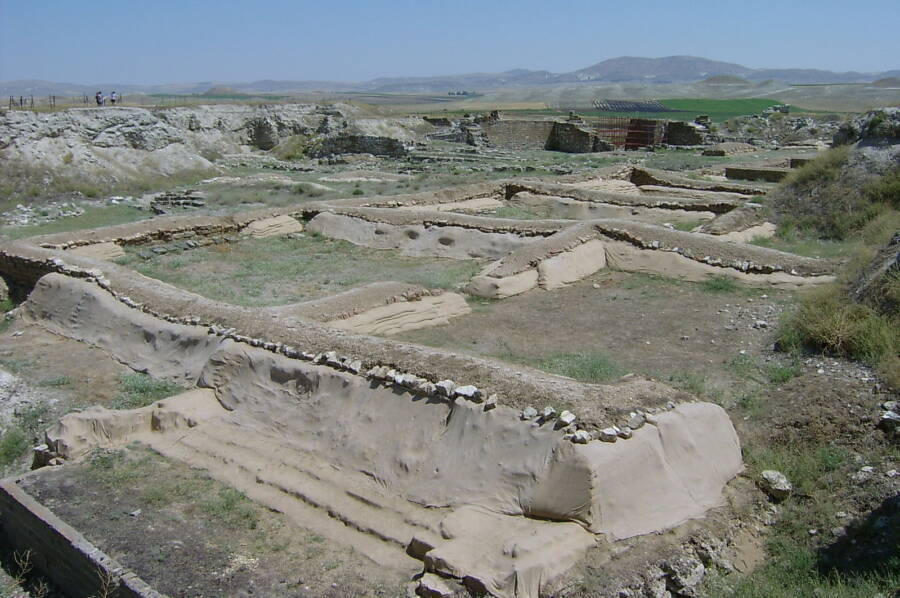
Several decades ago, archaeologists uncovered a 3,200-year-old tomb in central Turkey that was surrounded by a massive burial mound, one commonly referred to as the “Midas Tumulus” to this day. Alongside the Midas Tumulus, there are 130 known tumuli in Turkey’s Polatlı district, and almost 90 of them are concentrated among the ruins of the ancient city of Gordion, which served as the flourishing capital of the ancient Phrygian kingdom.
Archaeologists have long argued that the well-preserved Midas Tumulus and its grave goods illustrate the high-level craftsmanship of the Phrygian civilization. However, despite its name, researchers are also now saying that this tomb was likely actually built for Gordias, the father of the Phrygian King Midas.
The Enormous 3,200-Year-Old Tumulus Among The Ruins Of Gordion
Of the dozens of ancient burial mounds in and around Gordion, the Midas Tumulus is the largest and has been one of the most significant for understanding Phrygian society.
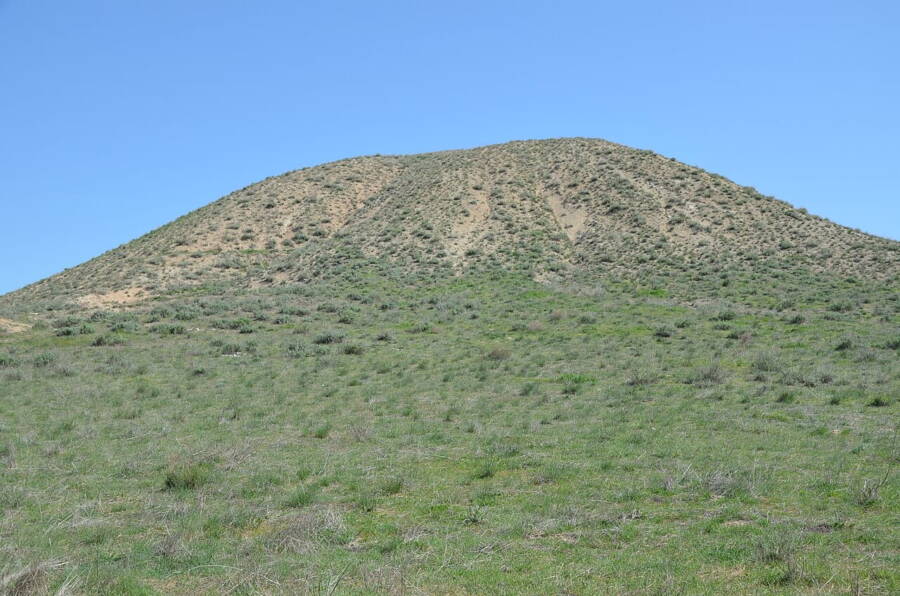
Wikimedia CommonsThe Midas Tumulus, the largest burial mound in the region, was first excavated in 1957.
The mound is more than 170 feet tall and stretches close to 1,000 feet wide. The center of the mound houses a wooden chamber, around 20 feet by 16 feet. This chamber was mainly built using juniper beams, which have survived around 3,200 years in a miraculously well-preserved state.
The tumulus was first excavated in 1957 by a team of Turkish and American scientists. They used drills to reach the underground chamber, and later, with the help of local miners, dug a 270-foot tunnel inside the mound.
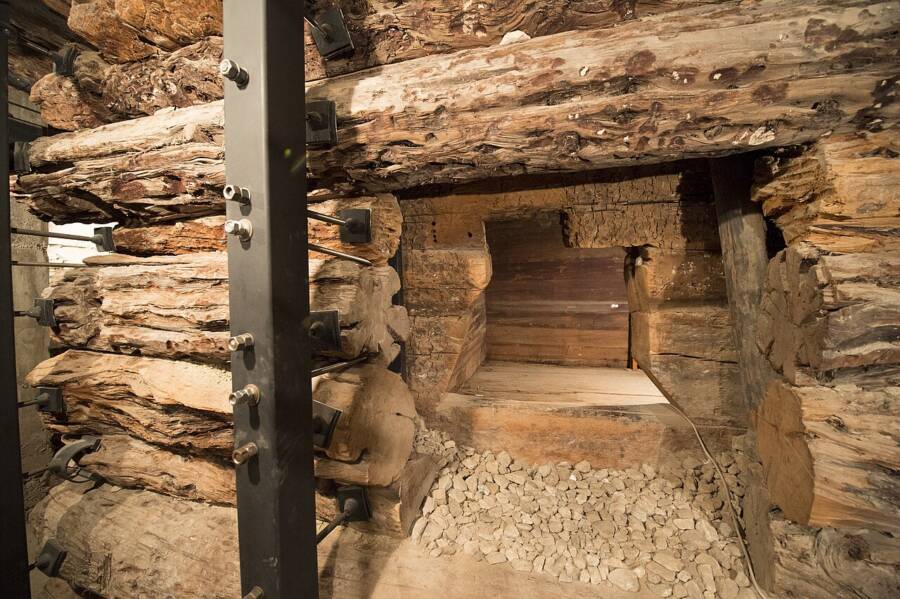
Wikimedia CommonsThe tumulus’ central burial chamber was made almost entirely out of wood (the metal was added in modern times for structural support).
According to Kadim Koç, chairman of the Gordion Foundation, this early excavation damaged some parts of the tomb and some of its textile grave goods. In addition to textiles, the tomb also contained some woodworked objects, as well as 99 fibulas, or bronze brooches.
Anakara’s “Midas Tumulus” May Actually Hold The Remains Of His Father, Gordias
Despite the tomb’s famous name, the Midas Tumulus was likely actually the burial place of Gordias, Midas’ father. According to Koç, at the time of the excavation, it was actually known to researchers that the tomb was meant for Gordias, but this fact got lost over time.
“When the tumulus was excavated in 1957 the Ulus newspaper reported that the tomb of Gordias, the father of Midas, had been found and that Gordias’ skeleton had been discovered,” Koç said. “However, Midas is such a famous figure of antiquity that his father could never take precedence over his son. Even today, although we explain that it is his father’s tomb, people continue to know it as the Midas Tumulus because Midas’ colorful personality stands out.”
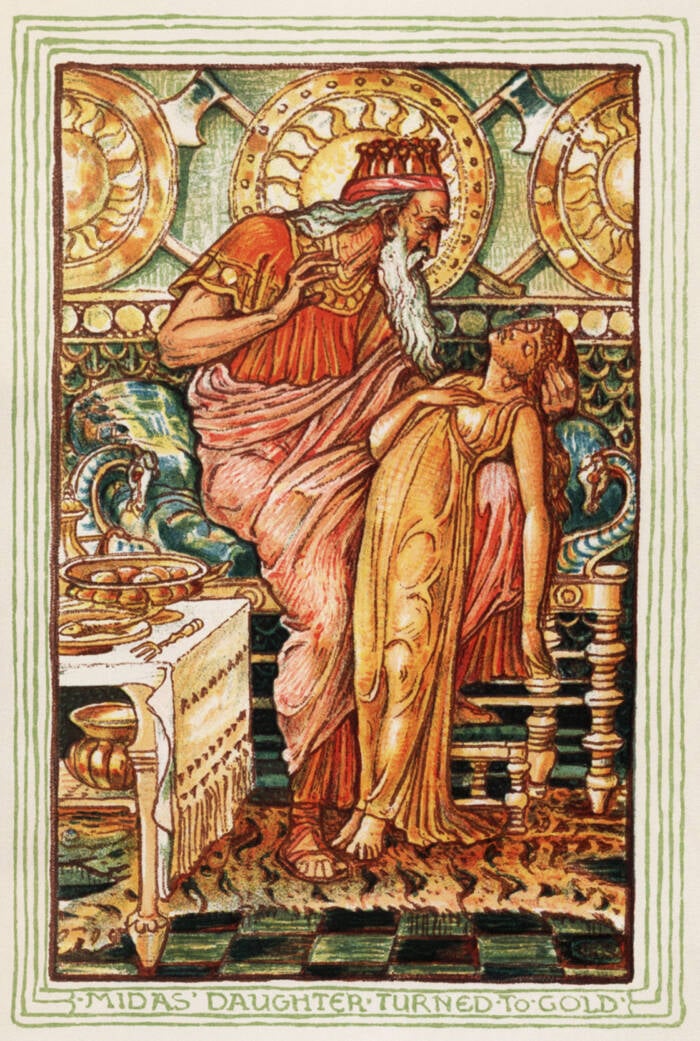
Public DomainKing Midas became infamous due to the Greek myth concerning his greedy wish to possess the “golden touch.”
Although Gordias looms large in both ancient history and Greek mythology — especially as the creator of the famous Gordian Knot — King Midas and his legend of the “golden touch” have since overshadowed the legacy of Gordias in modern times.
In addition to restoring the legacy of the tomb as the burial ground for Gordias, archaeologists have also taken the opportunity to analyze the tomb’s grave goods to learn about the customs and skills of the Phrygian people.
What This Tumulus Reveals About Life In Ancient Gordion
This tomb’s wealth of evidence illustrating the quality of ancient craftsmanship is rare, as natural materials like wood and textiles typically decay before archaeologists can analyze them.
Woodworking is known to be an especially important part of the story of the Phrygian kingdom. The preservation of the wooden chamber inside the Midas Tumulus has allowed researchers to analyze how Phrygian workers used large tree trunks to create a structurally-sound tomb that’s lasted for millennia.
Wikimedia CommonsThe area’s well-preserved grave goods have allowed researchers to learn about the beliefs and customs of the ancient Phrygian kingdom.
Furthermore, the 99 brooches point to the skills of Gordion’s metalworkers, and the significance of the brooch in Phrygian dress and burial customs.
“This is the homeland of the fibula, or brooch. The first fibulas were produced here,” Koç said.
The woodworking, metalworking, and textile-weaving shown in these artifacts prove that the Phrygian people were highly skilled in multiple trades some 3,000 years ago.
Some of these objects are on display at the Museum of Anatolian Civilizations in Ankara, and at the Gordion Museum.
Since UNESCO added Gordion to its World Heritage List in 2023, its impressive burial mounds have found new global recognition and attention, and efforts to unlock the secrets of the Phyrgian kingdom beyond the legacy of King Midas alone will now continue on.
After reading about how the “Midas Tumulus” may actually be the tomb of his father, Gordias, learn about this 3,000-year-old Phrygian rock tomb that was illegally turned into a café. Then, discover this 2,400-year-old tomb in Turkey that might hold the remains of an ancient pro wrestler.
The post This Enormous Ancient Tomb In Turkey Was Just Identified As The Likely Resting Place Of Gordias, The Father Of King Midas appeared first on All That’s Interesting.


