


Levon Biss Captures the Fragile Life of Insects and gives them monumental importance.
 Amidst the many wonders of the museum world in New York City is the American Museum of Natural History that is now 151 years old and going strong. Its new leader is a Ph.D. biophysicist, Sean Decatur, who left the presidency of Oberlin College to lead this complex institution. In the Ken Griffin Exploration Atrium is an amazing installation of macrophotography by specialist Levon Biss showing specimens which scientists worry are in danger of extinction.
 American Museum of Natural History

 Dr. Sean Decatur, Director

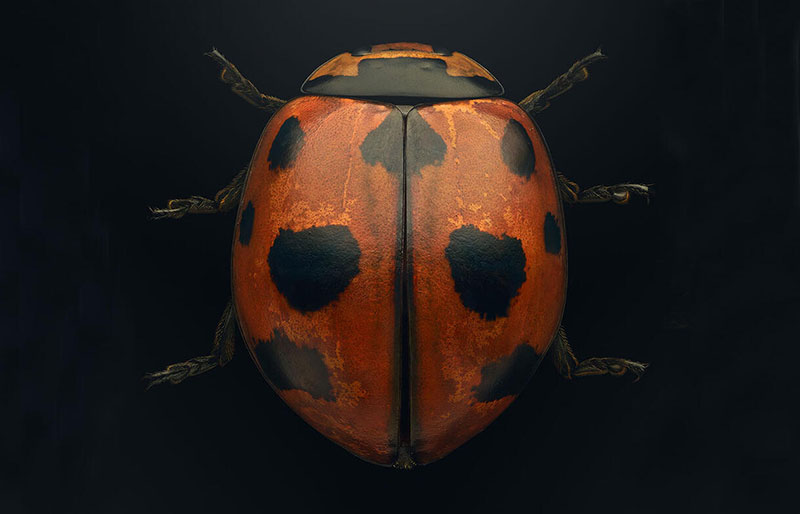
The museum’s staff entomologist, David Grimaldi, says that insects have lived on this earth for 450 million years, and his research has shown that many species are in decline today. This show aims to bring attention to this problem as they are part of our food sources and integral to the balance of our natural resources on the planet. Leon Biss has photographed 40 species of the 20 million in the museum collection, and their enlarged presence mirrors the huge whale and dinosaurs in adjacent galleries.
 Patagonia Bumblebee
Here is the world’s largest bumble bee specimen. The Patagonia bug is called the flying mouse as it is huge and key to fighting disease as a critical pollinator in the South American region.
 Blackburn Sphinx Moth

Here is another endangered sample of a hornworm moth which now lives mostly in the Hawaiian Islands where it is noted for fighting off attacks of predators and is labeled extremely endangered by the U.S. Fish and Wildlife Service.
 Madeira Brimstone Butterfly

Here is a fabulous photograph of the Madeira brimstone butterfly, which lives in dense forests. Like the rest of the insects, it is in decline and perhaps this exhibition will bring attention to its needs for hunters and farmers as well.
 Arachnid Spider

When you see a long- legged Arachnid Spider, the message here is to step aside and not squash it, as even spiders contribute to the livelihood of our ecological system. Seeing this image in a 4 x 8-foot dimension at this museum in this excellent show is a very new addition to our understanding of the contribution of modern photography.
This show will be on display until April 4, 2026, at the American Museum of Natural History which is open seven days a week for visitors. The massive photographs of these tiny insects enlarge for us our awareness of how interdependent we are in our universe from the smallest to our largest natural species and environments.
Sources Consulted:
- Levon Biss, Extinct and Endangered: Insects in Peril.
Abrams Books, 2025.
- Website: American Museum of Natural History.
- Sean Decatur, Numerous Articles on Biodiversity and Biophysics authored while teaching at Stanford University, Mount Holyoke College, Oberlin College.
American Museum of Natural History
200 Central Park West, New York, NY
The post Extinct and Endangered: Insects in Peril at the American Museum of Natural History appeared first on Sharp Eye.

