


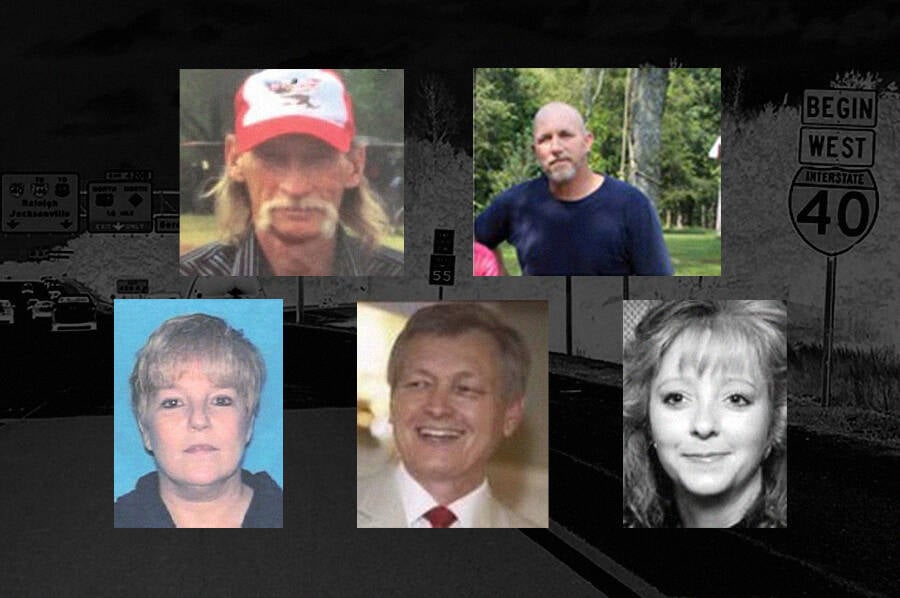
NamUS/Oklahoma State Bureau of Investigation/State of ArkansasFive missing or murdered individuals whose cases have been linked to Interstate 40: Billy Joe Lange, Joshua Hamm, Margaret Gardner, Rodney L. Frazier, and Sandra Beard.
Interstate 40 stretches 2,556 miles from Barstow, California, to Wilmington, North Carolina. Across this route, it passes through deserts and mountains, major cities and sparsely populated countrysides — and, it seems, numerous crime scenes.
In 2004, an Oklahoma criminal analyst discovered a strange trend. The bodies of numerous murdered women were found discarded in Oklahoma, Texas, Arkansas, and Mississippi, all near the I-40 corridor.
The analyst passed the information on to the FBI’s Violent Criminal Apprehension Program, or ViCAP. There, experts compared these cases with records from other jurisdictions and found that not only was there a disturbing trend on I-40, but similar trends could be seen near highways across the country.
While the initial discovery was shocking, this small event would radically change how the FBI approached its investigations.
What Happened On I-40?
Over the years, countless murder and missing persons cases have been linked to I-40. In March 2016, investigators found a car belonging to a man named Billy Joe Lange alongside I-40. While his vehicle was intact, Lange was nowhere to be found — and remains missing to this day.
There are many other, similar cases. Joshua Hamm was last seen walking west along I-40 in August 2018 before vanishing, while Rodney Frazier went missing in November 2006, only for his car to later be found abandoned on the I-40 bridge across the Mississippi River.
Many of these cases revolve around people whose disappearances would likely attract little attention. This includes the unhoused, sex workers, people with substance abuse issues, and others in precarious living situations.
Margaret Holmes Gardner had allegedly been making a living as a sex worker when she was found dead and partially unclothed alongside an I-40 entrance ramp in 2003. That same year, Sandra Beard’s body was discovered directly beside I-40 in McIntosh County, Oklahoma.
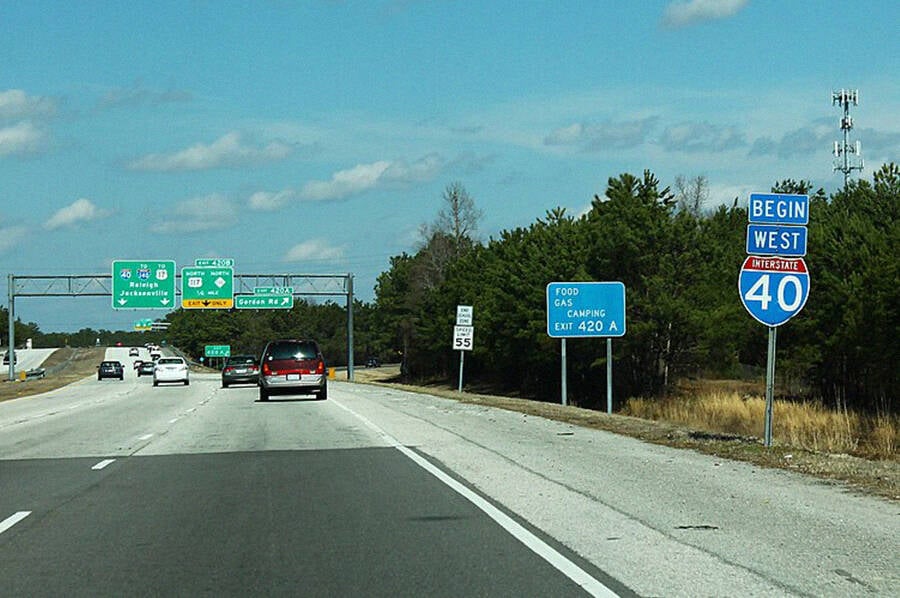
formulanone/Wikimedia CommonsThe eastern end of I-40 in Wilmington, North Carolina.
By linking all of these cases to an interstate, the analyst revealed a blind spot in the FBI’s thinking: highways.
Typically, an investigation into a missing person focuses on the local area. Those who work on or around interstates, however, do not necessarily have one “local area.” They may travel between several states in a single day for work — or, as the FBI slowly pieced together, they could commit a crime in one state and dispose of the evidence in another.
This led to the terrifying realization that someone could pick up a passenger in Alabama, kill them, then leave their body in Georgia later that day. Detectives who happened upon the body in Georgia would likely have no witnesses to the crime — and, importantly, no obvious reason to look for a suspect in Alabama. Investigators may also have difficulty linking their case to a similar one several states away.
So, when the analyst submitted his discoveries to the FBI, agents changed the way they investigated certain cases.
The FBI’s Investigation Of Highway Crimes
The FBI began looking at long-haul truck drivers when investigating murders or missing people reported near highways. However, the agency took pains to note that the overwhelming majority of truck drivers are law-abiding.
Still, there was plenty of reason to investigate. Truck drivers frequently move between states, and since there are so many of them in vehicles that look fairly similar, the average person wouldn’t take notice of any specific truck on the road. While these factors do not give drivers a motive, they certainly present them with an opportunity — one that a few may act upon.
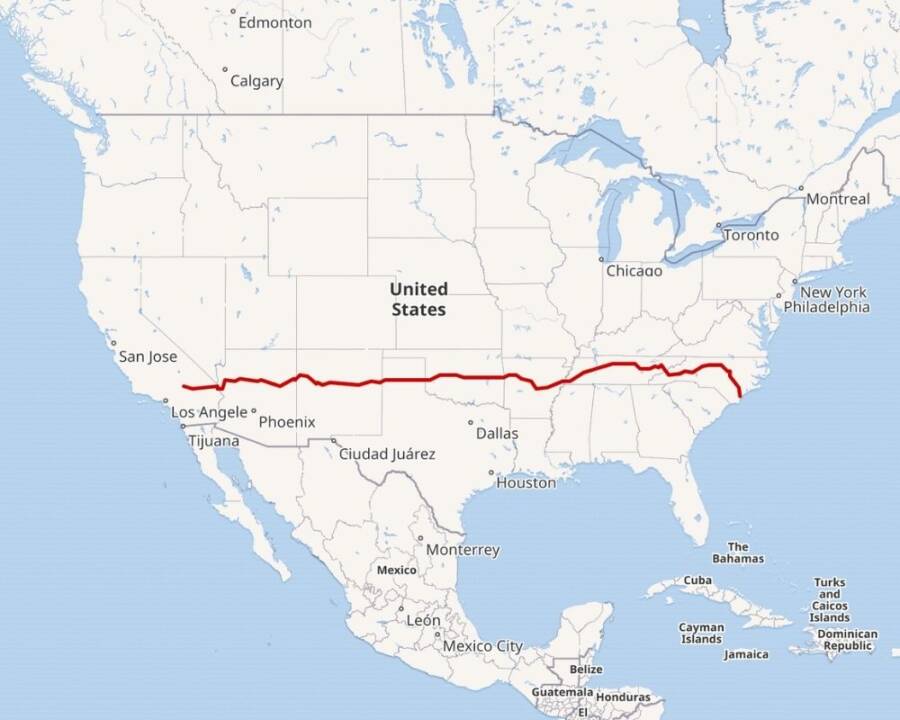
OpenStreetMap/Wikimedia CommonsInterstate 40 stretches from Barstow, California, to Wilmington, North Carolina.
By 2016, ViCAP had compiled information on over 750 murder victims discovered along or near American highways. They also identified around 450 potential suspects. This does not mean that the suspects actually committed a crime, but it was a starting point for the decades of built-up cases.
But why is I-40 the center of all of this? The truth of the matter is, it’s not. The interstate may have sparked ViCAP’s investigation, but the victims identified by the FBI were found along or near highways across America, not just I-40. I-40 is symbolic of this movement, but it is not its epicenter.
In addition to efforts like ViCAP, the FBI and other agencies have employed additional methods to solve these crimes. Investigators are now better able to share information across jurisdictions and state lines. Advancements in DNA testing have also made it easier to identify victims and determine what may have happened to them.
The road ahead for this work is long. That said, multiple agencies are making efforts to close this knowledge gap and prevent the people who commit these crimes from getting away with them.
After reading about the unsolved cases involving Interstate 40, go inside the history of Route 66, the highway that stretched from Chicago to California. Then, learn about the Texas Killing Fields, the stretch of I-45 where dozens of young women have gone missing over the years.
The post How Interstate 40 Has Become A Hot Spot For Unsolved Murders And Disappearances appeared first on All That’s Interesting.


